Archive for ‘Observations’

My Own Little Nature Show

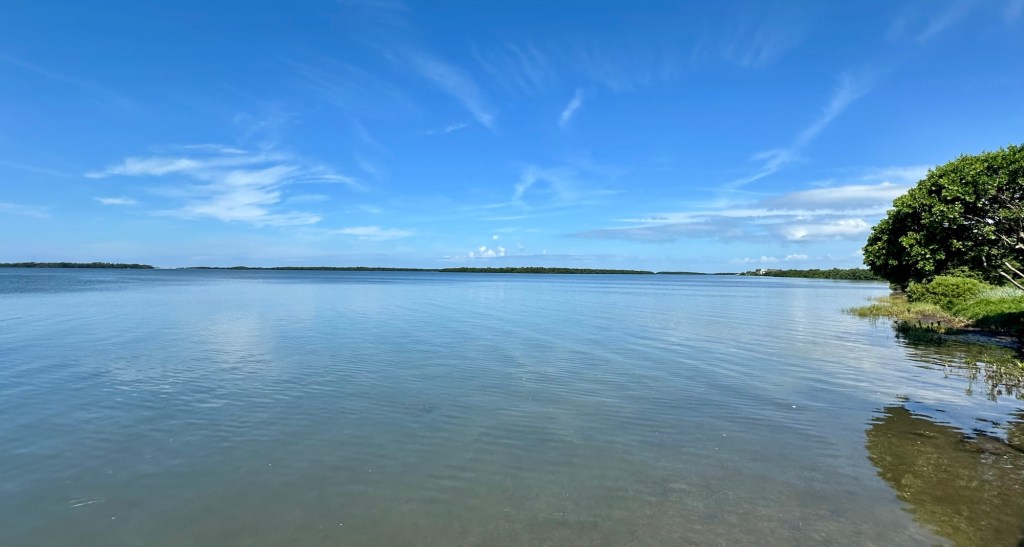
I had 30 minutes to spare before a meeting yesterday morning, so I popped over to Coffee Pot Bayou. Located just north of downtown there’s a small namesake park with a playground but the main draw for me is the walkway along the sea wall.

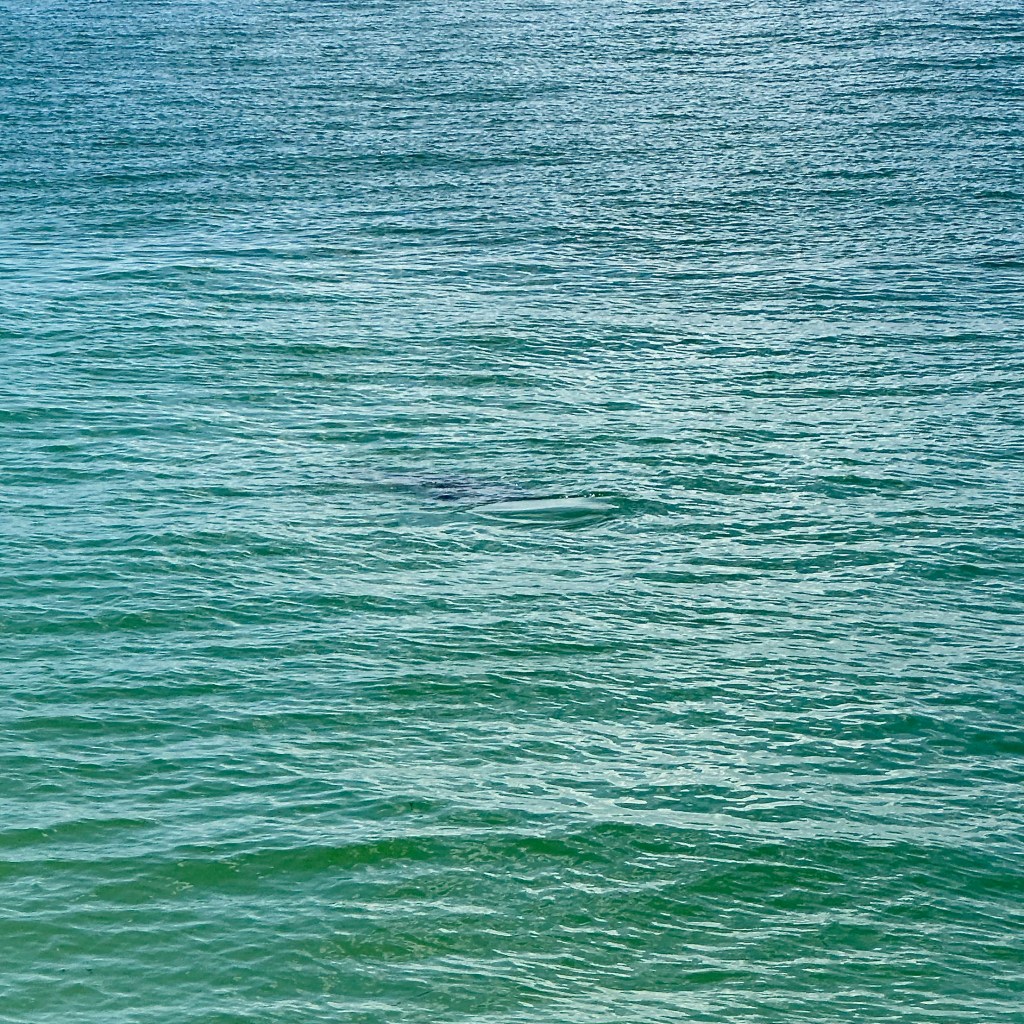
I was hoping to spot some manatees as that area is a favorite hangout of theirs. While I didn’t see any, I wasn’t disappointed as there was plenty of other wildlife.

Just as I arrived a fisherman emptied some Pilchards from his bait bucket near the dock. It afforded me a good luck at them, such pretty little fish!

They didn’t go to waste, as they quickly became a meal for a Common Gallinule. I was distracted from the feast by the “wingtips” (top of a ray’s dorsal fins) of a Cownose Ray. I just love their adorable little faces!

The ray led me toward a 3.5’ long Snook which was half-heartedly following a school of mullet. Next I noticed an Atlantic Needlefish (Strongylura marina) swimming at the top of the water which, sadly, did not pose for a photo.

Right at the base of the sea wall below me a crab was stuffing its face, I couldn’t tell what it was eating but it must’ve been tasty.

Heading back to my car, I followed the little creek where a few turtles were enjoying the sunshine. Behind them, a handsome Black-crowned Night heron was tucked away in the mangroves.

So much wildlife to watch, I’m fortunate to live here!

Holed Up

During the dry season here in Florida, wildlife concentrates around any remaining pockets of fresh water. Alligators, especially, flock to these wet areas. Interestingly, they are strong diggers and they actually create many of these deeper pools.

I counted 31 gators in one hole with an additional 11 in the channel on the other side the trail. Keep in mind, these are just the ones that I could see. Did you know gators can stay submerged for hours? Larger adults can stay under for up to six hours or longer.

As they say down here, always assume there is an alligator in any body of water larger than a rain puddle (including swimming pools and even saltwater). As of the last gator census in 2023, Florida Fish and Wildlife Conservation Commission estimates there are roughly 1.3 million of them in the state.

Sneaky Gator
Gator Glide
Gator Splash

Corkscrew Swamp Sanctuary

I wanted to take advantage of the last of our Spring weather (before it really heats up down here in Florida) so I headed over to explore Audubon’s Corkscrew Swamp Sanctuary. The refuge’s name came from an early epithet for a nearby winding waterway, now known as the Imperial River.

The wetland sanctuary at the western edge of the Everglades, spans over 13,000 acres. Much of it first set aside in 1954, though protections for the heart of the property began much earlier. In a way, we can thank the fashion industry for that.

Ladies’ hats in the late 1800s were elaborate displays, featuring fancy feathers and floral elements. The feathers were sourced from wild birds, usually during breeding and nesting season when they were at their showiest.

Milliners were paying $32 an ounce for the feathers, which was more than the price of gold at the time. As a result, plume hunters around the world were killing over 5 million birds a year. By 1900, they had wiped out an estimated 95% of Florida’s shorebirds (primarily herons, egrets, Roseate Spoonbills, and Flamingoes).

Near the center of what is now the sanctuary was a massive rookery, which locals took upon themselves to hire protection for in 1900. Some fifty years later, the area again needed protection, this time from logging. Again, local residents fought to save the area. In 1954 the first section of land was set aside to protect a stand of ancient bald cypress trees.

During my stroll along the two mile boardwalk, I found the area to be absolutely teeming with wildlife. Sanctuary indeed!

St. Pete’s First Historic Neighborhood

This past Saturday afternoon, I was drawn to Creek Fest, an afternoon of live music in the Roser Park neighborhood. Since I arrived early, I went for a stroll along the narrow, shady streets of the historic district.

This area south of downtown was transformed by Charles M. Roser, who fell in love with the jungle-like gully of Booker Creek shortly after moving to St Pete in 1911. The vision for his development was quite impressive; each house was required to be unique and of high quality, lush tropical foliage was enhanced by planned plantings with a focus on colorful blooms, brick paved streets followed the natural, winding path of Booker Creek, and finally, for the good of the community, he set aside land for a park, a school, and a hospital (all of which still exist in some form).

Mr. Roser was not alone in his appreciation of the location, the Tocobago people had lived along the fertile banks of Booker Creek for hundreds of years, as evidenced by the artifacts and large shell mounds they left behind.

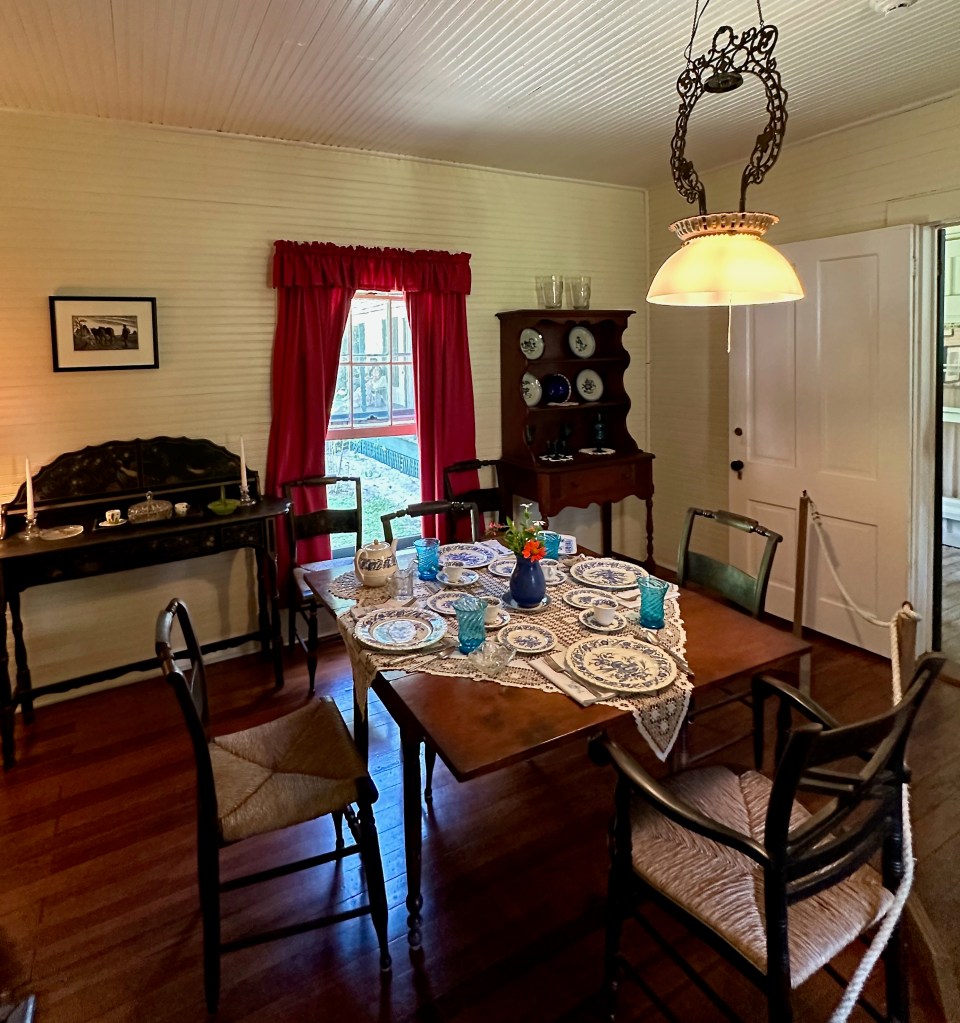
My favorite stop of my informal tour was the Bradshaw House, a large classic, colonial revival home named for one of St. Pete’s early mayors. Not only has it been lovingly restored but it has a fun history. It was once known as the Zilch House. The name bestowed by a group of bachelors who rented the house starting in 1925. They creatively called it that, so they could say they were the last listing in the phone book (remember those huge tomes?).

While the area’s history and lush foliage were charming, I most enjoyed watching the trickling of the creek. I was not alone in my appreciation of the water, I noticed several turtles, ducks, and even a young alligator. The rest of my afternoon I spent relaxing on the lawn, listening to live music while the delicate, tropical scent of plumeria wafted in the air. Over a century later, I think Mr. Roser would be pleased with how things turned out.

Fun at the Farm

I met my friends, Mike and Becky, at Anada Farm yesterday afternoon. It’s a relatively new venture down in Terra Ceia and I was excited to explore the property.

I really didn’t know what to expect, so I was pleasantly surprised by the expansive setup. There’s a vegetable garden, u-pick flower field, sunflower patch, an area for a corn maze, fruit trees, a pond, a water sluice for panning for treasures, a treehouse that spans massive oak trees, lots of different slides, a little kid playground, huge bounce pillows (with no age limit, which Becky and I took full advantage of, see video below), a pedal-powered cart track, stage for live music, a covered play area with a massive corn bin, lots of artsy photo ops, a snack bar, a pizza barn, and 2 bars.

That’s just the stuff I remember, I’m sure I forgetting some things. I could also see that there were other sections in the works. Whoever is behind this project has done a great job of turning formerly fallow agricultural land into a large, outdoor family attraction.

As you can tell, we had a good time. There’s no such thing as too much fun!

Caught on Camera

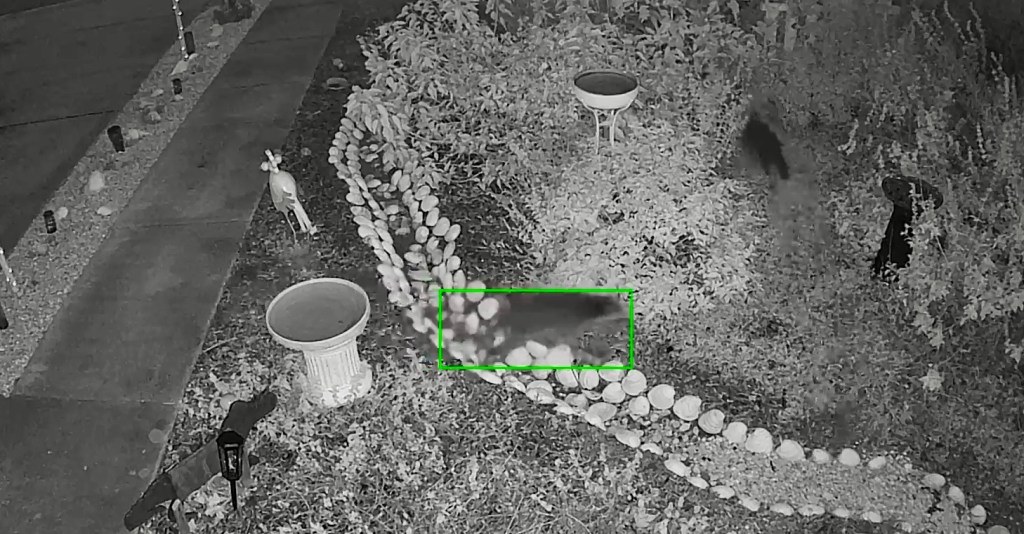
I was greeted by this damage yesterday morning. Naturally, I wondered who the culprit was. So, I checked my handy motion-activated camera and found this incriminating evidence:

It’s worth noting that I have 4 water dishes of various sizes and heights for differing species. The tallest one, the one my bandit broke, was intended for the bees. This little stinker clearly knows where all the dishes are, as it even checked the last one before loping off into the night.

I especially love how the raccoon washed its hands after the accident! 🦝

Adventuring Home

I decided to do a bit more exploring before leaving the Panhandle last weekend. I was lured to Ochlockonee River State Park by the possibility of sighting an endangered Red-cockaded Woodpecker, or their piebald squirrels, or even river otters.

No luck with any of those but I still had a great time in this section of the Apalachicola National Forest. The park’s main waterway (and namesake) is a unique blackwater river, the water isn’t murky but it is a dark, burnt orange from all the tannins. No surprise that Ochlockonee in native Hitchiti means yellow river.

The park protects a small remnant of a Longleaf Pine (Pinus palustris) forest. Pre-European settlement there was an estimated 90,000,000 acres of these trees in the South. Longleaf Pines were prized by early settlers not only for their wood but for their resin. Collected by hatching the bark, resin was processed into turpentine used to waterproof boats, an important part of the naval stores industry.

Much of the state park land was purchased from the Phillips Turpentine Company in the early 1930s, as demand for turpentine waned. Sadly, because of deforestation and overharvesting only about 3% of the original Longleaf Pine forest remains in the US.

A short drive later I entered St. Marks National Wildlife Refuge. For me, the main draw of the refuge’s 83,000 acres was the St. Marks Lighthouse, the second-oldest one in the state. First lit in 1831, the tower weathered many hurricanes and even withstood a Confederate attack in 1865 before finally being deactivated in 2016.

The refuge is best accessed from the water but I enjoyed wandering the few trails, pleasantly surprised by the Spring flowers I encountered. All the leg-stretching came in handy on my long drive home that evening.

It was a quick visit but I’m glad I made the trip up to the Panhandle, it’s been on my list of places to see for a few years now. There’s always so much to see and discover!

Gruntin Good Time

As I mentioned previously, I was enticed up to the Panhandle this weekend by an intriguing event. The Sopchoppy Worm Gruntin Festival is so unusual, I’m pretty certain it’s the only one in the world.

What exactly is worm gruntin? Well, it’s a technique used to harvest worms. Grunters pound a wooden stake “stob” into the ground, then rub a metal bar “iron” across the top. This motion produces a vibration that worms mistake for the tunneling action of moles. In order to escape these voracious predators, the worms head for the surface where they are gathered by the grunters to be sold as bait. So, sadly for the worms, they end up getting eaten anyway.

I’ve heard they grunt for worms in other nearby states but the little town of Sopchoppy has elevated it into an annual extravaganza. The morning starts with a worm wriggle fun run, followed by a gruntin demo by local grunt masters, a kids’ gruntin contest, and even a worm eating contest (gummy ones, thankfully). There’s live music all day with arts and crafts vendors scattered up and down the streets. The night ends with a Worm Ball (sadly, I missed that part).

Gruntin Masters
Young Grunter

I captured a few gruntin snippets for your viewing pleasure. If you’d like more information I found this news story that is worth a watch. If you’re ever in the Panhandle during the second weekend of April, swing by Sopchoppy for an unforgettable small town experience.

North is South

People say, that in Florida, the further north you go, the more Southern it is. Based on today, I concur with that sentiment.

I was enticed up to Florida’s Forgotten Coast by a unique event (more about that soon) but decided to come a day early so I could explore this section of the Panhandle.

I broke up my 5 hour drive this morning, by stretching my legs alongside the Suwannee River. Did you know Stephen Foster’s “Old Folks at Home” (aka Swannee River) is Florida’s state song?

During the next two hours I passed boiled peanut and Tupelo Honey stands before being greeted by a Piggly Wiggly market. Definitely signs of Southern culture.

After spending a warm but breezy afternoon wandering the beach on St. George Island I headed over to Apalachicola. The town was once famous for its oysters, though the harvest has been closed for the past five years.

According to locals they have survived mainly by shrimping, fishing, and farm raising oysters (a labor intensive process). It will be interesting to see how the town rebounds after the oyster harvest reopens next year.

I backtracked to Carrabelle to end my day. Snapped a quick photo of the World’s Smallest Police Station before catching sunset on the Carrabelle River. Not a bad way to end a day of exploring!