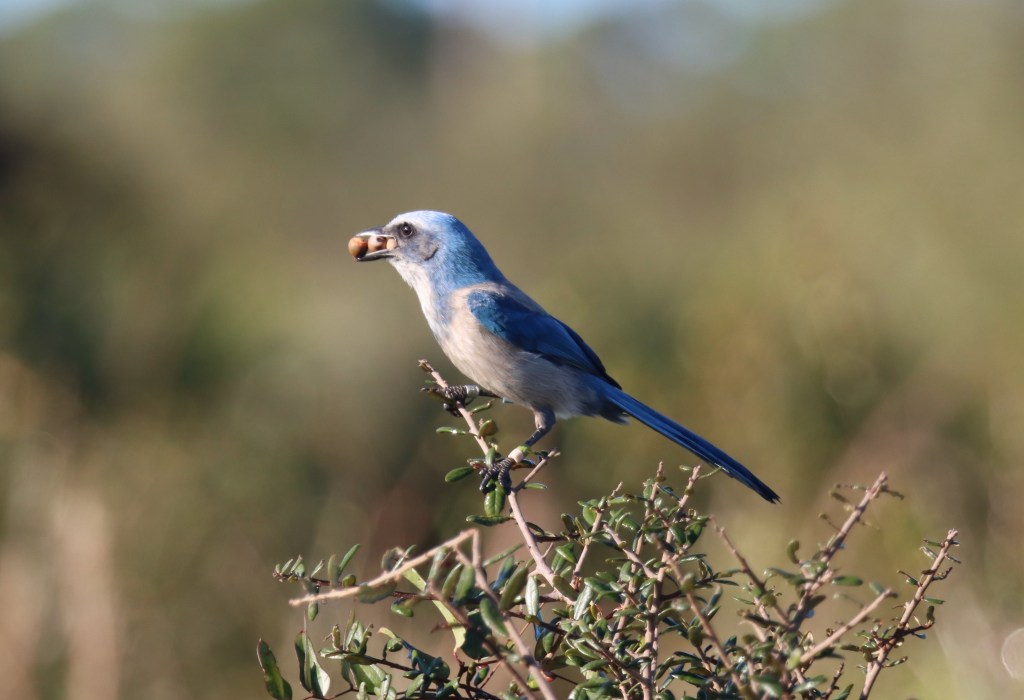
 Mouthful
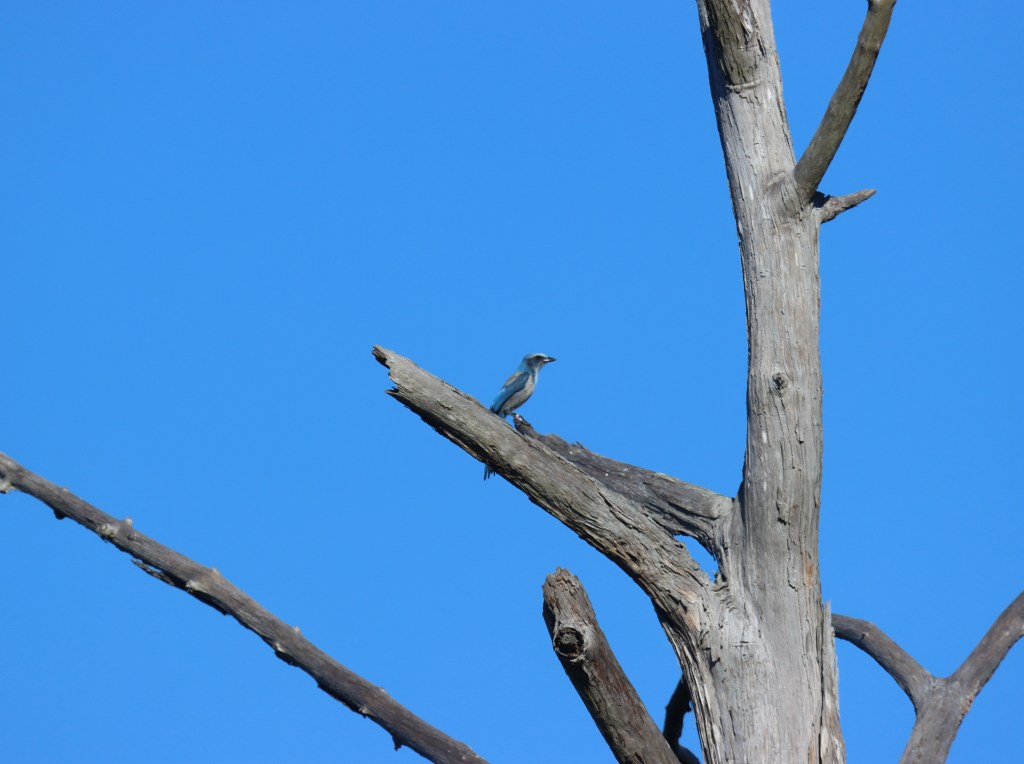 Sentinel


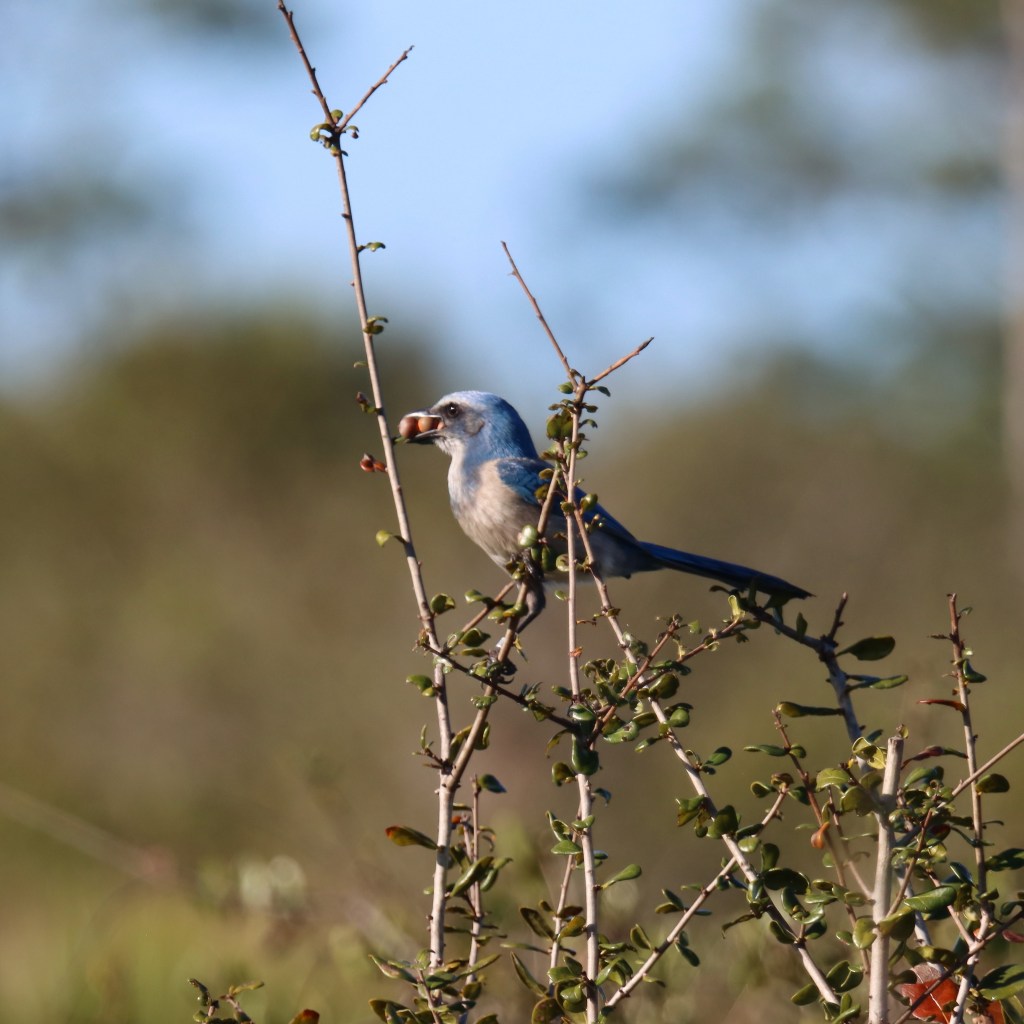
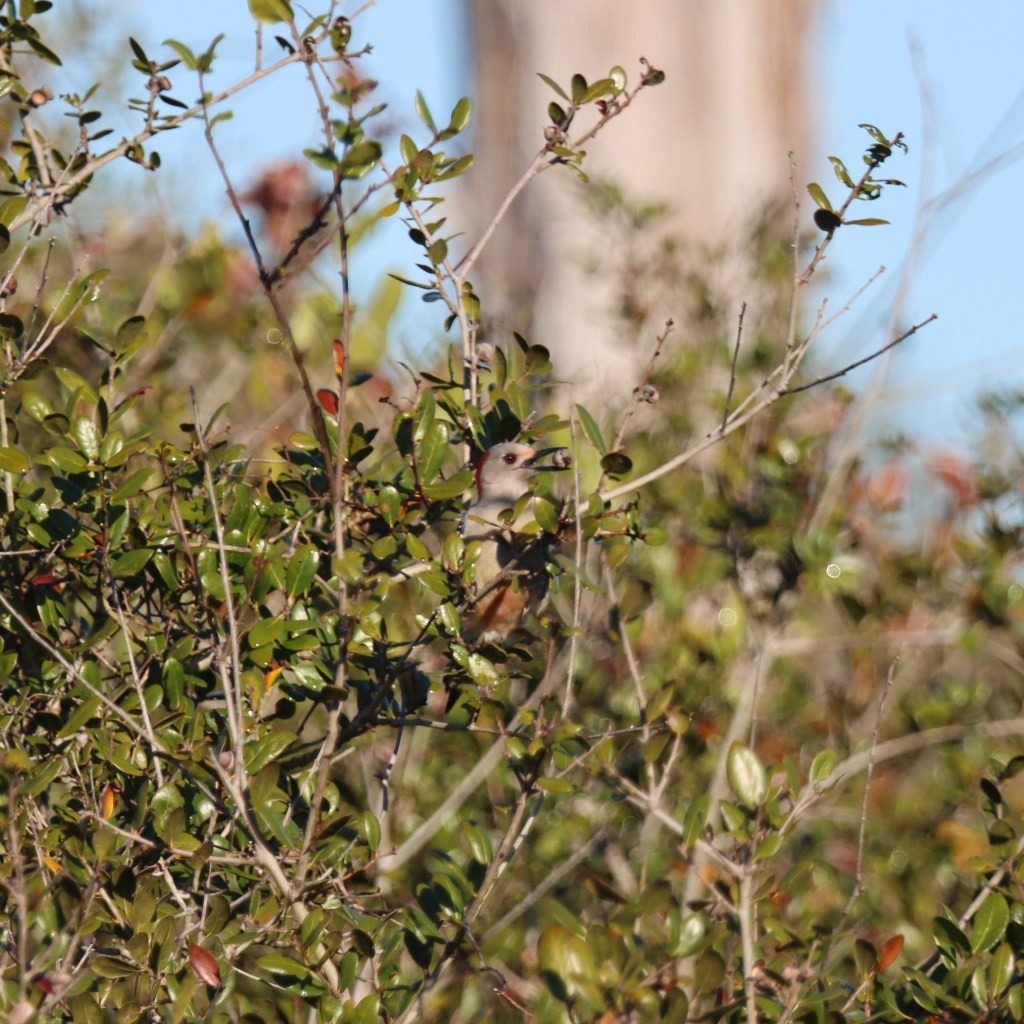 Red-bellied Woodpecker
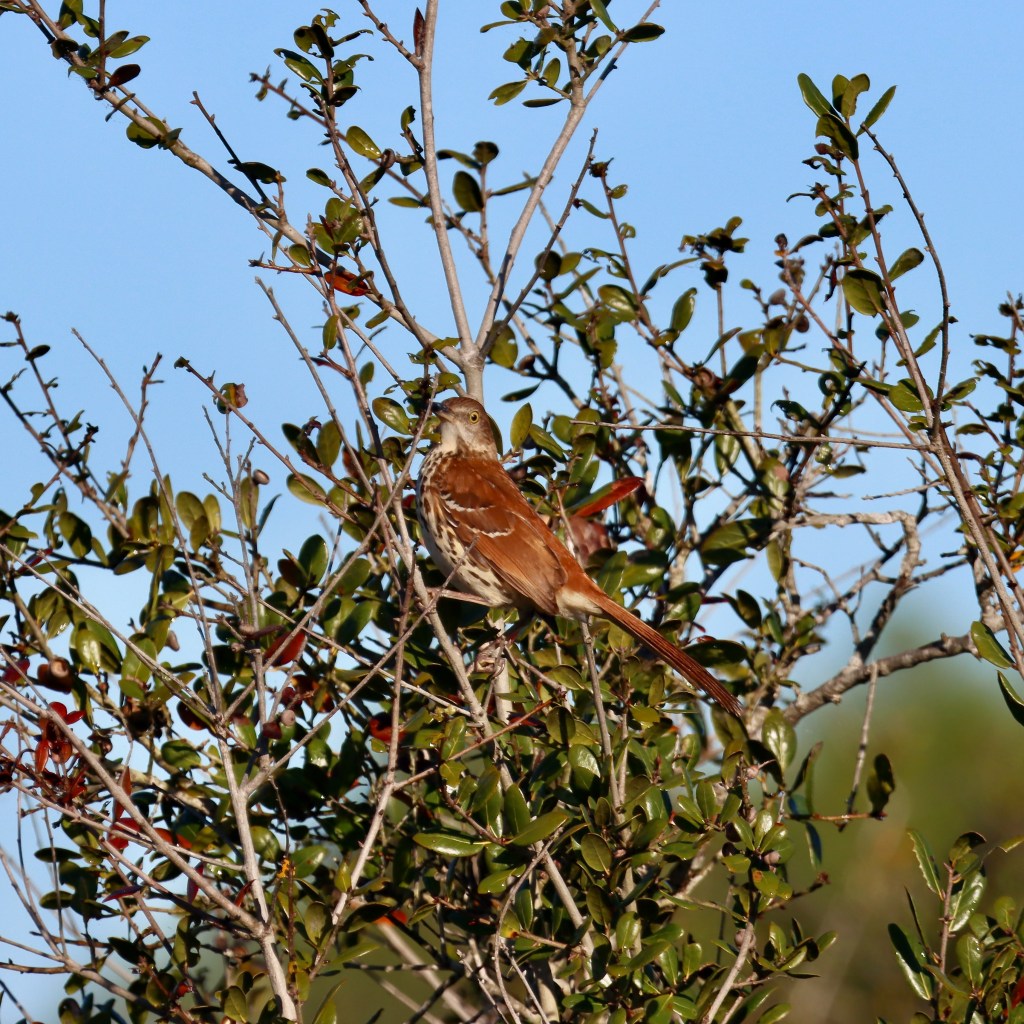 Brown Thrasher
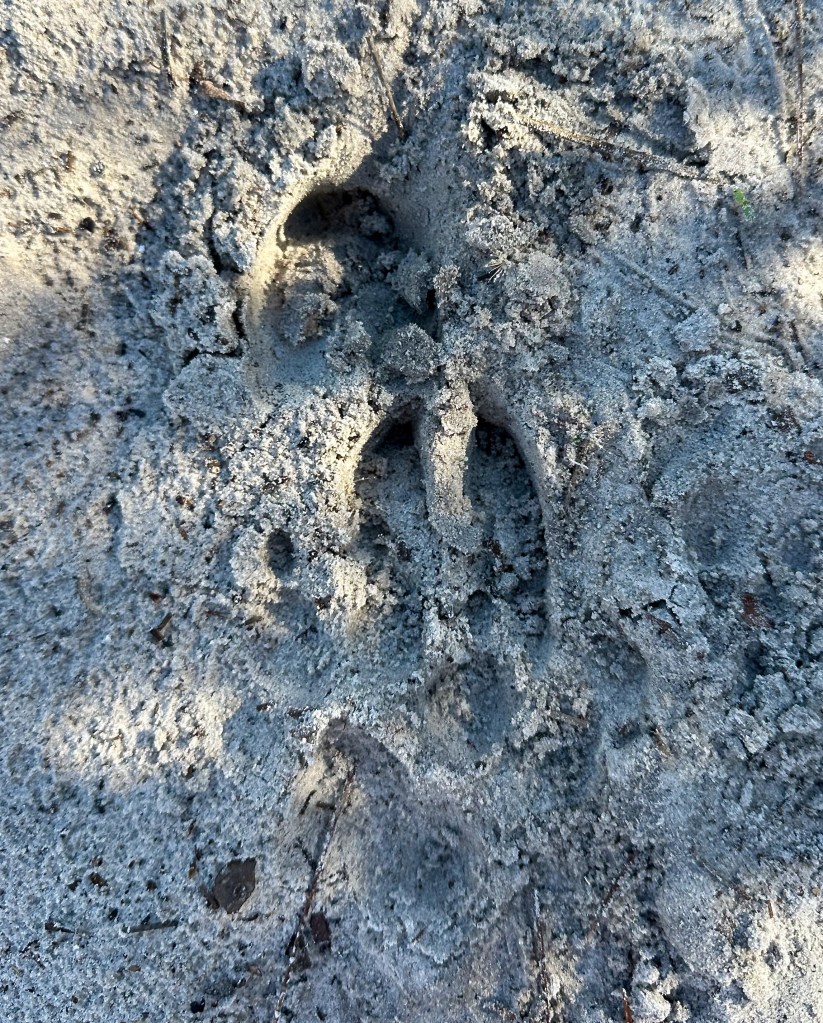 Deer Prints
 Tasty Treat
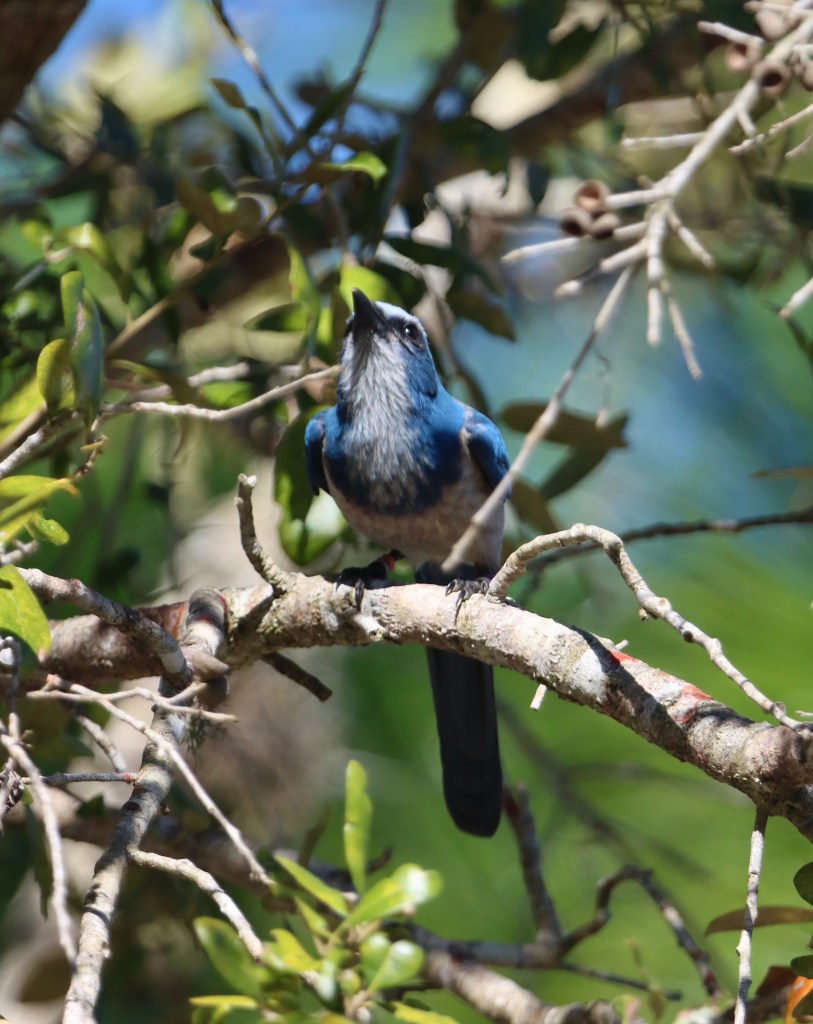
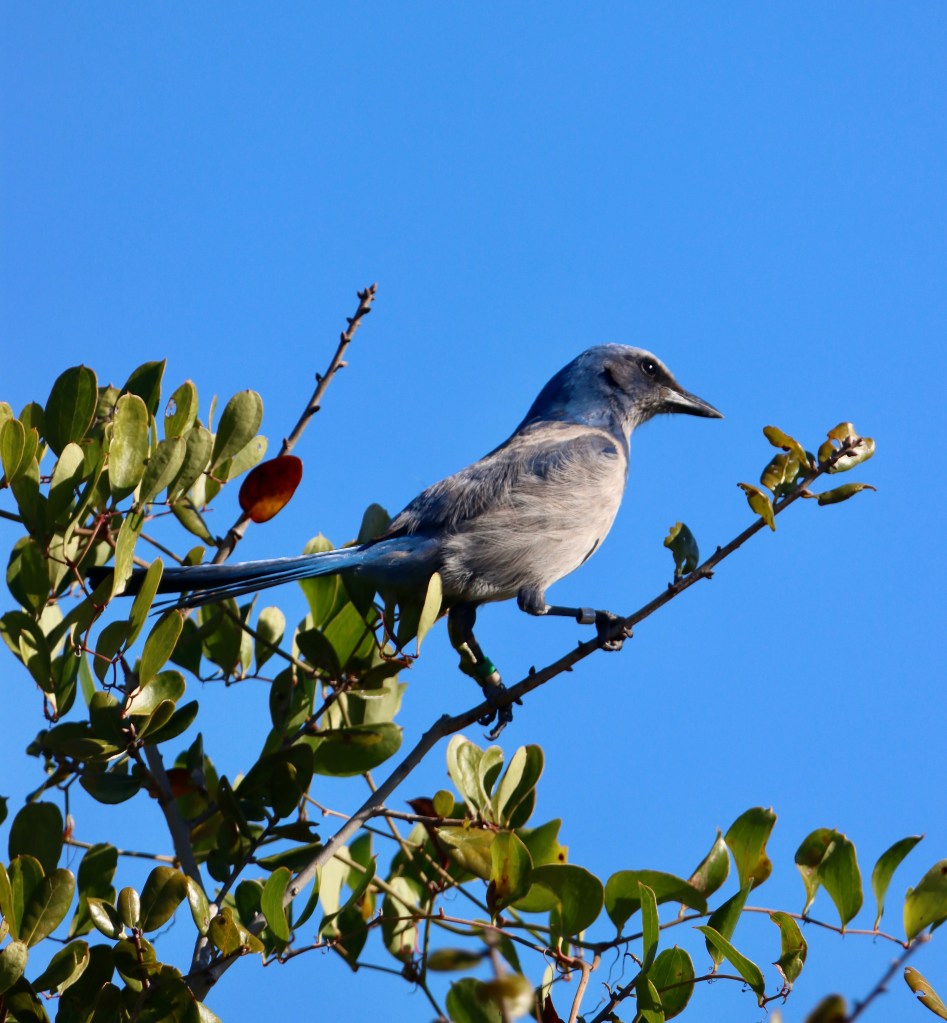 Note the Leg Bands
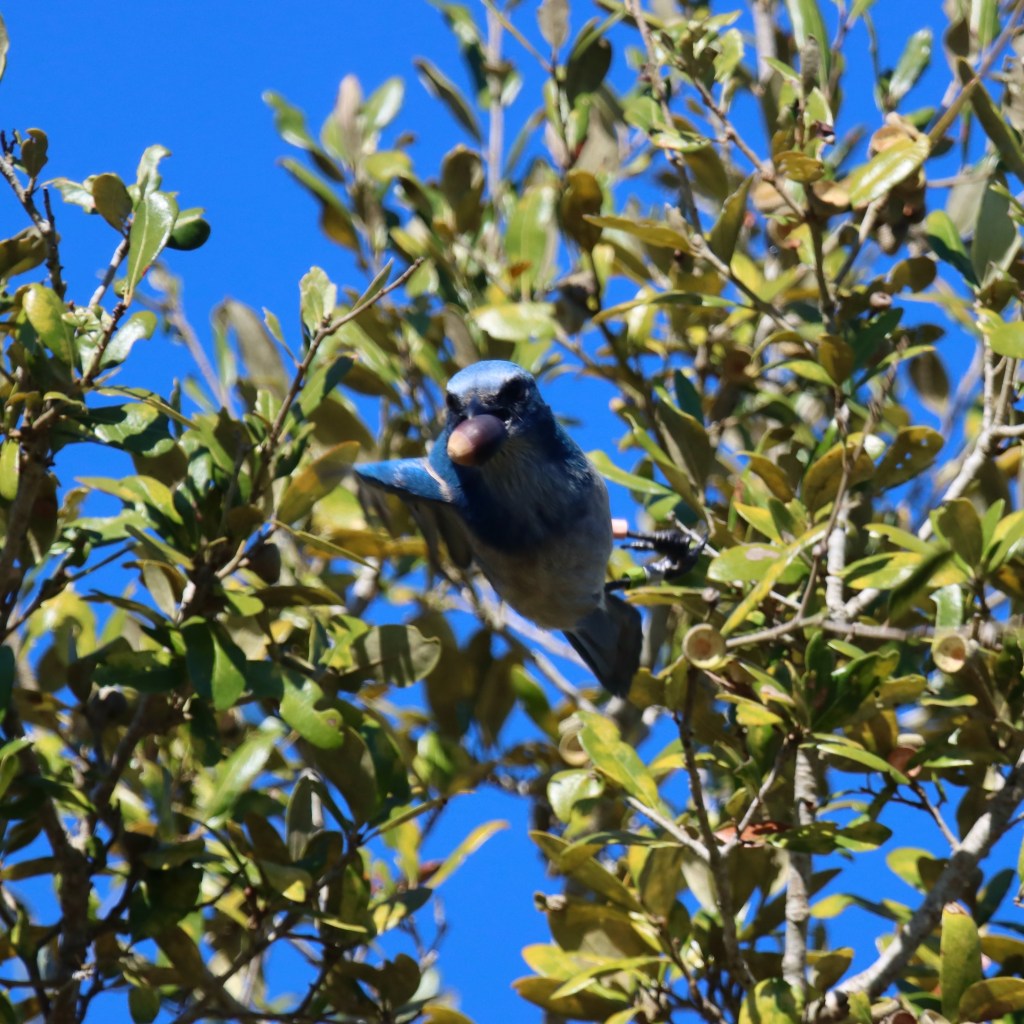 Away to the Cache
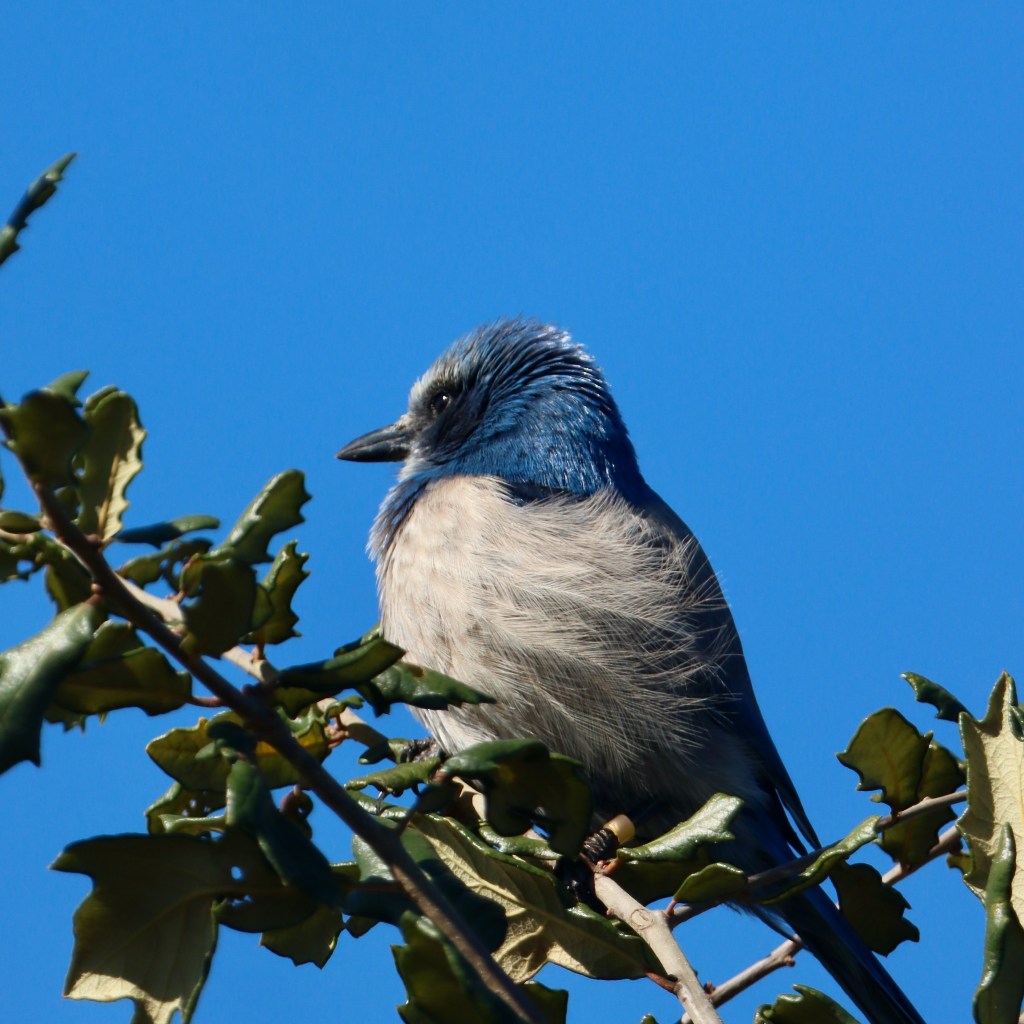
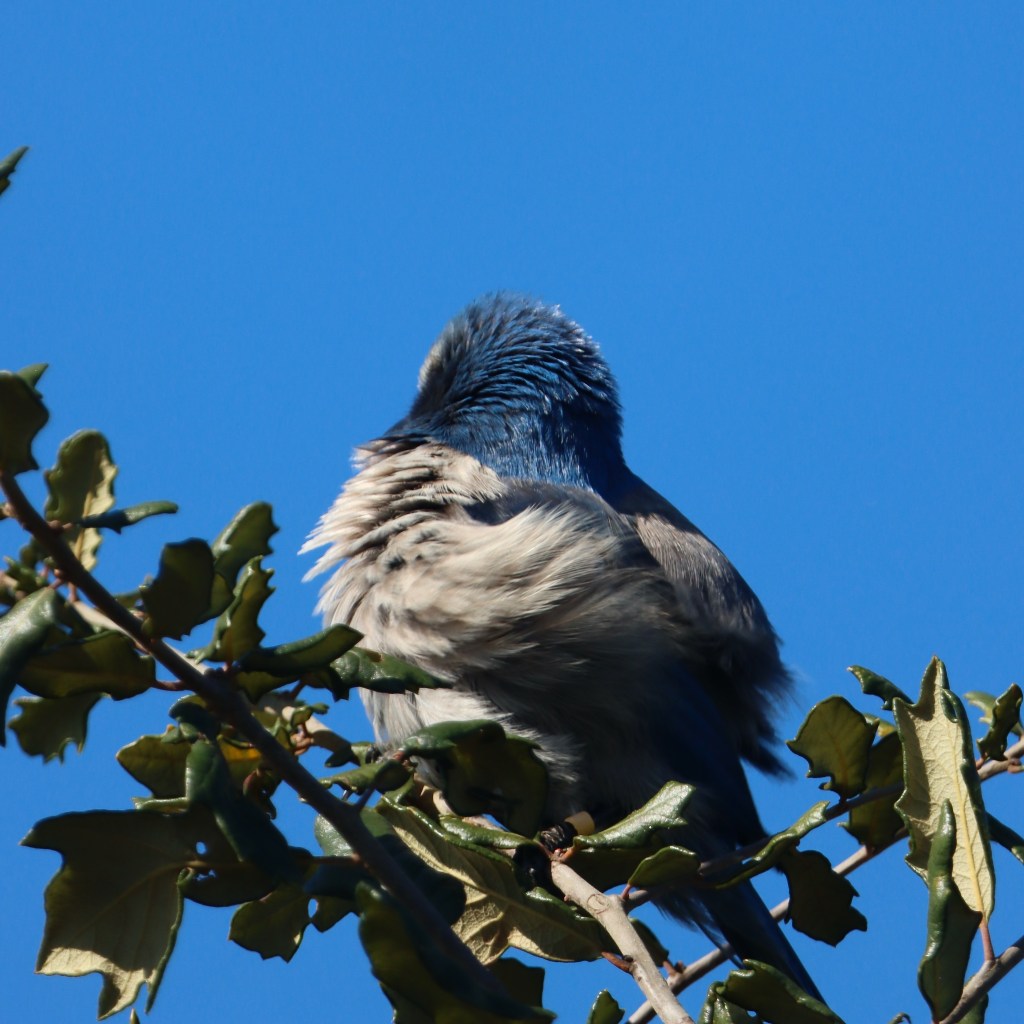 Fluffy
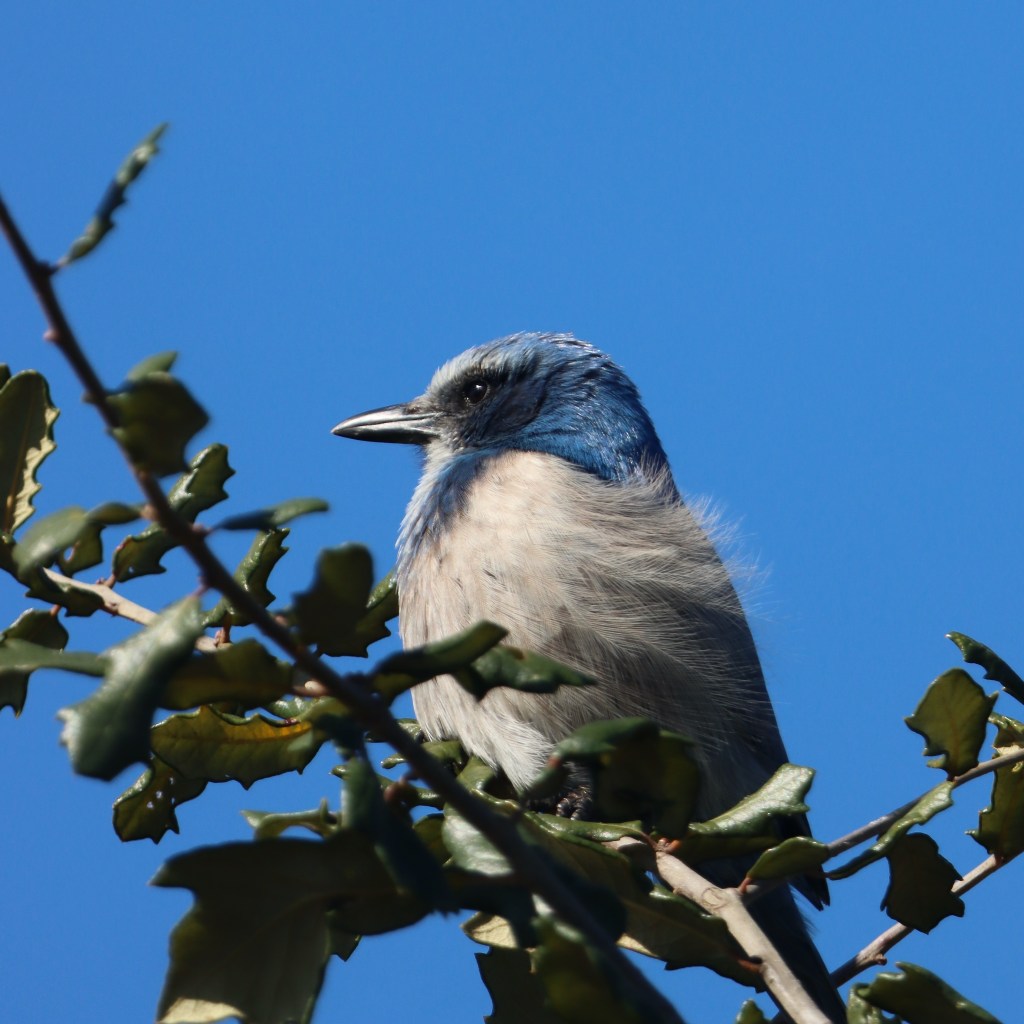 So Handsome!
After a previous failed attempt to meet the Florida Scrub Jay (Aphelocoma coerulescens), the state’s only endemic bird species, I finally got lucky this past weekend. Within 15 minutes of hitting the trail at Oscar Scherer State Park, I came across a family group of jays in a thicket of scrub oaks. While not as vividly blue or strikingly marked as other jay species, these birds are still quite handsome.
As I watched the busy birds, more birders arrived. Thankfully, our presence didn’t bother the jays, they were focused on harvesting acorns. It was fascinating to watch them scramble around in the branches, looking for just the right one. I don’t know what makes an acorn appealing but these birds definitely had requirements.
After carefully selecting an acorn (or three), the jays would fly a few yards away and then drop down to the ground out of sight, presumably to stash their booty. I read that each jay can collect over 6,000 acorns in a season. Considering that these jays hang out in family groups of 5-7 birds that’s over 30,000 acorns! As with squirrels, not all the nuts are later recovered by the jays. The forgotten ones often propagate, thereby ensuring future oak trees.
Meanwhile, high in a dead snag overlooking this frenzied nuttery, there perched a lone, sentinel jay. After a sharp cry from the lookout above all the jays below flew off to safety. I waited about 10 minutes for their return to no avail, so I continued along the trail.
I was definitely pleased with that sighting but an even better experience waited just around the bend. There was another family group of jays in some oak trees, even closer to the trail. You may be wondering how I knew it was a different group of jays. I didn’t at first but when looking through my photos afterward I could see the various colored leg bands sported by many of them. They were distinct sets, with no overlap, which tracks since I’d read that they are very territorial.
The jays weren’t the only species flocking to those oak trees, there was a pair of Red-bellied Woodpeckers, some Brown Thrashers, Mourning Doves, and even a couple Catbirds (though I have to presume they were after insects and not nuts). The prints in the sand beneath the trees led me to believe these acorns were also favored by deer.
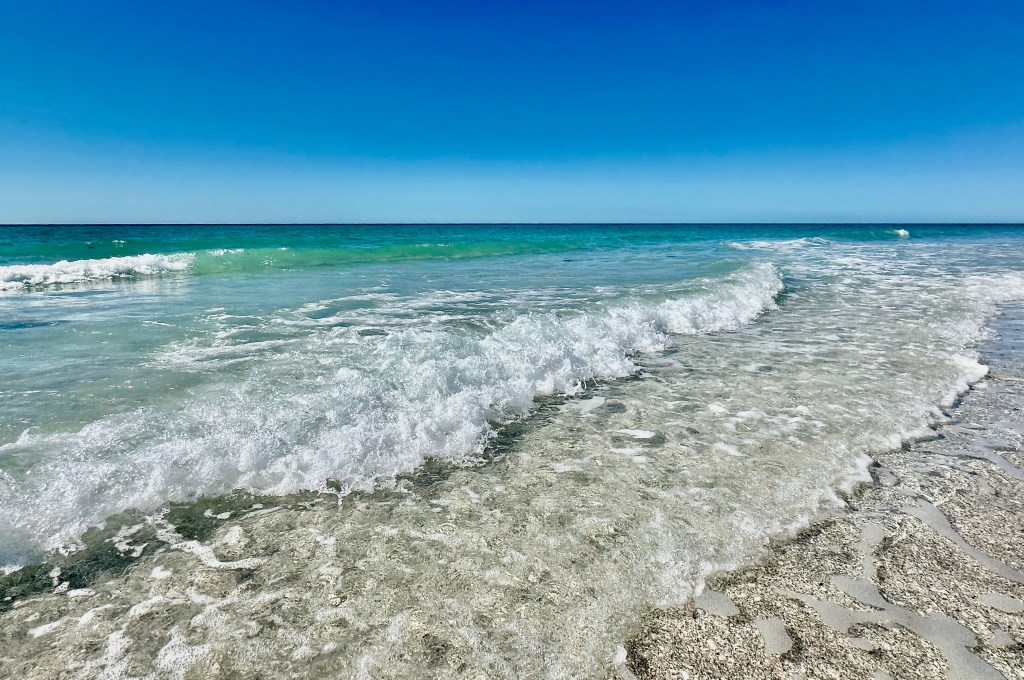
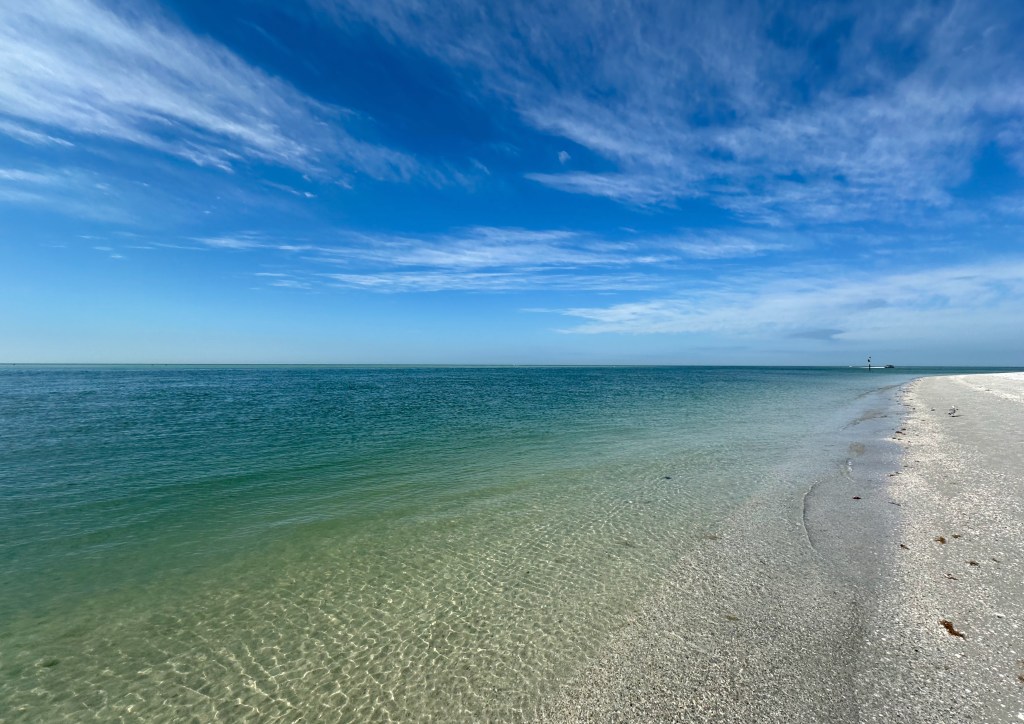
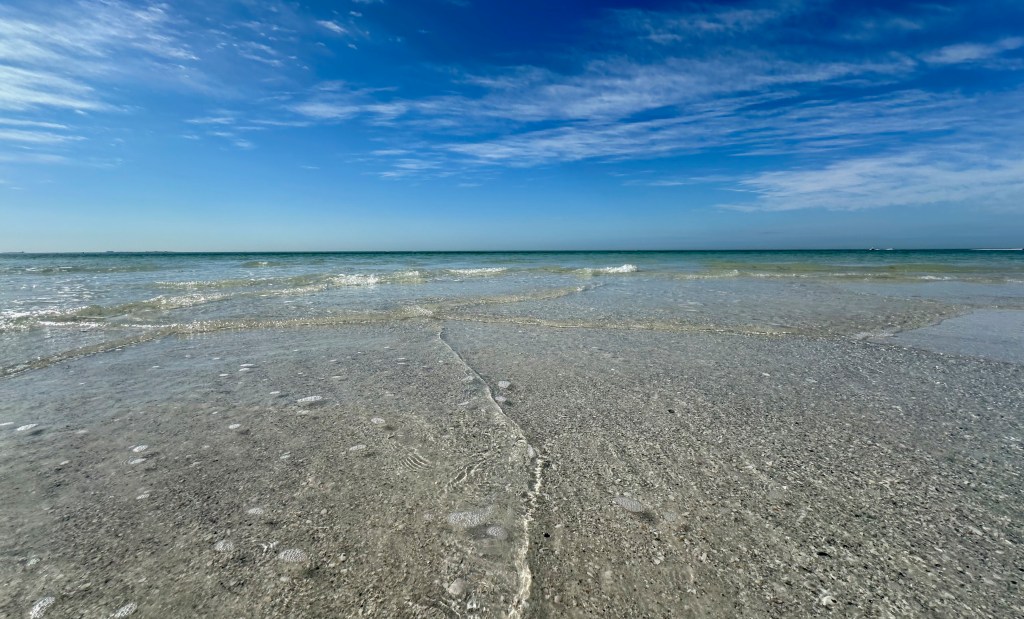
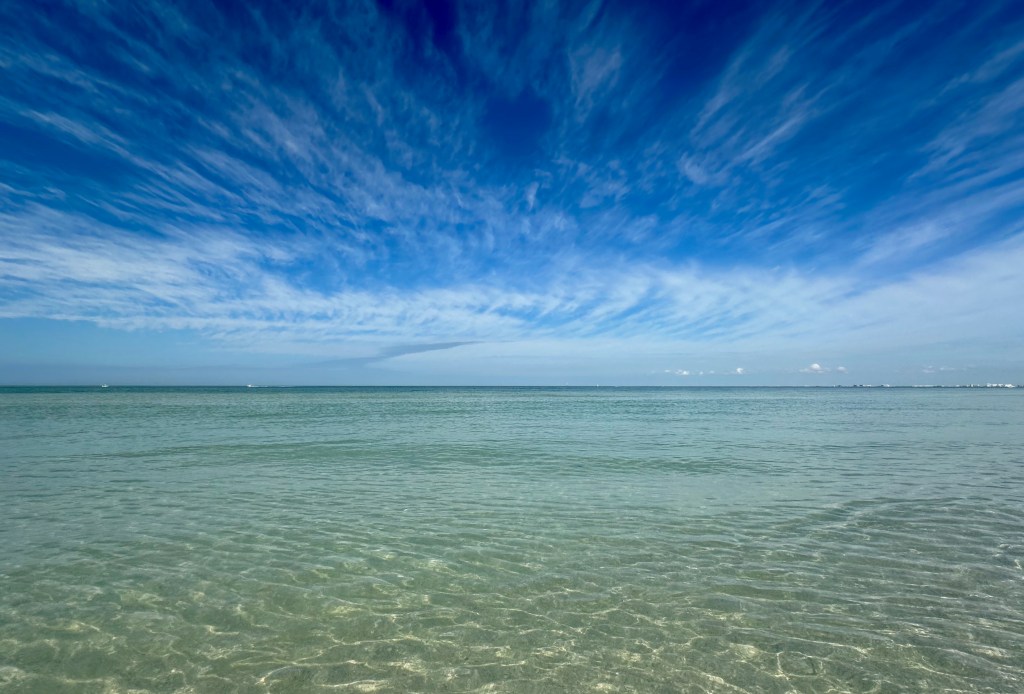
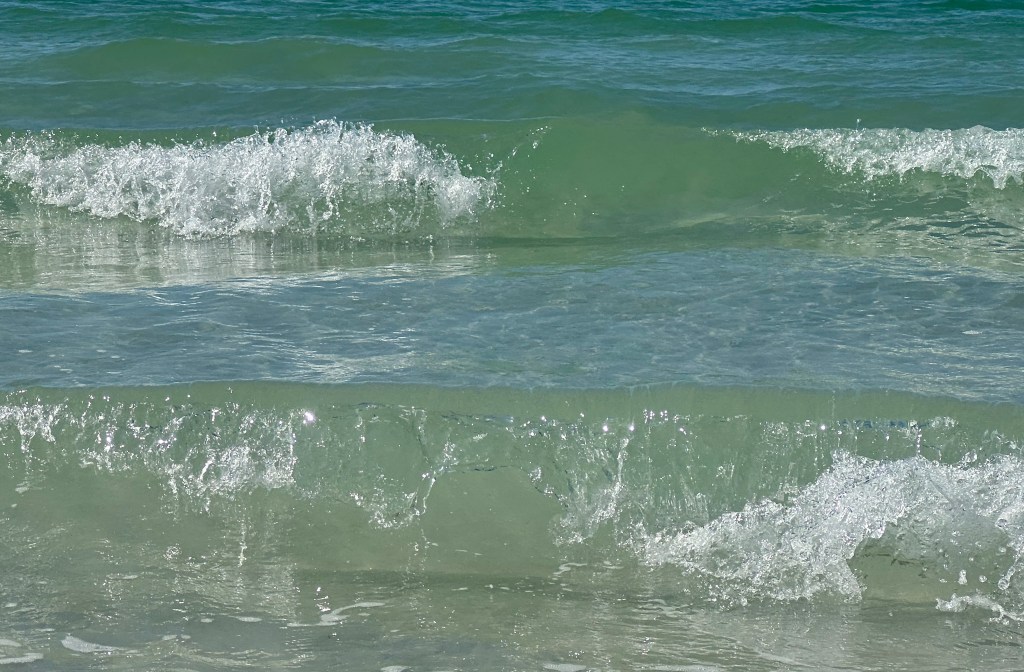
Eventually (and quite reluctantly), I tore myself away from the birds. Since it was such a lovely, warm and sunny day I headed over to the beach south of nearby Venice. The color of the Gulf down there always amazes me, just look at that turquoise blue water! It was a fantastic day, well worth the early morning drive!
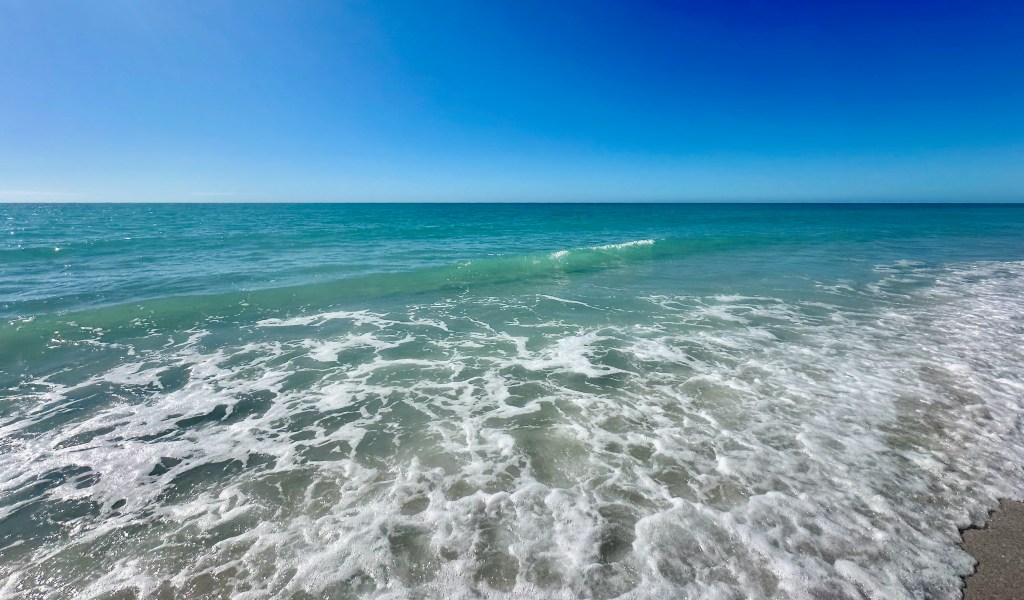 Manasota Blues
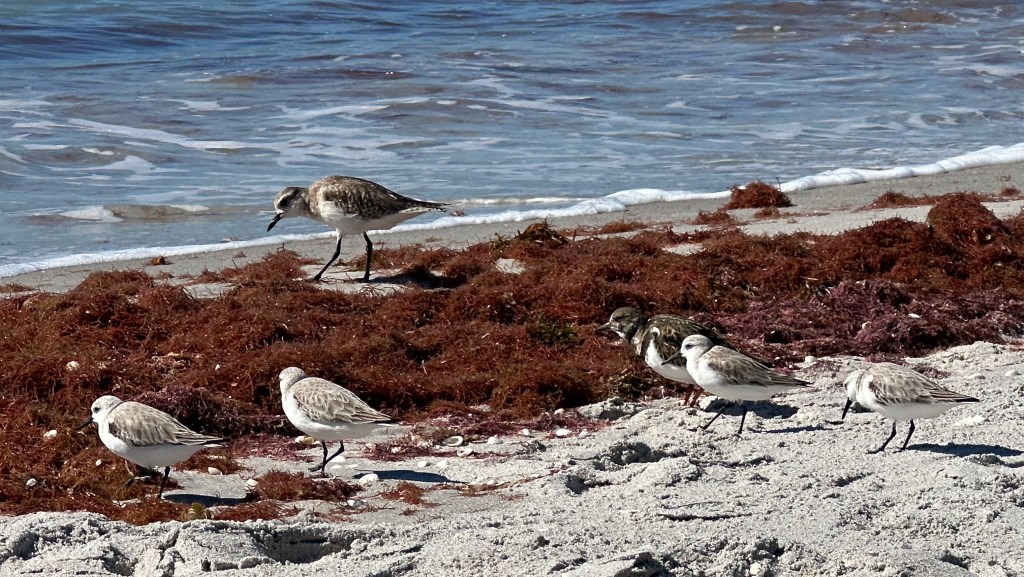 Sanderlings, Black-bellied Plover, Ruddy Turnstone



 3rin's View...