Flying Into the Weekend


While I was down south a few weeks ago I spent an edifying morning touring the historic Edison and Ford Winter Estates in Fort Myers. Intent on beating the heat (and the crowds), I visited on a weekday and arrived just before it opened. Other than staff dusting furniture and tending gardens, I was the only person on the grounds for the first hour.
It was so peaceful that it was easy to understand how the spot quickly captivated Edison. In March of 1885, when Thomas Alva Edison was 38 years old, he visited tiny Fort Myers. A quick thinking man, within 24 hours he had purchased thirteen acres of waterfront along the Caloosahatchee River with the intent of building a home as a respite from the frigid New Jersey winters.
As the railway had not yet reached Fort Myers, all the materials for the three main buildings (Edison’s house, one for his friend and business partner Ezra T. Gilliland, and Edison’s laboratory) had to be brought in by boat. Unlike many of his peers with their ostentatious, massive winter “cottages”, Edison’s plans were modest enough that construction was completed the following year.
1886 was quite a year for Edison as he also married his second wife, 20 year old Mina (his first wife had passed in 1884). Though she was young, Mina could hold her own with him (Mina’s father was a fellow inventor who also founded the Chautauqua Association). Choosing the term “home executive” instead of housewife to describe her role, Mina handily managed both households (New Jersey and Florida) and led several charities while raising Edison’s three children from his prior marriage as well as bearing three of her own.
While the Edisons took full advantage of their time in Florida, fishing in the Gulf and admiring the local wildlife (even amassing quite a menagerie on the grounds, including an alligator), these were not vacations as Edison worked constantly. Apparently, he often worked through the night – during the day he was known to stop and take a catnap wherever he was, sometimes even just sleeping on the ground.
Edison was endlessly curious. To that end, he was a voracious reader that surrounded himself with fellow innovators. When Gilliland decided to sell his portion of the property after the two men had a business dispute, Edison was pleased that Henry Ford eventually bought the house. Even though Ford was almost 40 years his junior, the men were acquainted since Ford had worked at the Edison Illuminating Company as a young man.
One winter, the men decided to explore the Everglades so they invited naturalist John Burroughs to join them on a camping trip. Though the terrain was rough and the swamps were buggy, the men enjoyed their strenuous adventure. They continued their “roughing it” trips for over a decade, in differing locations with a slew of guests over the years (including notables such as Harvey Firestone, Luther Burbank as well as Presidents Warren G. Harding and Calvin Coolidge).
I knew of Edison as a prolific inventor (with 1,093 patents) but I was pleasantly surprised to learn of his reverence for nature. In 1930, about a year before his death, Edison wrote, “Florida is about as near to Heaven as any man can get.” I’m not going to argue with that! Fort Myers is quite fortunate that Mina had the foresight to deed the property to the city in 1947.

I woke up early Saturday morning so I headed downtown to catch the sunrise. My walk along the water was cut short by the incoming storm, I made it back to my car right before it started pouring down. The rains continued off and on over the weekend and through this morning. I’m not complaining, we definitely needed the moisture!


I had 30 minutes to spare before a meeting yesterday morning, so I popped over to Coffee Pot Bayou. Located just north of downtown there’s a small namesake park with a playground but the main draw for me is the walkway along the sea wall.
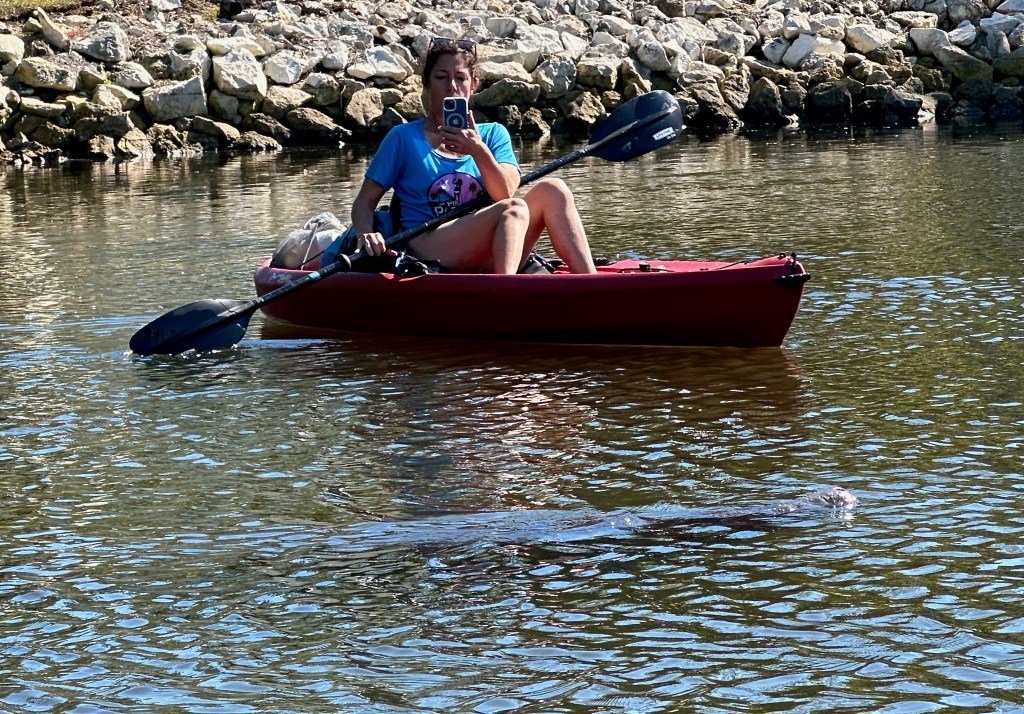
I was hoping to spot some manatees as that area is a favorite hangout of theirs. While I didn’t see any, I wasn’t disappointed as there was plenty of other wildlife.
Just as I arrived a fisherman emptied some Pilchards from his bait bucket near the dock. It afforded me a good luck at them, such pretty little fish!
They didn’t go to waste, as they quickly became a meal for a Common Gallinule. I was distracted from the feast by the “wingtips” (top of a ray’s dorsal fins) of a Cownose Ray. I just love their adorable little faces!
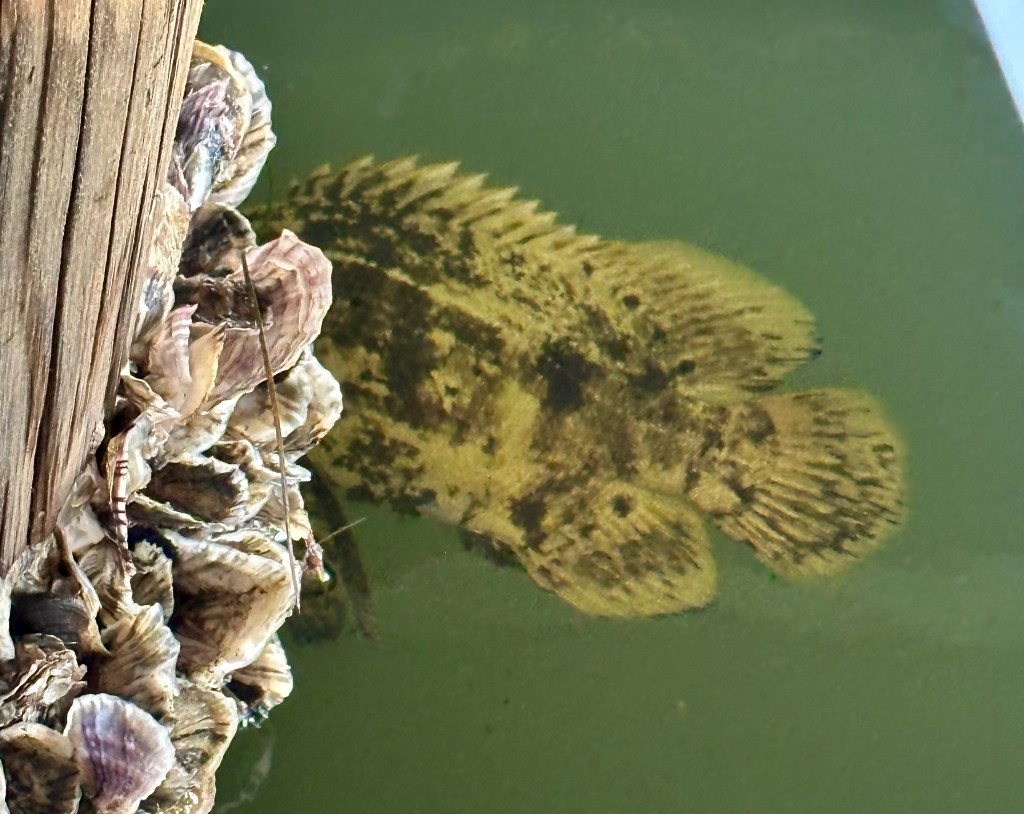
The ray led me toward a 3.5’ long Snook which was half-heartedly following a school of mullet. Next I noticed an Atlantic Needlefish (Strongylura marina) swimming at the top of the water which, sadly, did not pose for a photo.
Right at the base of the sea wall below me a crab was stuffing its face, I couldn’t tell what it was eating but it must’ve been tasty.
Heading back to my car, I followed the little creek where a few turtles were enjoying the sunshine. Behind them, a handsome Black-crowned Night heron was tucked away in the mangroves.
So much wildlife to watch, I’m fortunate to live here!


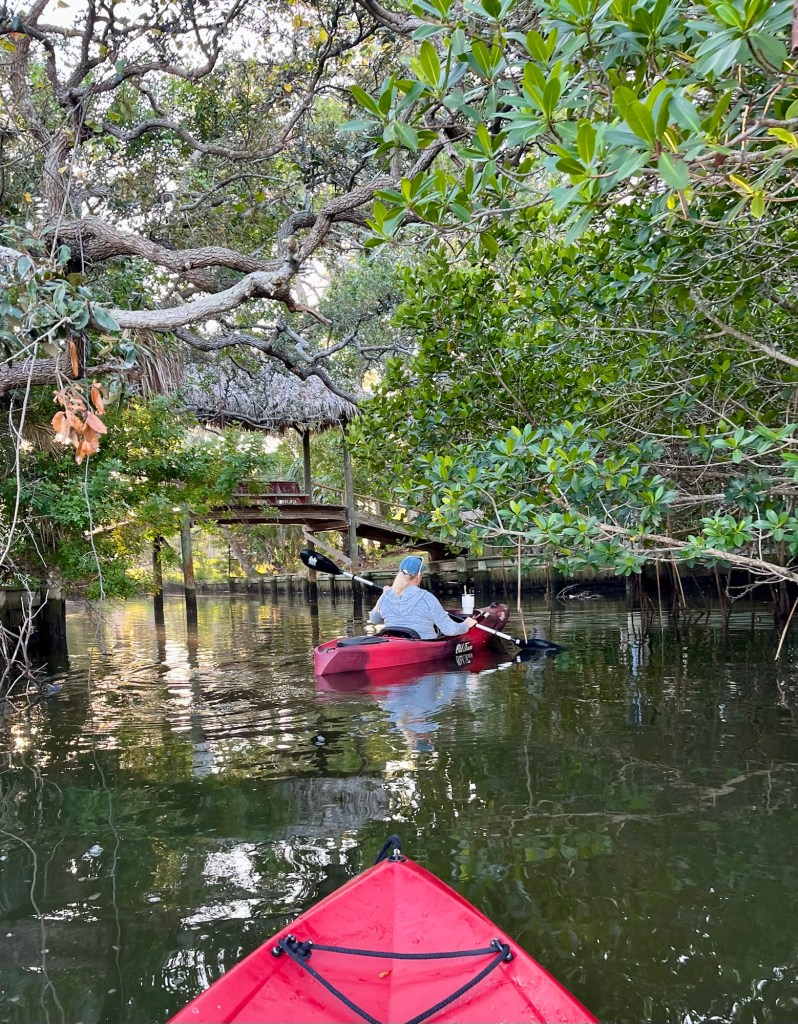
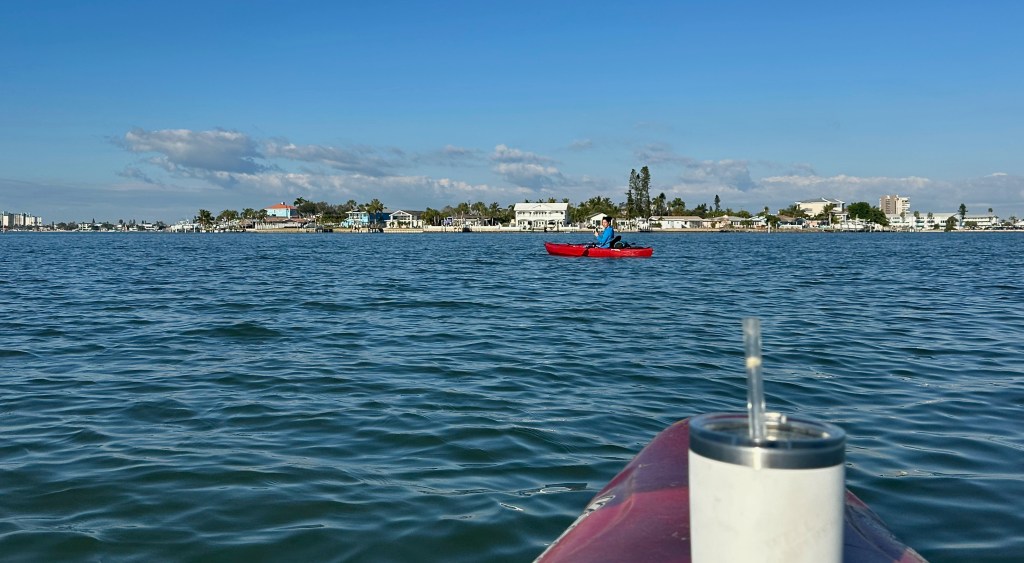
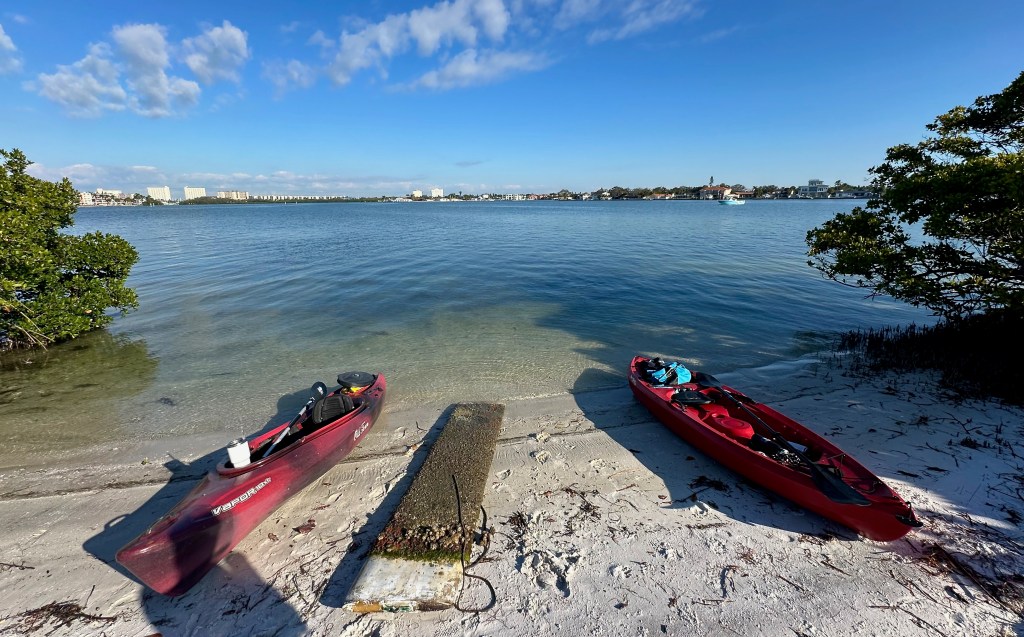
Sadly, an unseasonal storm ruined my kayaking plans yesterday morning. I was disappointed but I know my plants were thrilled with the rain.
After the storm blew over it left behind an ideal May day with a mild temperature, surprisingly low humidity, and a good breeze.
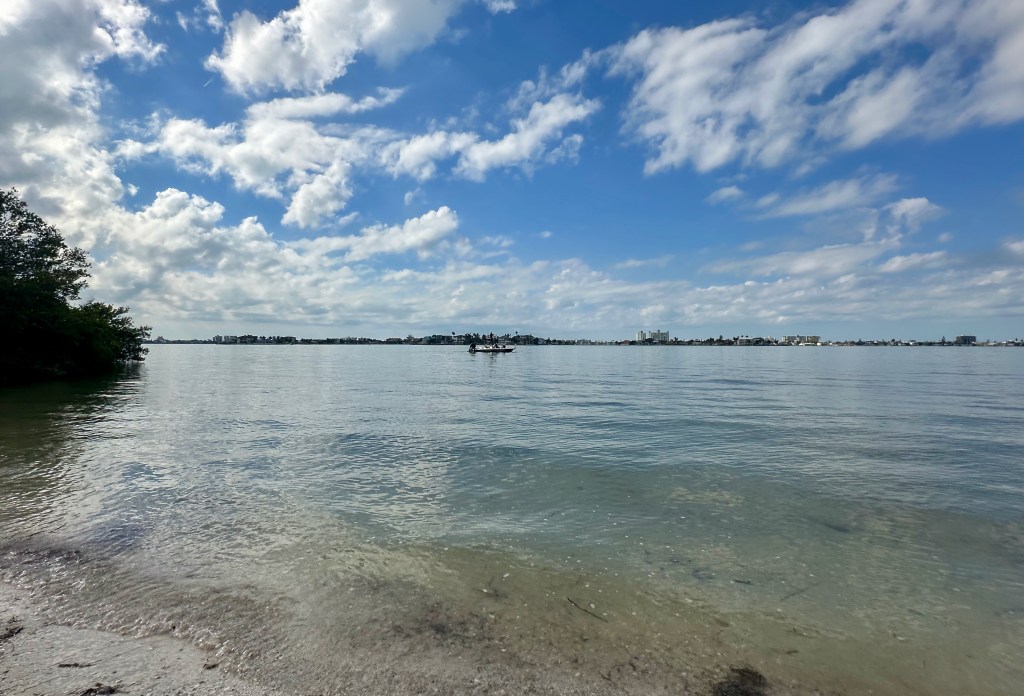
Perfect for a long beach walk. Added bonus, the water was absolutely gorgeous!


During the dry season here in Florida, wildlife concentrates around any remaining pockets of fresh water. Alligators, especially, flock to these wet areas. Interestingly, they are strong diggers and they actually create many of these deeper pools.
I counted 31 gators in one hole with an additional 11 in the channel on the other side the trail. Keep in mind, these are just the ones that I could see. Did you know gators can stay submerged for hours? Larger adults can stay under for up to six hours or longer.
As they say down here, always assume there is an alligator in any body of water larger than a rain puddle (including swimming pools and even saltwater). As of the last gator census in 2023, Florida Fish and Wildlife Conservation Commission estimates there are roughly 1.3 million of them in the state.


I wanted to take advantage of the last of our Spring weather (before it really heats up down here in Florida) so I headed over to explore Audubon’s Corkscrew Swamp Sanctuary. The refuge’s name came from an early epithet for a nearby winding waterway, now known as the Imperial River.
The wetland sanctuary at the western edge of the Everglades, spans over 13,000 acres. Much of it first set aside in 1954, though protections for the heart of the property began much earlier. In a way, we can thank the fashion industry for that.
Ladies’ hats in the late 1800s were elaborate displays, featuring fancy feathers and floral elements. The feathers were sourced from wild birds, usually during breeding and nesting season when they were at their showiest.
Milliners were paying $32 an ounce for the feathers, which was more than the price of gold at the time. As a result, plume hunters around the world were killing over 5 million birds a year. By 1900, they had wiped out an estimated 95% of Florida’s shorebirds (primarily herons, egrets, Roseate Spoonbills, and Flamingoes).
Near the center of what is now the sanctuary was a massive rookery, which locals took upon themselves to hire protection for in 1900. Some fifty years later, the area again needed protection, this time from logging. Again, local residents fought to save the area. In 1954 the first section of land was set aside to protect a stand of ancient bald cypress trees.
During my stroll along the two mile boardwalk, I found the area to be absolutely teeming with wildlife. Sanctuary indeed!


This past Saturday afternoon, I was drawn to Creek Fest, an afternoon of live music in the Roser Park neighborhood. Since I arrived early, I went for a stroll along the narrow, shady streets of the historic district.
This area south of downtown was transformed by Charles M. Roser, who fell in love with the jungle-like gully of Booker Creek shortly after moving to St Pete in 1911. The vision for his development was quite impressive; each house was required to be unique and of high quality, lush tropical foliage was enhanced by planned plantings with a focus on colorful blooms, brick paved streets followed the natural, winding path of Booker Creek, and finally, for the good of the community, he set aside land for a park, a school, and a hospital (all of which still exist in some form).
Mr. Roser was not alone in his appreciation of the location, the Tocobago people had lived along the fertile banks of Booker Creek for hundreds of years, as evidenced by the artifacts and large shell mounds they left behind.
My favorite stop of my informal tour was the Bradshaw House, a large classic, colonial revival home named for one of St. Pete’s early mayors. Not only has it been lovingly restored but it has a fun history. It was once known as the Zilch House. The name bestowed by a group of bachelors who rented the house starting in 1925. They creatively called it that, so they could say they were the last listing in the phone book (remember those huge tomes?).
While the area’s history and lush foliage were charming, I most enjoyed watching the trickling of the creek. I was not alone in my appreciation of the water, I noticed several turtles, ducks, and even a young alligator. The rest of my afternoon I spent relaxing on the lawn, listening to live music while the delicate, tropical scent of plumeria wafted in the air. Over a century later, I think Mr. Roser would be pleased with how things turned out.


I met my friends, Mike and Becky, at Anada Farm yesterday afternoon. It’s a relatively new venture down in Terra Ceia and I was excited to explore the property.
I really didn’t know what to expect, so I was pleasantly surprised by the expansive setup. There’s a vegetable garden, u-pick flower field, sunflower patch, an area for a corn maze, fruit trees, a pond, a water sluice for panning for treasures, a treehouse that spans massive oak trees, lots of different slides, a little kid playground, huge bounce pillows (with no age limit, which Becky and I took full advantage of, see video below), a pedal-powered cart track, stage for live music, a covered play area with a massive corn bin, lots of artsy photo ops, a snack bar, a pizza barn, and 2 bars.
That’s just the stuff I remember, I’m sure I forgetting some things. I could also see that there were other sections in the works. Whoever is behind this project has done a great job of turning formerly fallow agricultural land into a large, outdoor family attraction.
As you can tell, we had a good time. There’s no such thing as too much fun!

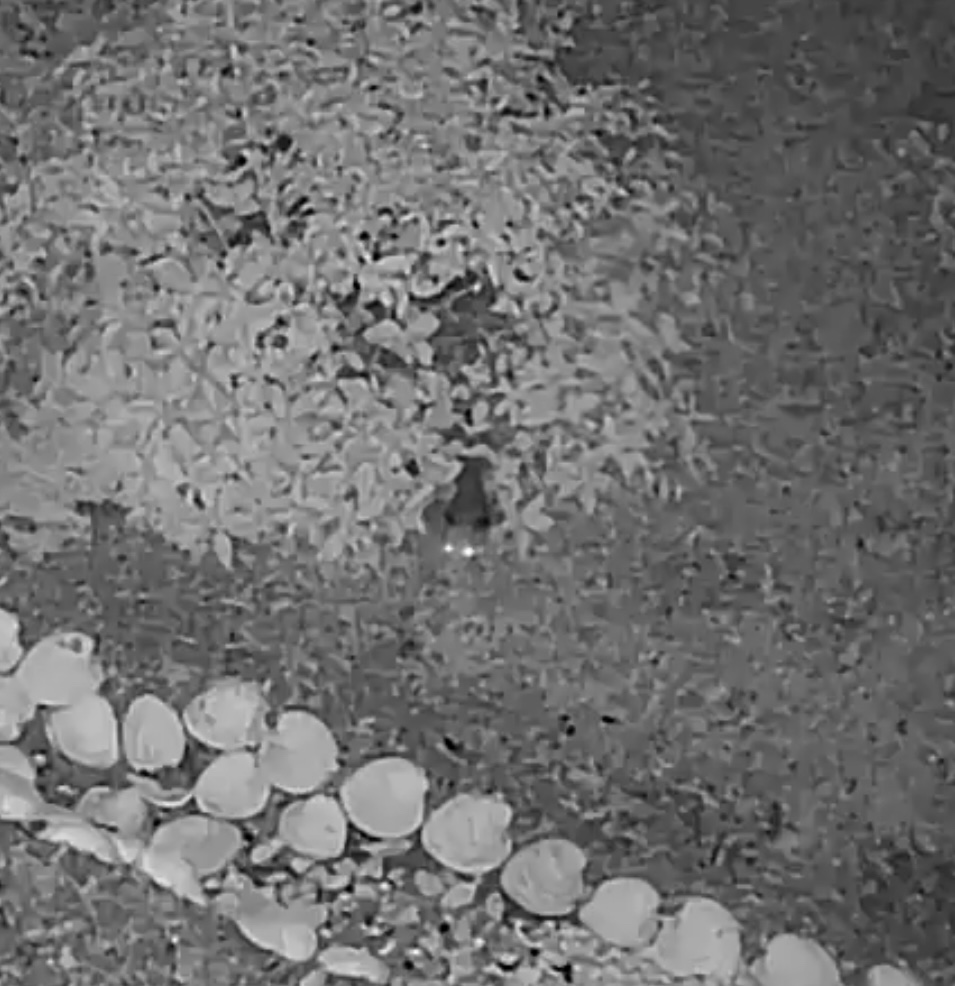
I was greeted by this damage yesterday morning. Naturally, I wondered who the culprit was. So, I checked my handy motion-activated camera and found this incriminating evidence:
It’s worth noting that I have 4 water dishes of various sizes and heights for differing species. The tallest one, the one my bandit broke, was intended for the bees. This little stinker clearly knows where all the dishes are, as it even checked the last one before loping off into the night.
I especially love how the raccoon washed its hands after the accident! 🦝