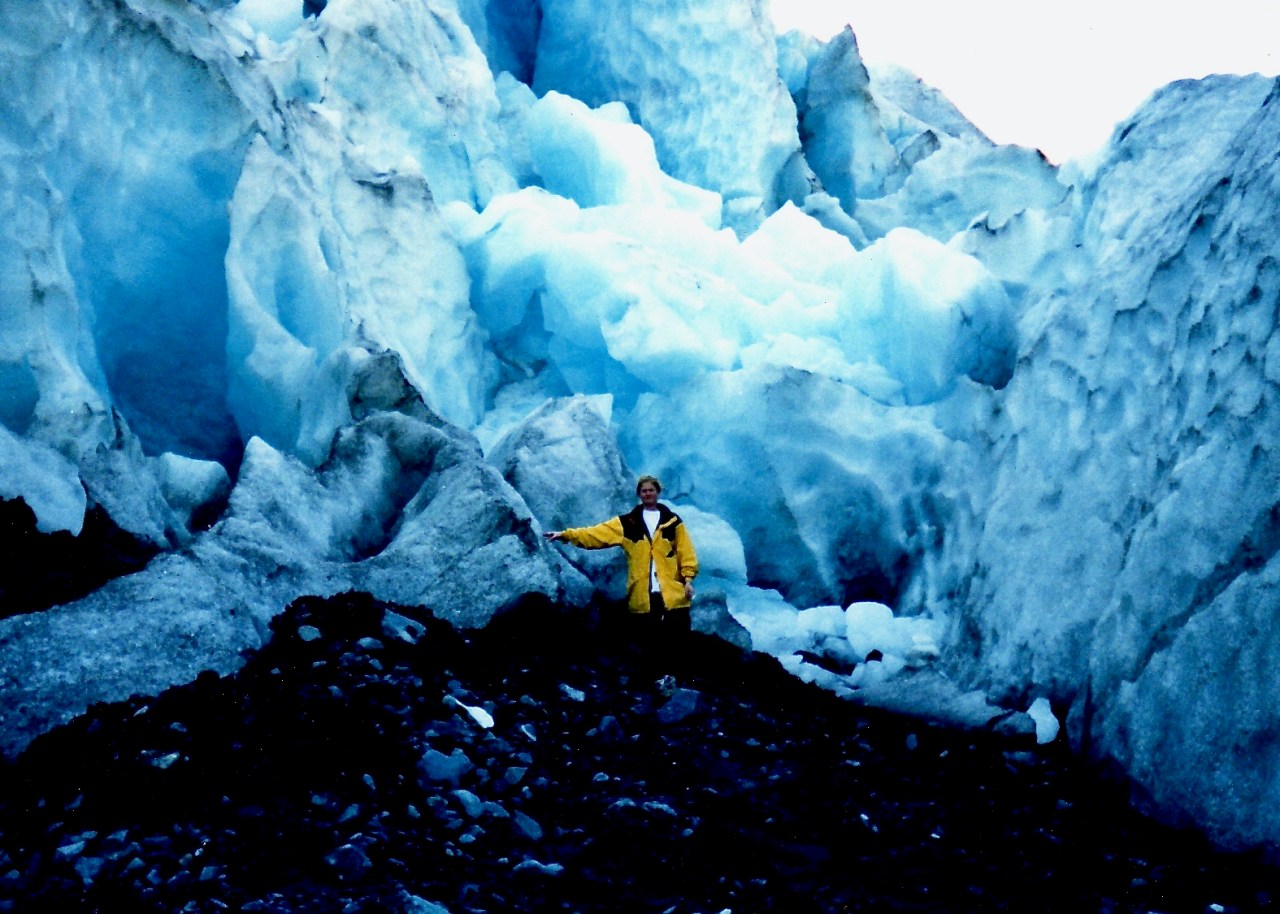
Alaska, September 1999
Looking back on it, I can see that even though there were times when I felt my life was meandering wildly, I often ended up exactly where I needed to be. Case in point, the summer of 1999.
That year I drove from Tucson to Alaska on a wing and a prayer in late May. Unlike previous summers, I had not pre-arranged a job. Thankfully, I had a strong track record working with national park concessionaires in food and beverage. I arrived at the small cluster of lodges and restaurants near the main entrance to Denali National Park on a Sunday and I was in uniform working for the Denali Princess Wilderness Lodge by Wednesday.
As the last employee to join the team I was given the least lucrative shifts but I didn’t complain, I knew I was fortunate to have the gig. There was no way I was admitting defeat and returning home early. It was an awfully long way to drive just to flame out! And, full disclosure, I doubt I would’ve had enough money to make it back anyway.
I was a recent college graduate, who majored in a field that wasn’t exactly lucrative. To make matters worse, though I’d dreamed of being an archaeologist since childhood, partway through my studies it dawned on me that I didn’t have any desire to actually work in that field. Too late to change direction, I stuck with it, rationalizing that my Masters degree would be in my preferred field. (Spoiler alert: I never did go back to school, life had other plans.)
During my second week of work, a scruffy man ambled in during happy hour. He was clearly not one of the “cruisers” (most of the customers at the Lodge were retired folks who had added an inland excursion to their “dream” Alaskan cruise).
I am not exaggerating when I say he could’ve been a Jack London character in a story about the Klondike Gold Rush. He was a true sourdough; full beard, worn and stained denim overalls, with gnarled, hard-working hands, and a tired air about him. After a long swig of beer he placed his right fist on the bar and ordered another one.
As I delivered the second mug, he pulled his right hand away and said, “That oughta cover it.” There on the bar were two, small gold nuggets.
He watched me with a keen eye, judging my reaction. For a second, I was dumbfounded. Thoughts flashed rapid-fire through my brain: “Was it really gold? Do locals pay with gold? Should I demand cash? What was an ounce of gold worth? How could I weigh it?” Of course, I could answer none of those questions and instinctively, I knew it wasn’t about the gold, it was about my character.
I quickly realized there was only one thing I could do to gain his respect (and for some inexplicable reason, I wanted it); I swept the nuggets into my pocket and paid his tab with my tips. My action was acknowledged with a slight nod of his head. Apparently, I passed his test.
I couldn’t blame him for challenging me that way. By all appearances, I was a young, blonde woman fresh from the Outside (as Alaskans call the lower 48), indoctrinated in the belief system of the American Dream. The latter was something I would later learn that Foster had strong feelings about.
He became one of my regulars and he’d regale the bar with his outlandish stories: peeing outside in the winter when it was so cold that his urine froze in mid-air and tinkled on the snow like tiny pieces of glass, the wolf that followed him on his trap line and gobbled up whatever Foster would share but never stole from him, the grizzly bear that ate so much salmon from his drying rack that he fell asleep on his doorstep blocking Foster in his house. I was never sure what to believe but up there, outrageous, tall tales were generally true.
When I wasn’t busy behind the bar, our conversations took on a more philosophical tone. Foster was adamant that I not jump on the hamster wheel of American life, where working just to buy bigger and better things took precedence over everything else. My views were filled with the naïve hopes of youth (some version of peace, love, and happiness), while Foster’s beliefs were scarred and burnished through tragedy.
He eschewed material things, he derided the “rat race,” and he vehemently despised people who bobbled through life without asking why. For some reason, it was imperative to him that I learn these truths. I already wasn’t exactly a follower of that lifestyle, I mean, I drove by myself to Alaska, sleeping in the back of my truck that I had converted into a camper. Clearly, not your typical young woman.
Piece by piece over the summer, I learned that Foster had been a successful businessman in Chicago, with a wife and two kids in the suburbs, living the American dream. All that destroyed when a car accident killed his family. After a full day at work, and a long commute, he pulled up to an unusually empty home. The blinking message light on his answering machine an unwitting indicator of life-altering news.
Since nothing else mattered any more, Foster walked away from everything. Literally. He left the house full of belongings, didn’t even bother locking the door. Not caring if he lived or died, Foster headed to the middle of the Alaskan wilderness to fight his demons and God.
Apparently, he won those battles because I met him thirteen years after. His was a sparse life; he resided in an old boxcar he’d found and eked out a living running trap lines, taking photos, occasionally working on the Al-Can pipeline, and panning for gold.
Tenets of belief are formed in different ways, some are definitively shaped by a crucial experience, while others build through chance moments, layer by layer like a pearl. That summer, I was the fortunate recipient of Foster’s hard-won wisdom.
We stayed in touch for a few years after, though eventually our long letters were reduced to holiday cards and then ceased altogether after I moved (yet again). I wonder about Foster from time to time, and I hope he is still up there, surviving in spite of the odds, and sharing his unique perspective with whoever will listen.
After all, Foster, more than anyone else I’ve met knew what Horace meant when he said, “Carpe diem, quam minimum credula postero.” “Seize the day, put very little trust in tomorrow.” It’s been over twenty years and I still carry Foster’s nuggets with me, both the gold and the wisdom.








 3rin's View...