Archive for ‘Observations’

Could’ve Been Worse

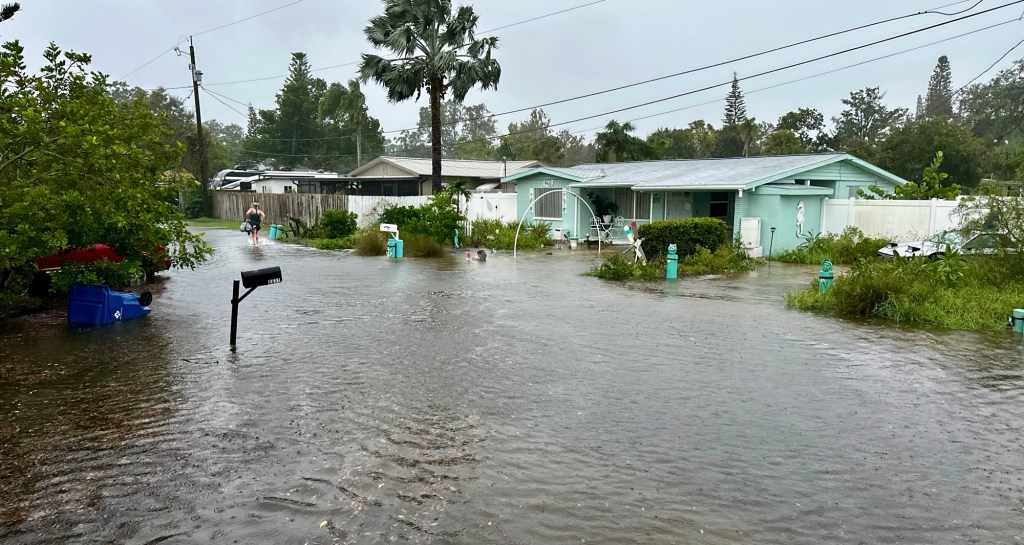
It’s been a little bit tense around here for the past 36 hours. Though she was only a tropical storm, when Debby swirled by she made an impact. There was an awful lot of flooding south and north of me, though thankfully my neighborhood escaped the worst of it.

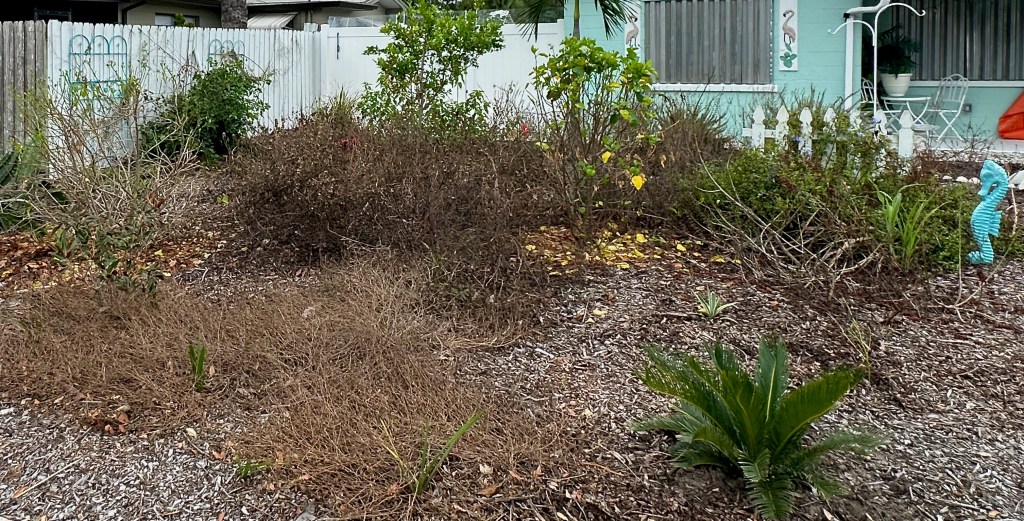
When the rain finally stopped this evening I headed outside to assess the damage. Overall, I’m impressed with how well my yard handled the roughly 8” of rain, there was very little ponding. All my plants are very wind blown but they survived, with the exception of one.

I was sad to discover one of my sea grapes snapped off near the base. I’d been so happy with their growth! I had planted them a couple years ago to shade the western side of my house. They’d grown vigorously, reaching my roofline this summer and keeping the sun at bay.

As I chopped it up I noticed a couple of small shoots attached to the stump below the break. It is a native plant, accustomed to the harshness of life in Florida, I imagine it will regrow.

Here’s hoping everyone recovers from this storm…

Debby Day

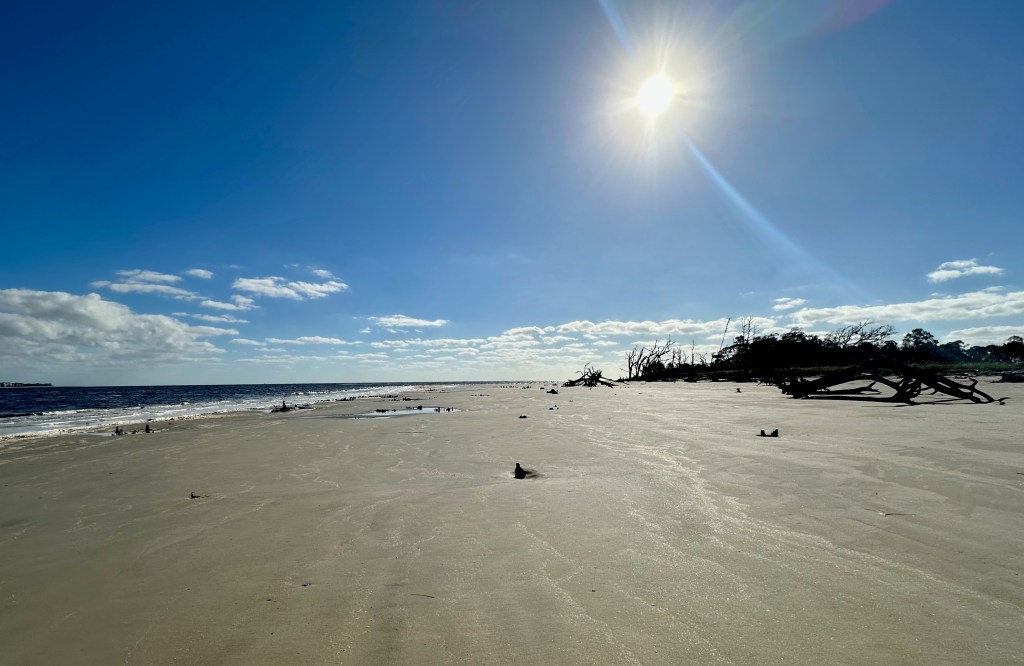
Since the main brunt of Debby hadn’t yet arrived I headed over to check on my beach this morning. As expected, the surf was up and so were the surfers. They don’t get many opportunities to catch waves over here on the West Coast of Florida so they were excited by the breakers.

While my walk coincided with low tide, it didn’t seem like it since the outer bands of the storm were already pushing water well past the high tide wrack line. The choppy waves were eroding the shoreline, dragging off tons of sand. Nothing too drastic, just part of the natural ebb and flow of a barrier island.

Thankfully, I made it home before the rain started. It will be interesting to see how the day progresses. Hopefully, Debby’s impact will be minimal!
Foraging for a Fox Squirrel

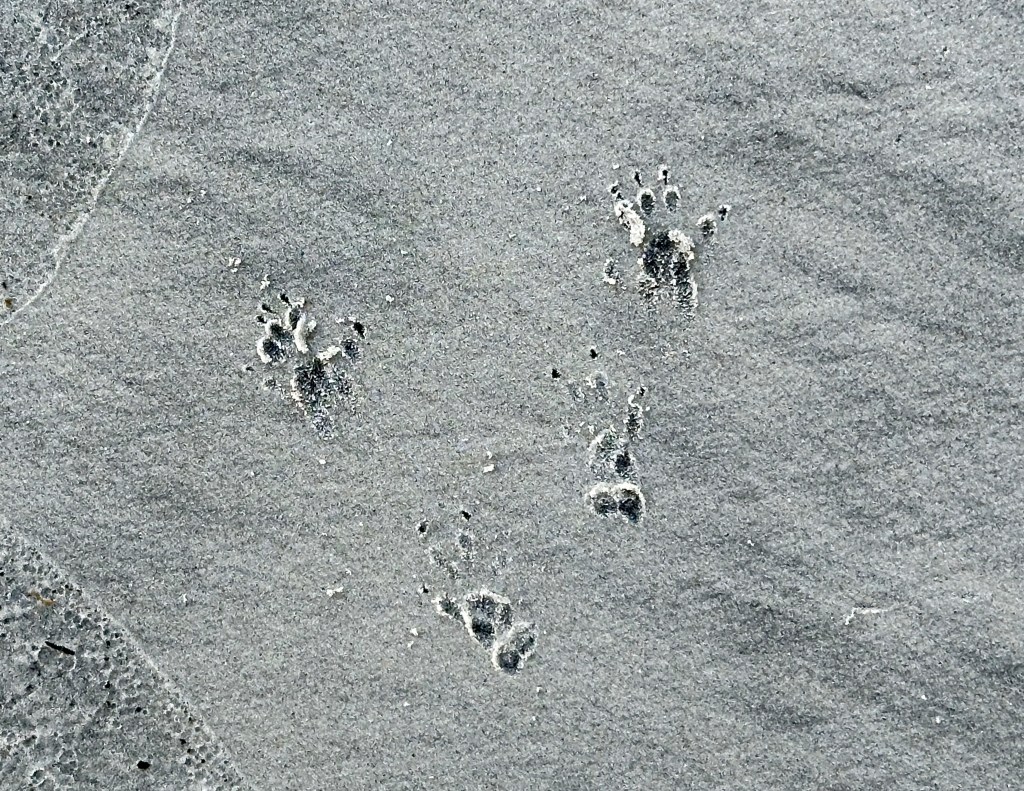
Last week I drove over toward the center of the state in search of a Fox Squirrel. After all my outdoor adventures across the country over the years I still have yet to photograph one. That morning, as I drove east my hopes were high since a friend had recently shared some sightings online.

I started my day at Colt Creek State Park before wandering over to the Green Swamp. As can be expected in Florida in July, it was hot and humid. Though I struck out on my desired goal, there were still plenty of interesting things to see; birds, butterflies, reptiles, flowers (and even mating grasshoppers).

On my return trip I opted for side roads and wound up in the middle of nowhere. But more about that later…

Unlikely Visitor

I found this handsome, roughly 1″ long, bug in my carport yesterday evening. Its size and unique appearance caught my eye and warranted a few photos.

Good thing it tolerated a mini photoshoot because I needed all the images during my research into the species. Placing it in the leaf-footed bug family was fairly simple. After all, those fancy legs are pretty obvious.

Since most of the species in that family reside in Mexico and Central America, I was left with just two possibilities; the Florida Leaf-footed Bug (Acanthocephala femorata) or the Flag-footed Bug (Anisoscelis affinis).

The former certainly sounded the most promising since I live in Florida (and the latter’s only US records are from Texas). I searched online images and both species had life stages that somewhat resembled my insect. Though, to complicate matters, all leaf-footed bugs can change color, to match the fruit they are consuming in order to avoid predation. So color was not a helpful identifier.

This is where my photos came in handy. In all its life stages, the Florida Leaf-footed Bug has a pointed tylus on its head (the genus name Acanthocephala translates as spiny head). The Flag-footed Bug does not have this protuberance. So, even though it sounds unlikely, I’m pretty sure it’s the latter.

I wonder how in the world it got here. I did have a couple packages delivered recently, perhaps it was a stowaway?

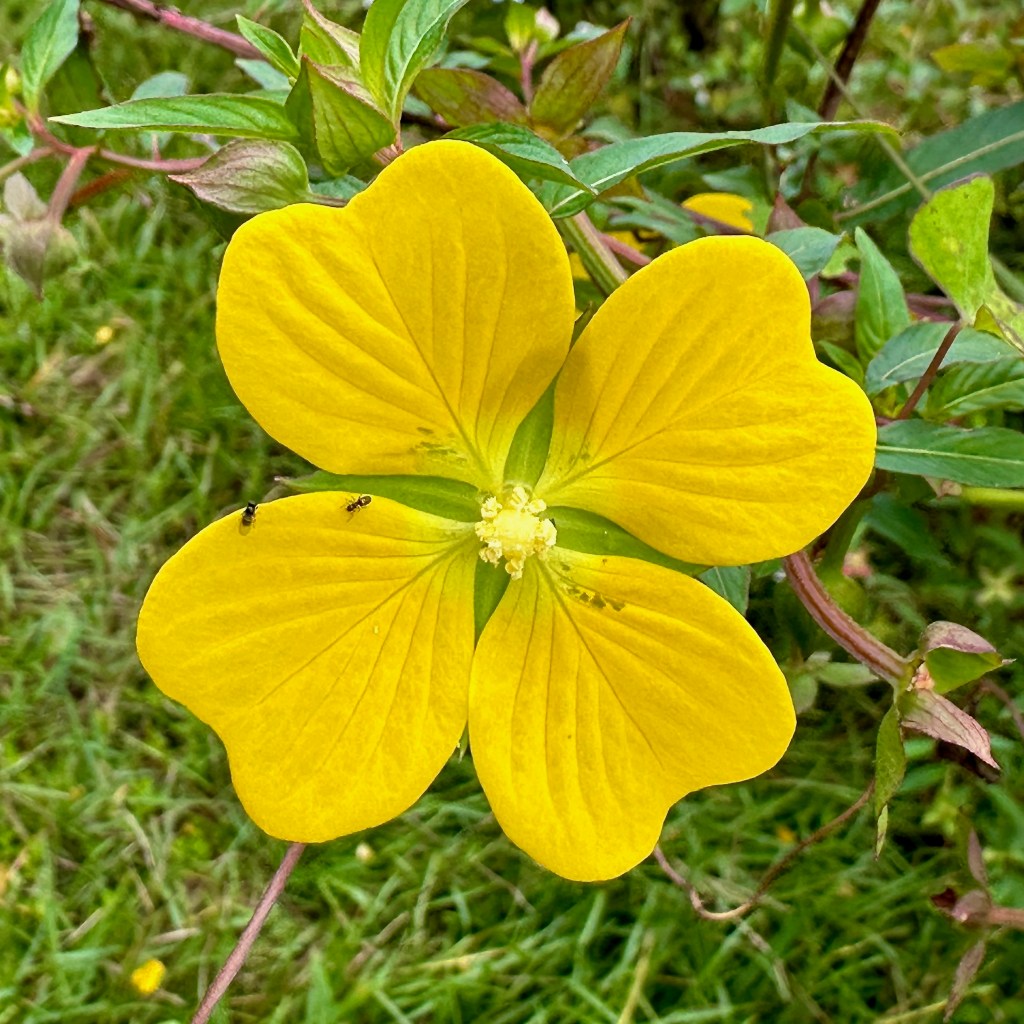
Now that it’s here, it’ll probably survive just fine. Specimens have been found hiding in Yellow Buttercups (Turner ulmifolia) and feeding on passionvines (Passiflora sp.), both of which I have planted in my yard.

Turtle Boil

Speaking of testudines, on my beach walk yesterday morning I came across the turtle patrol. Noticing they were parked, and ever curious, I walked toward a nearby marked sea turtle nest.

Peering carefully over the markers, I noted a caved in area and tiny scratch marks in the sand around it. After roughly 100 days of incubation, sea turtle hatchlings leave their eggs, emerge from the sand*, and, typically, make their way to the water.

Unfortunately, some of these littles had been found in the backyard of a nearby house. So, the turtle patrol staff were searching the yard to make sure they’d all been found and relocated in the correct direction.

Sadly, I didn’t get to see the hatchlings clambering out of the soil. But it made me happy to know that at least one of our sea turtle nests was successful this year (since we’d lost all our nests last summer to storms).

*This mass emergence is the reason it is referred to as a “turtle boil”.

Helping Hand

While I was out exploring earlier this week I spotted an odd lump on the road. At first I dismissed it as a pinecone but that didn’t seem quite right as I drove by. So I backed up to get a closer look.

That brownish lump turned out to be the smallest Gopher Tortoise (Gopherus polyphemus) I’ve ever seen. Knowing that they are a threatened species here in Florida (mainly due to habitat loss), I decided to help the little one out.

I certainly didn’t want a careless driver to run it over so I gently picked it up off the hot asphalt.* I carried it off the roadway, following the direction it had been pointed in. While the tortoise remained tightly tucked in during the transfer process, once on the ground it didn’t take long for the legs and head to emerge. Within seconds the wee one was walking into the nearby grassland.

Having noted a bite mark on its shell, I wished it well on its journey before continuing on mine. Good luck, little dude!
* I grew up in the Sonoran Desert with a very similar species, the Desert Tortoise (Gopherus agassizii), so I am acquainted with the protocol for carefully moving these creatures.