Archive for ‘Nature Notes’

Energetic Egret

Compared to the staid demeanor of the majority of the heron family, the entertainment value of the Reddish Egret (Egretta rufescens) is off the charts! While the others tend to approach hunting as a study in patience, the Reddish jumps, spins, and flaps its way to a meal. I spent hours the other afternoon captivated by this one’s antics. (The distinction between heron and egret is a bit fuzzy – all egrets are herons but they generally have white feathers and produce white plumes during mating season.)

Surprisingly, this charismatic and active egret has been poorly studied. The species suffered greatly during the plumed hat craze of the late 1800s. Texas Parks and Wildlife estimates there are less than 2,000 nesting pairs in the nation and they are listed as Threatened in this state.

Best to listen to the video with the sound off, I apologize, it was extremely windy that day.

Pretty, Deadly

IMG_0866

This Eastern Coral Bean (Erythrina herbacea) is very similar to the Western Coral Bean (Erythrina flabelliformis) I grew up with in Tucson. Interestingly, the Eastern has been found growing in isolated populations in Southern Arizona, believed to have been imported through trade by the Mogollon culture. Both species owe their common name to their vibrant red seeds. The plant is full of toxic compounds that can cause paralysis when ingested.

The seeds have been used to make personal adornments, like necklaces, for thousands of years. I once read that Spanish missionaries made rosaries out of them and when they kissed the beads they inhaled the powder and were sickened. Perhaps poetic justice for forcing Catholicism and fealty to the crown onto the indigenous cultures?


Nesting Season

IMG_0903

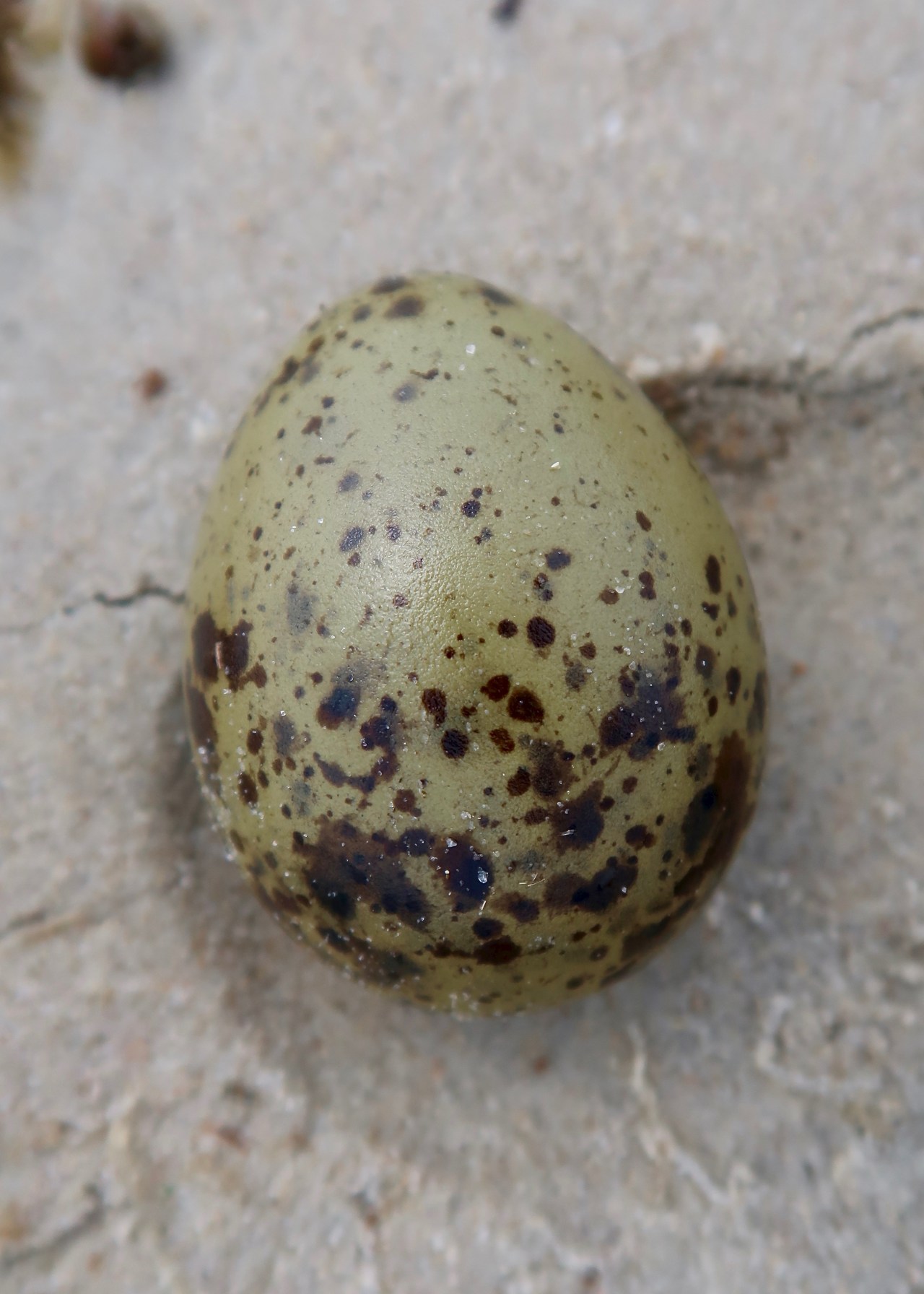
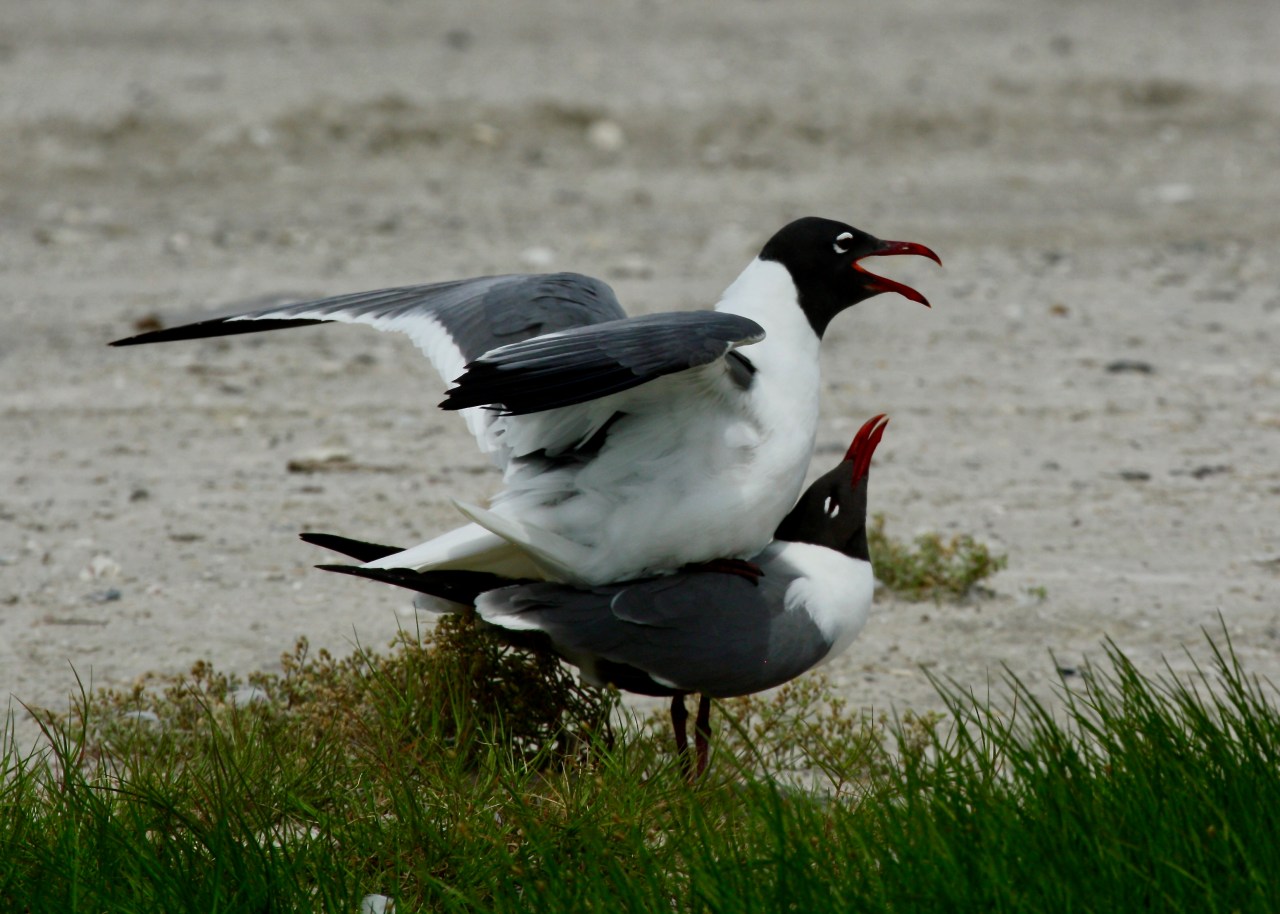
I discovered this egg rolling in the waves on the beach a few days ago. Based on a bit of research, I’ve determined it came from a Laughing Gull (Leucophaeus atricilla). They are the most prominent birds here and we are smack in the middle of nesting season. In fact, part of the Rockport Beach peninsula is closed right now to protect the nesting area. Several stages of the season were observable.

IMG_3263

Mating Laughing Gulls, Rockport, Texas May 2019

Is it just me, or does she look irritated?

To actual nesting:

IMG_3256

Laughing Gull Pants in the Heat While Nesting, Rockport, Texas May 2019

The pair will take turns tending the nest during the three to four week incubation period. I have yet to see any hatchlings but I hear that they are exceedingly well camouflaged so it will prove to be a challenge.

Sea Butterflies

IMG_0797

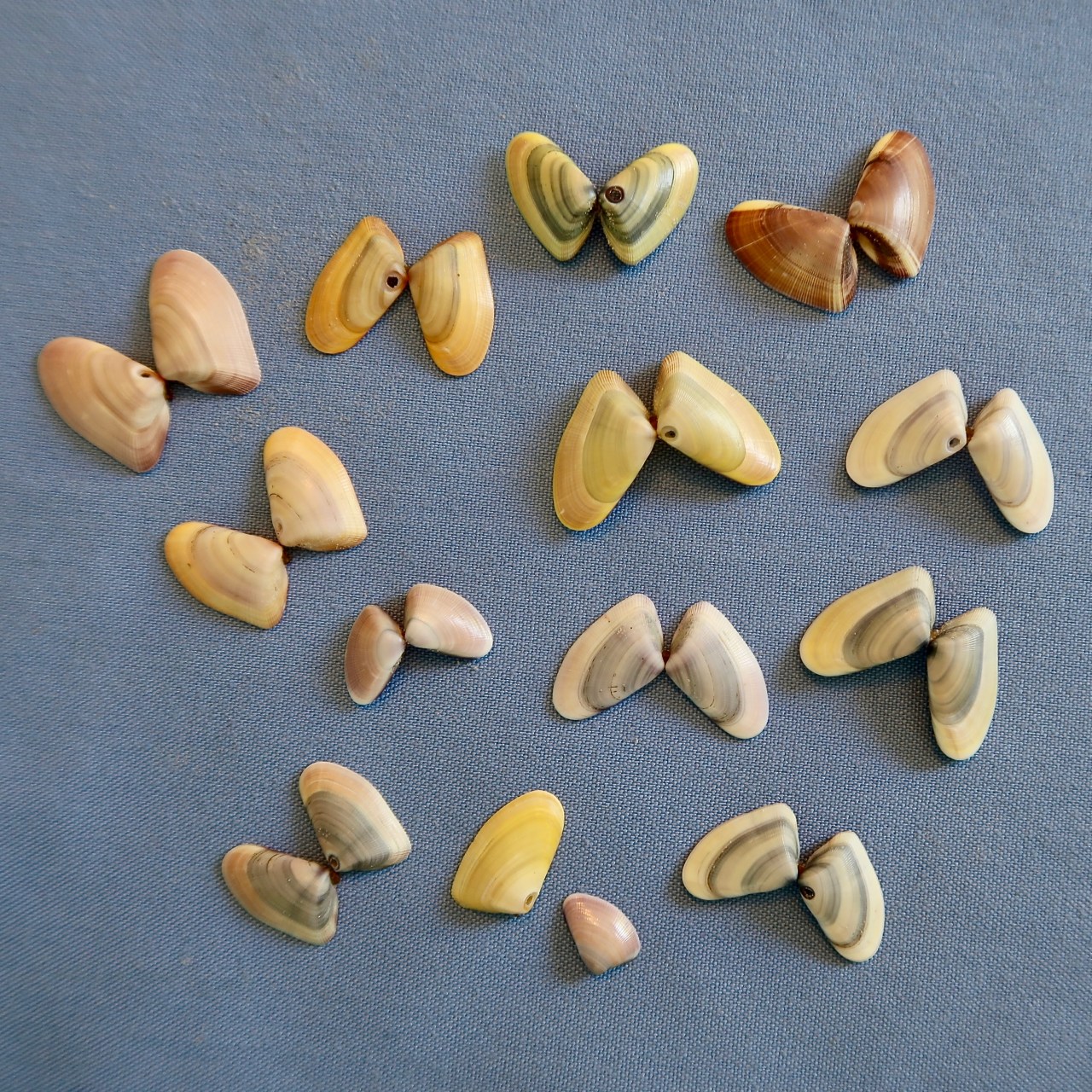
The endlessly colorful Coquina clam (Donax variabilis) lives along the southern Atlantic and Gulf of Mexico coasts. Since the two halves are often found still attached after death, it earned the common name Sea Butterfly. This small, saltwater bivalve (no larger than an inch) lives under the sand in the littoral (or swash) zone and is considered a keystone species since so many others rely on it as a food source. The Shark Eye Moon Snail, for instance, drills into the clam, injects digestive juices, and then slurps out the mush (note the holes in some of the shells in the above photo). Willets, on the other hand, gobble coquinas whole, letting their gullet grind the shells, before regurgitating the undigested pieces in chromatic clumps.

IMG_9506.jpg


Sinking Shucks

My first week in Rockport I attended a talk about Oyster Reef Restoration efforts in Copano Bay (pronounced similar to Kokomo – the only #1 Beach Boys hit during the 1980s. It was released in 1988 which, unfortunately, coincided with my summer working in a pub in northern Wisconsin. Guess which ditty was the most frequently played on our jukebox? Take a wild guess as to which song made me wanna pull my hair out by the end of the day?).

But, I digress. The speaker outlined the financial impact of oysters, obviously for the oyster industry but also the indirect benefits of oysters (improved water quality, reefs providing safe refuge for the young of dozens of other commercially harvestable species, as well as reducing shoreline erosion).

In recognition of the value of oyster reefs, and to counteract their decline – primarily due to decades of harvesting and an oyster disease called dermo (Perkinsus marinus) – Texas recently enacted a law that requires oyster wholesalers to pay a fee or return an amount of oyster shell to the state. As I mentioned in an earlier post, most wholesalers are opting to pay the fee since they can sell the shells for a much higher price (a main source of calcium for health supplements).

The Harte Research Institute for Gulf of Mexico Studies took it one step further by convincing a few local restaurants to separate used oyster shells from their waste stream to be used in a volunteer reef restoration program called Sink Your Shucks. The program began a reef restoration project at Goose Island State Park in 2012 and I was fortunate to take part in the ongoing effort this morning.

With roughly 75 of us volunteering we filled over 1,000 bags (averaging 5 gallons of shell per bag) and placed them in the bay. It was a bit of a workout but the weather was lovely and it felt good play a small part in this important work.


Seacat

IMG_6588

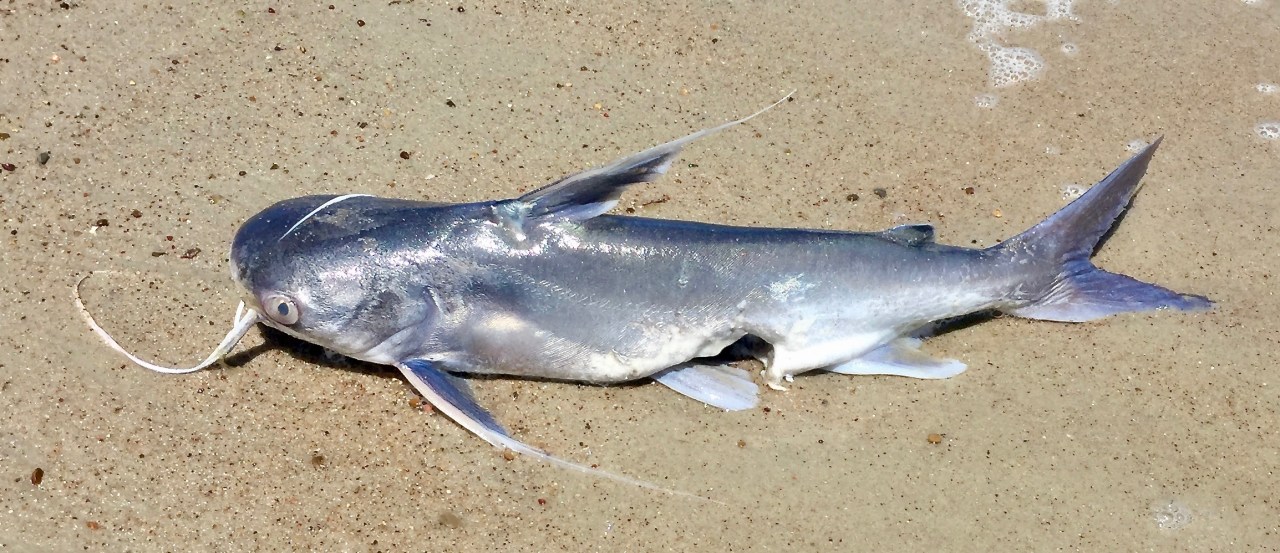
Gafftopsail Catfish, Rockport, Texas April 2019

Don’t let the shiny surface of the Gafftopsail Catfish (Bagre marinus) fool you – this fish is adorned with long, venomous spines (hiding in the dorsal and pectoral fins). Fishing websites recommend caution when dealing with this species as one wrong move can send you to the emergency room in horrible pain. Interesting factoid, the male is a mouthbreeder, meaning after fertilizing her eggs (up to 55 of them) he carries them in his mouth until they hatch. He must forgo food for the entire 65 day incubation period. What a good dad!


Colorful

IMG_2661

Texas Spotted Whiptail, Estero Llano Grande State Park, Weslaco, Texas March 2019

When I glanced down to find the source of the rustling noise in the leaf litter I caught a blur of color. Intrigued, I followed my fast moving subject through the detritus. Finally, he paused and I snapped a couple photos before he zipped away.

A bit of online research helped me identify my speedy fellow as a Texas Spotted Whiptail (Aspidocelis gularis). The species sports an exceptionally long tail, roughly three times their body length, but I was too busy concentrating on the colorful stripes and spots on its body to catch the tail.

Gularis is Latin meaning throat which is an appropriate feature to focus on since the reddish throat is so prominent (females of the species sport a lighter pink throat). Here’s a better photo of the back:

IMG_2664