
My Viewpoint

The recent riptides and swirling currents along our coast stirred up a bunch of debris from the shallow sea floor and tossed it up on the shore. While some visitors were disturbed by the mess, to me it was a beachcomber’s paradise.
The most exciting find of my day was this small brittle star. Does that central disc remind you of something? A sand dollar, perhaps? You’re on to something!
Brittle stars, sea stars, sea cucumbers, and sand dollars are all members of the same phylum, Echinoderm (Greek for spiny skin).
Like their multi-armed counterparts, brittle stars can also regrow their limbs. In fact, they earned the moniker brittle star because they shed their arms so easily (as a mechanism to avoid predation).
But brittle stars take regeneration to the next level with their ability to completely separate from their central disc and organs: a single arm can produce an entirely new brittle star. That’s so amazing that it is almost creepy.

Found this Stormtrooper on the beach yesterday. Not sure what he was aiming at but I take comfort in knowing that he probably missed. 😂

The intricate layering of this Little Blue Heron’s (Egretta caerulea) plumage caught my eye last weekend. It reminded me of the work of an incredibly talented papercutting artist featured in Audubon’s magazine a couple years ago. Do yourself a favor and check out her gorgeous rendition of an American Kestrel.
Thankfully, this is one of the calmer, more deliberate members of the heron family, which allowed me a decent amount of time to take photos.

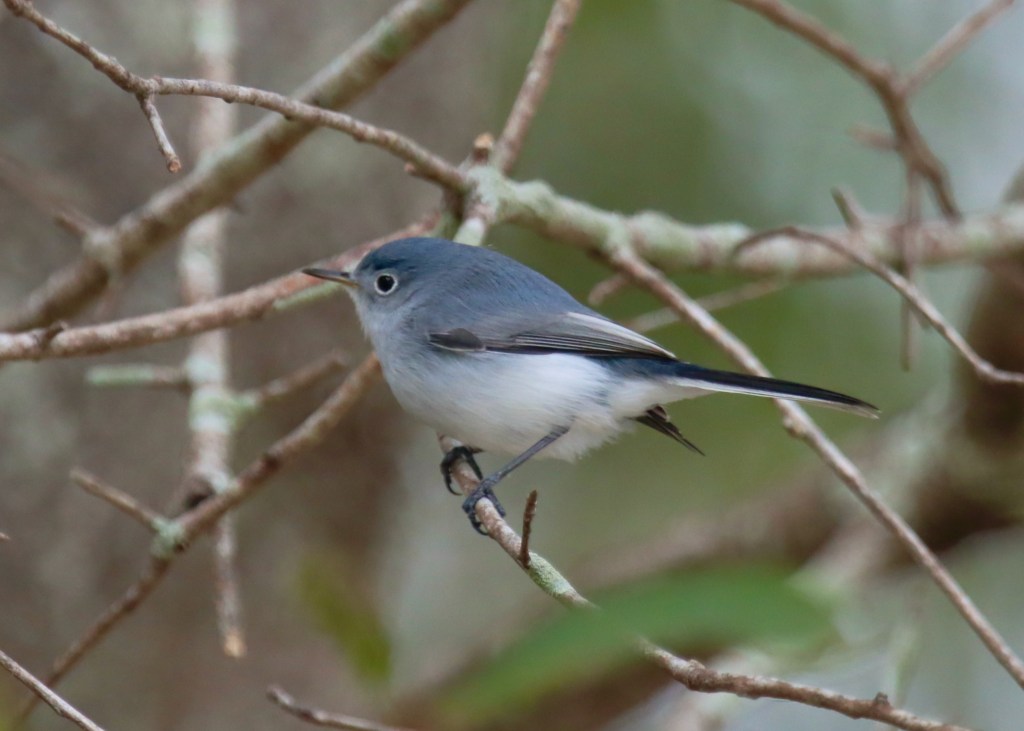
According to the All About Birds website the Blue Gray Gnatcatcher (Polioptila caerulea) “makes itself known by its soft but insistent calls and its constant motion”. Now add in the fact that it prefers dense foliage and you’ll begin to understand why I am delighted to have captured a decent shot of this energetic bundle.
If you look closely you can see the hint of a dark eyebrow, meaning this little male is preparing for mating season.
In case you were wondering, this is what most of my photos of him from that day looked like:


This past Saturday I checked out a nearby park, recommended by a friend from work. The place was small but it was quite birdy. While trying to capture a decent shot of a busy Blue Gray Gnatcatcher (more about him tomorrow) this Palm Warbler (Setophaga palmarum) popped into view.
Since it was a bit chilly out, he was far more interested in foraging for insects in the old wooden fence than worrying about me. Which meant that I finally caught a few decent photos of this very busy, wren-like bird. My first set of photos last February were quite awful (much like the year, now that I think about it).
True snow birds, this species migrates down to the Gulf Coast and the Caribbean for the winter. If I wanted to see this male in his dapper breeding plumage, I’d have to head up to the far northeast or Canada in a couple months. Even without his rufous cap and belly streaks he is still a handsome avian!
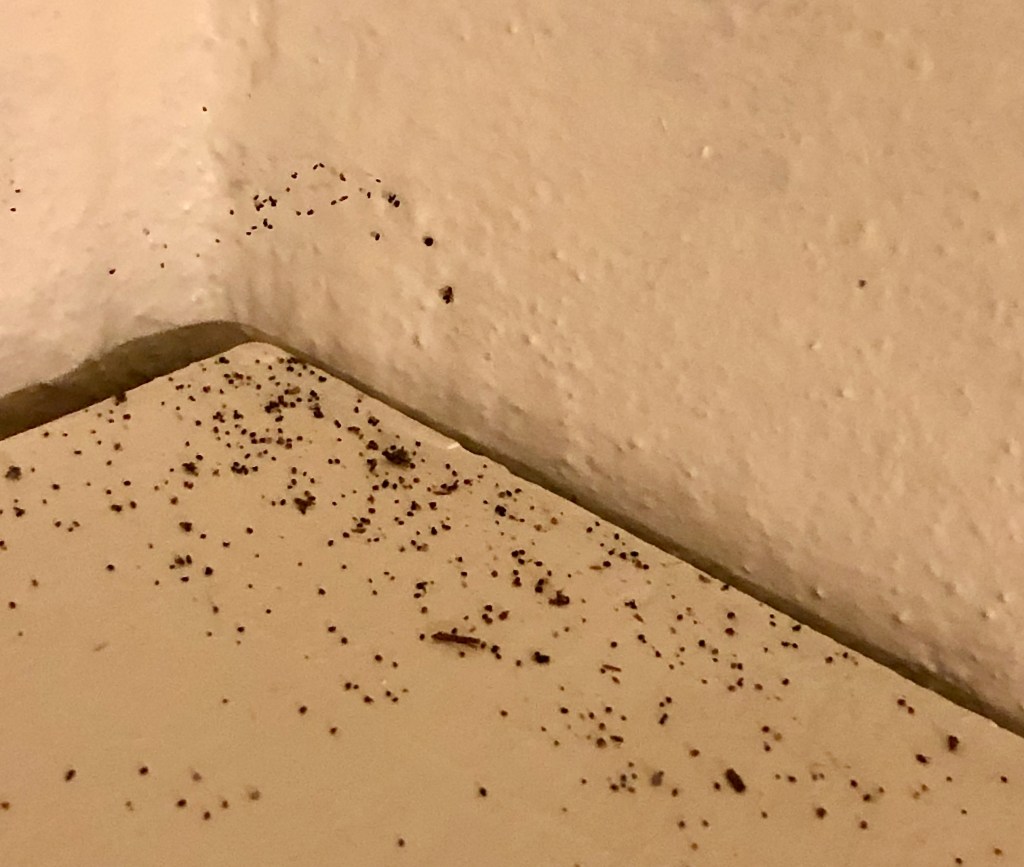
I’m referring to crap, of course. While I was rearranging my laundry room this weekend I came across debris on the top shelf. This sh*t is never a good sign, since it means there are termites nearby chewing away on the wooden parts of my house.
Thankfully, the damage is relegated to a small area and I have a termite contract with a pest control company. The main reason I wanted to share this with you is because termite feces has the cutest term: frass. It’s just a darn fun word to say. Try it, I’ll wait.
As a self-professed scatologist, I spend a lot of time looking at and pondering wildlife doo-doo. Poop is fascinating because it holds clues that can help you piece together an animal’s behavior. Dung can tell you how recently an animal passed by, what animal deposited it, and what the animal last ate. Like I said, fascinating.
While there are many terms for excrement, frass is my all-time favorite. My only complaint is that the word is wasted on termites (and other wood-boring insects). Of all the creatures in the animal kingdom, shouldn’t otters be the ones who get a cute name for their manure?

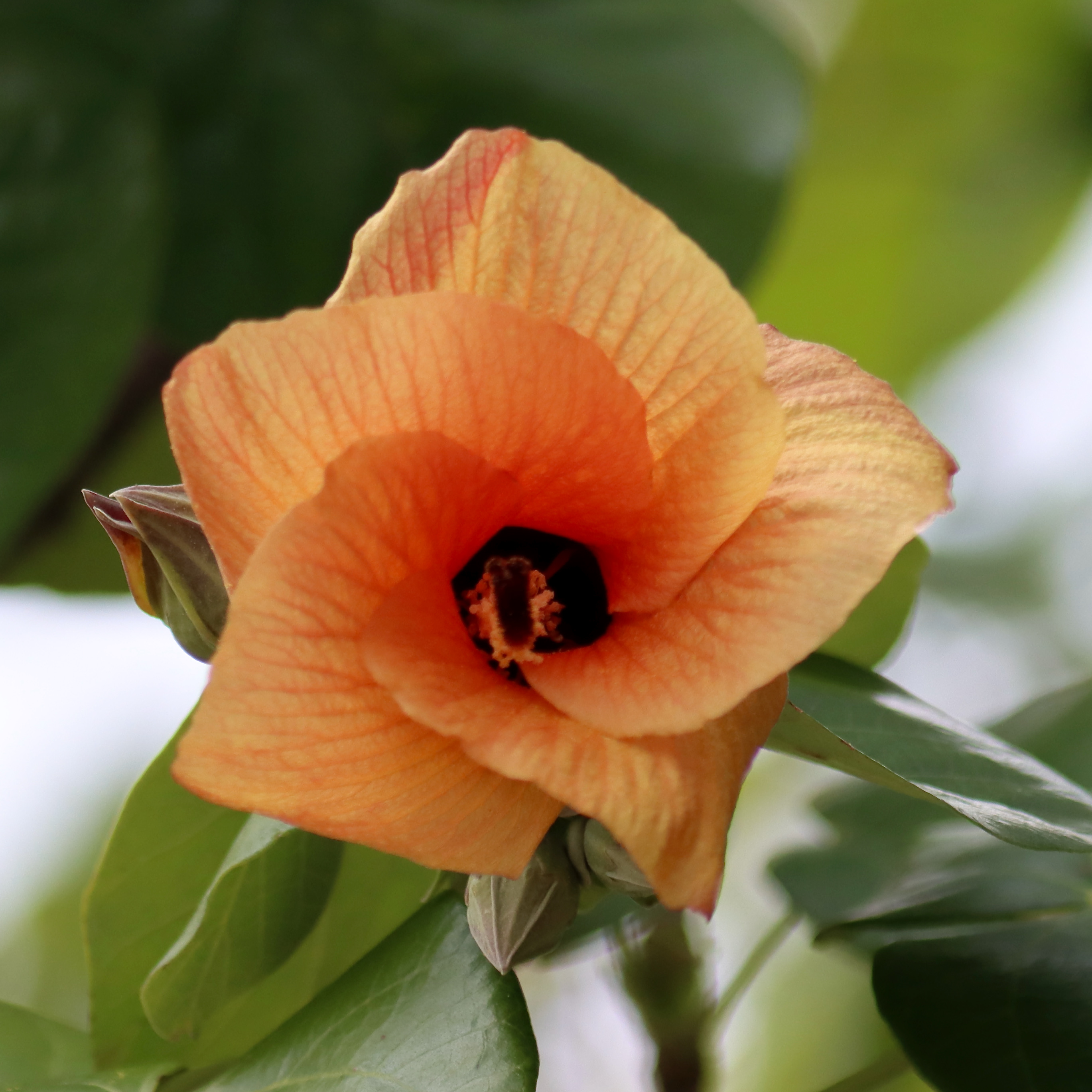
While out exploring a nearby park today I was captivated by these bright blossoms. Closer inspection of them had me perplexed, they looked like hibiscus flowers but they were attached to a large tree.
A quick internet search cleared up my confusion, it was a Sea Hibiscus (Hibiscus tiliaceus), the only member of the hibiscus family that reaches tree status. This one, was close to thirty feet high and equally wide (and I wish I had taken a photo of it).
Introduced from the Old World, this year-round bloomer has naturalized in Florida. The flowers open yellow with a red center but change to orange and then red before dropping off the limb. I wonder if I could plant one in my yard…
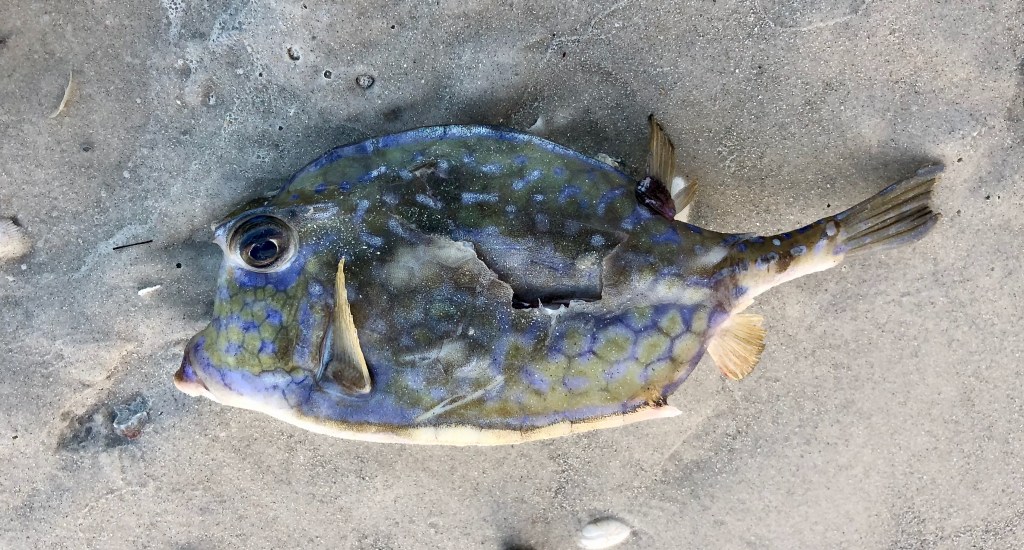
This evening on my beach walk, I borrowed a gull’s dinner so I could take a few photographs.* I was enthralled by the fish’s striking appearance.
The first part of the common name, Honeycomb Cowfish (Acanthostracion polygonius), derives from the unique hexagonal plates of the fish’s carapace (yes, this slow moving species sports armor). Each plate has a dark ring, creating a honeycomb pattern. While cowfish, comes from the spines (that look like horns) over the prominent eyes and sloped forehead.
Measuring about 8 inches long this was an average size specimen. While the bright coloration suggests it was a juvenile. This species is somewhat uncommon in the Gulf of Mexico though there is a known population that hangs out along the coast of Florida.
*After a quick rinse and snapping a few shots I returned the fish to the impatient gull. Bon appétit!

Okay, maybe not THAT tall. But playing with shadows is kinda fun.
 3rin's View...