Gently Taking Food Eye Open Partial Nictating Membrane Nictating Eyelid Watching a Hawk Soar Savoring Dessert The chilly temperature (67 degrees) coupled with the fresh breeze (according to the Beaufort Wind Scale) kept me off the beach this past Sunday. Yes, I’m a cold weather wimp which is why I live here and not somewhere that has winter.
A friend and I made the best of the situation by touring a new-to-us location, the George C. McGough Nature Park in nearby Largo. Though it’s a small park tucked in a residential area, it had plenty to explore. There was a nice boardwalk out to the Intracoastal Waterway and a large freshwater pond but the highlight was the Birds of Prey area.
All of the roughly twenty avians were rescued and are not releasable due to various health issues. Under the Federal Migratory Bird Special Purpose Possession program, carefully monitored by the US Fish and Wildlife Service, participating facilities develop educational programs highlighting their birds.
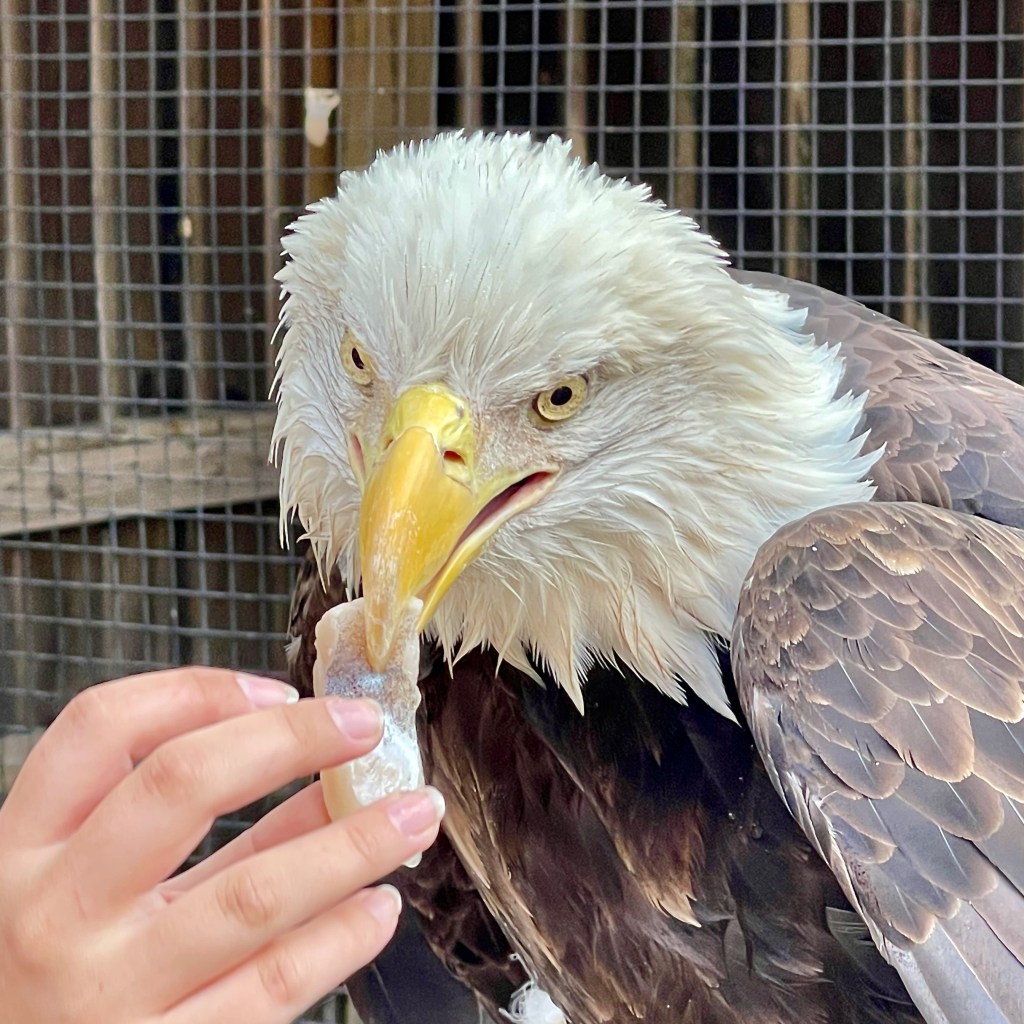
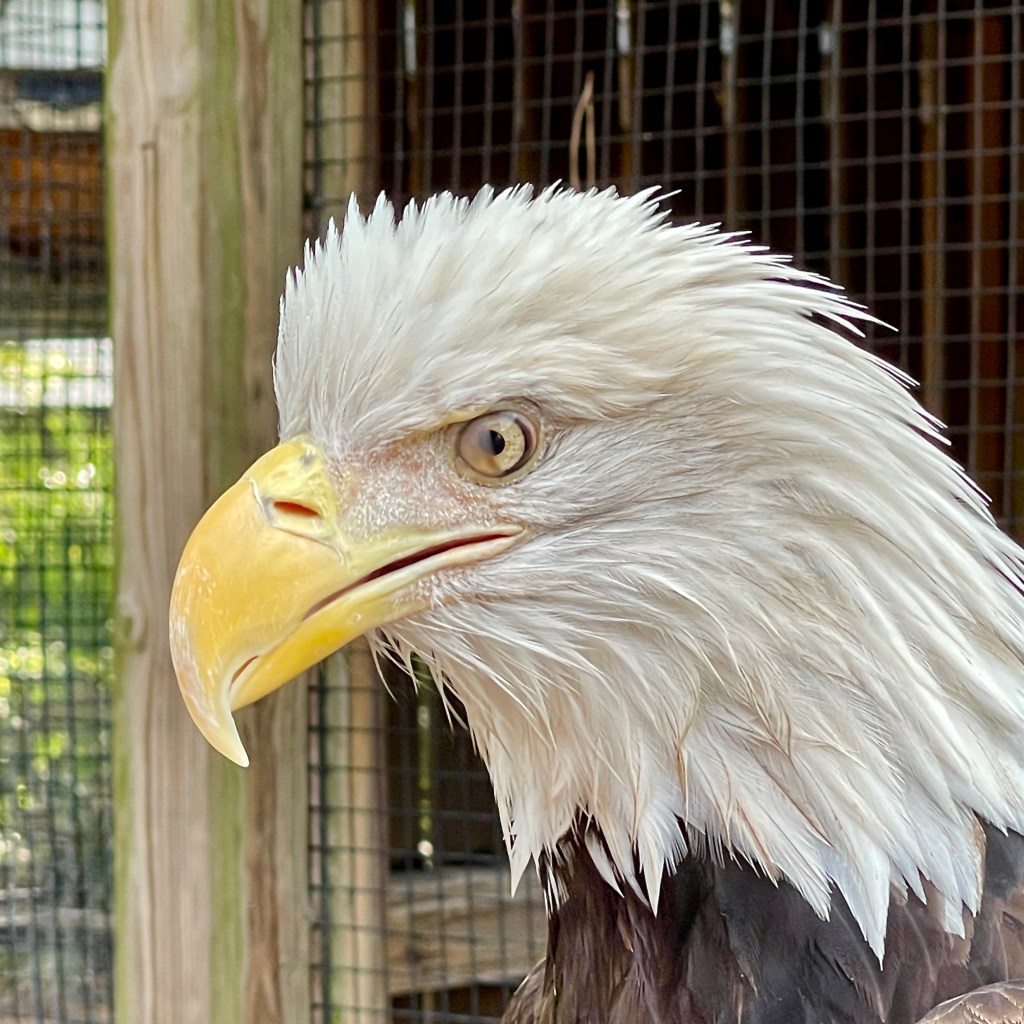
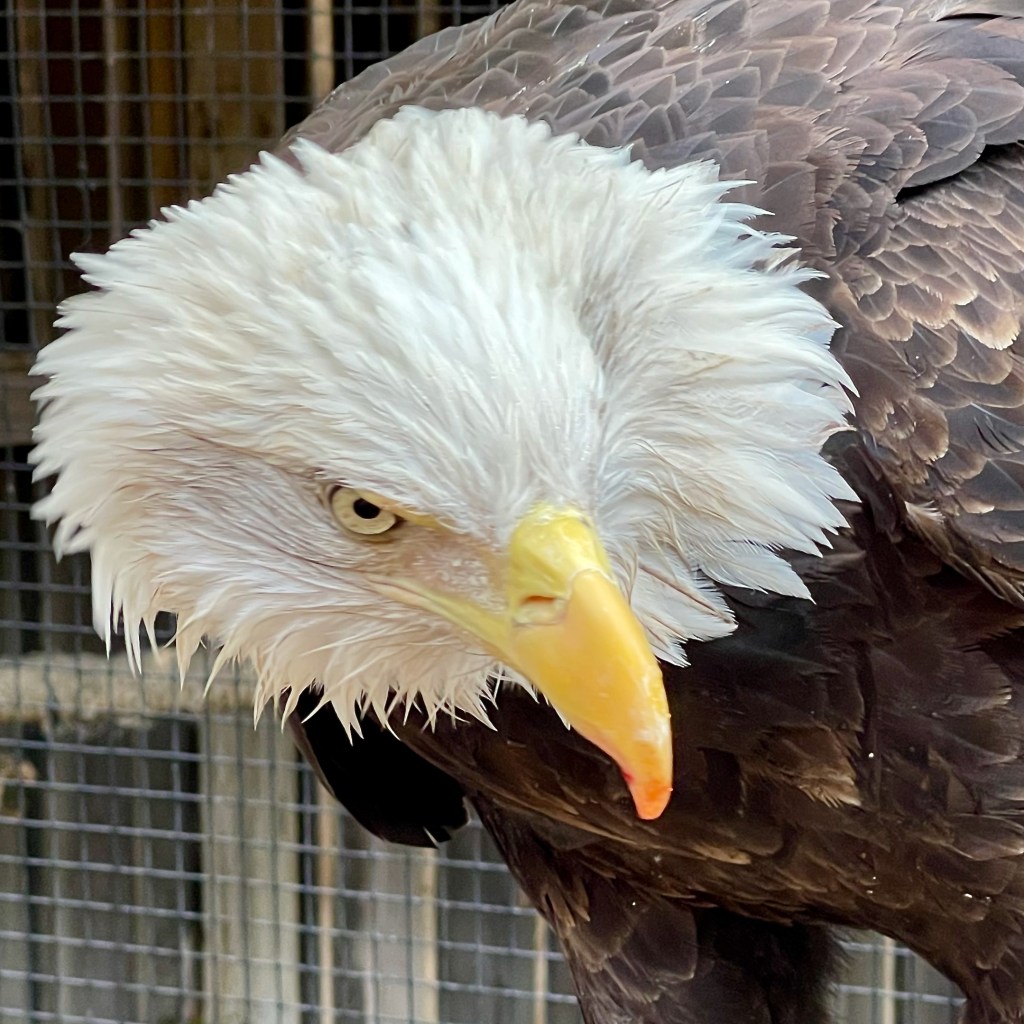
Luckily, during our visit the keepers had a few birds out on display. Though they are fascinating birds, the American Kestrel and Red-shouldered Hawk couldn’t lure us away from Sarge, the resident Bald Eagle.
When Sarge was rescued as a slightly malnourished, young adult they discovered she (yes, Sarge is a girl) had a genetic feather disorder. This deficiency disrupted her hunting ability and therefore, Sarge now resides at the park.
Standing about three feet tall and weighing just over ten pounds Sarge cut a commanding figure. It was fascinating to watch how gently she took food from her handler. Her demeanor changed when she was offered her dessert, a dead but intact quail.
With gusto Sarge used her sharp and strong, hooked beak to tear into the flesh. We took a step back when she began flinging out the inedible bits, like the intestines.
Though it’s sad that she can’t live free at least she has a safe place to call home.