






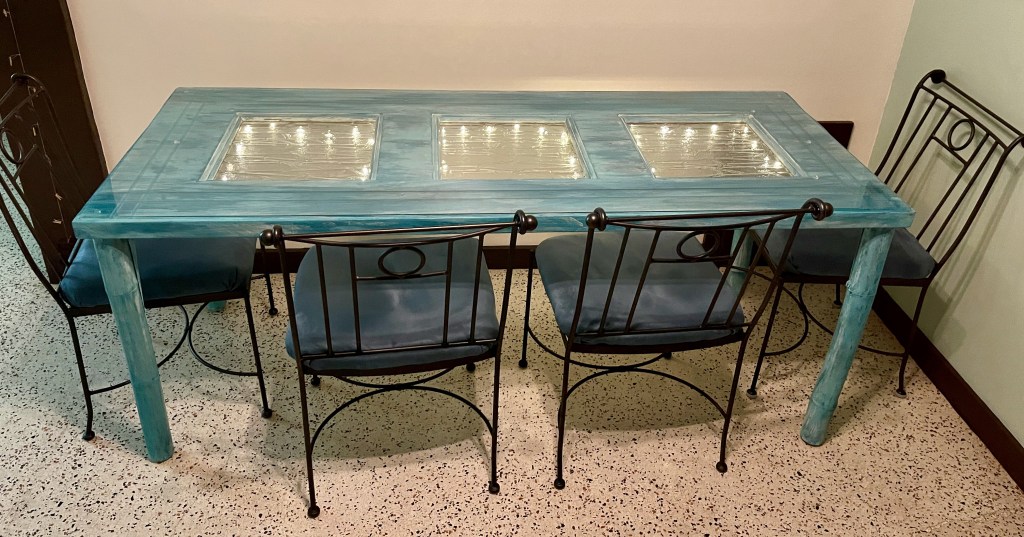

I’d like to introduce you to my new dining room table. This project began when I replaced the front door, the first week of October 2020 (yes, that’s over a year ago – don’t judge).
As a single female, I didn’t feel comfortable with that much glass in the front door. Add in the incredibly disconcerting fact that the door was hung inside out, meaning the hinges were on the outside. In case you don’t know, any door can be easily removed with a hammer and a screwdriver as long as you have access to the hinges (you just tap on the screwdriver to push the pins up and out). It wouldn’t matter in the slightest if you had the deadbolt engaged or not.
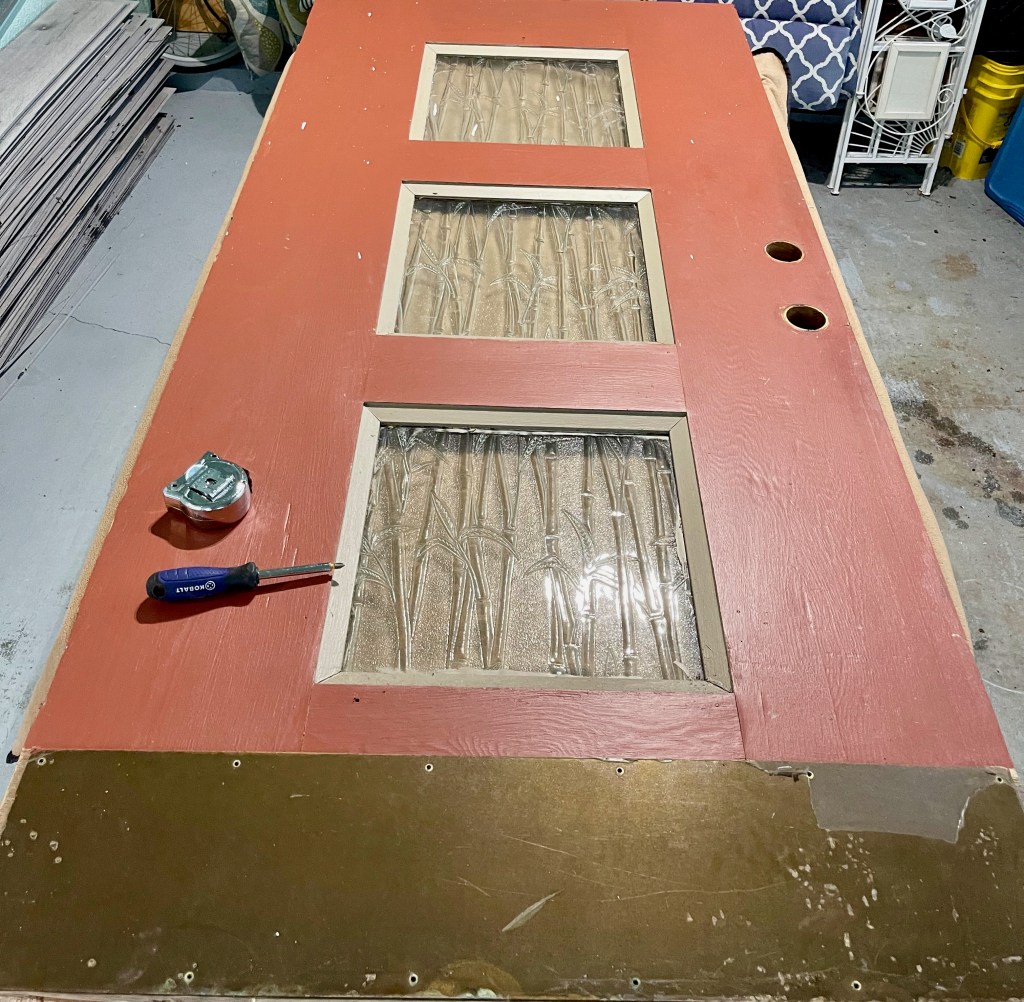
So, before I moved into my house I replaced the front door. The old one had so much character though that I couldn’t bring myself to throw it out. Not only was it solid wood but the glass inserts are molded in the shape of bamboo – I’m sure it was a very expensive door (best as I can tell the door would’ve cost at least $1000 new).
So, I kept the door and eventually it occurred to me that I would need a new dining room table, one that was a better match for my house than the country-style set I had purchased used for my little rental. I hadn’t rushed into buying a new set because I lacked a clear vision (and I thought the prices were ridiculous).
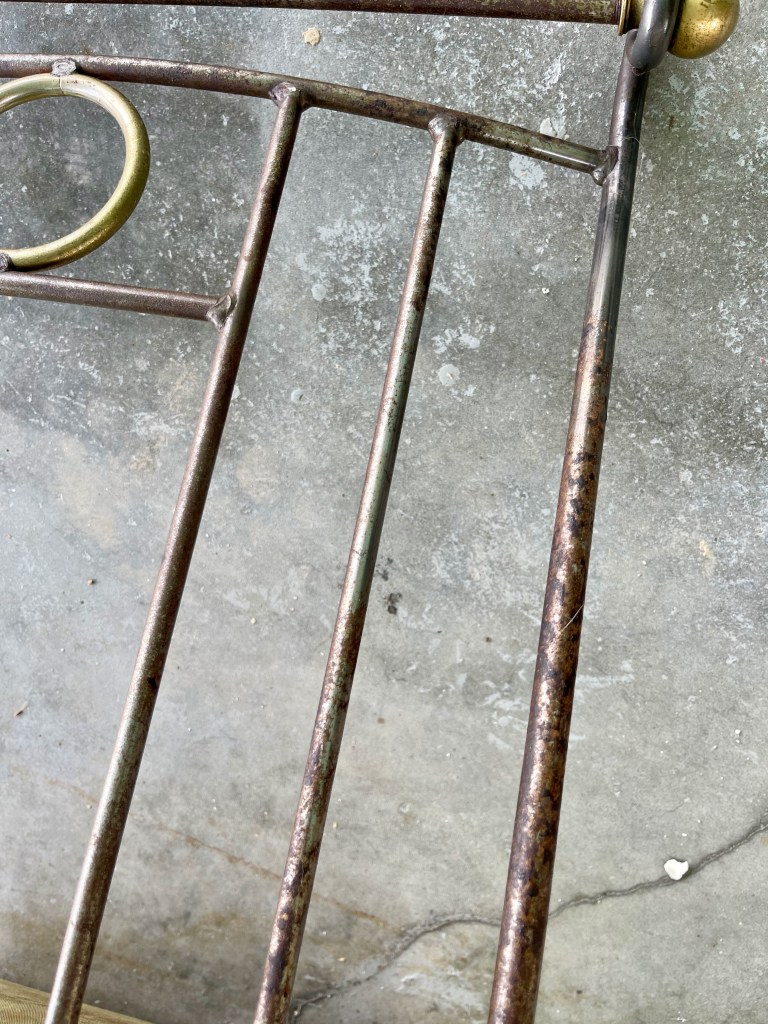
One day a neighbor placed an old brass and glass storm door out by the curb for trash day. Knowing that I would need a glass top for my table (since the inserts are inset in the wood), I walked over and carried the storm door home. I leaned it up against the old door and ignored them both for a couple months.
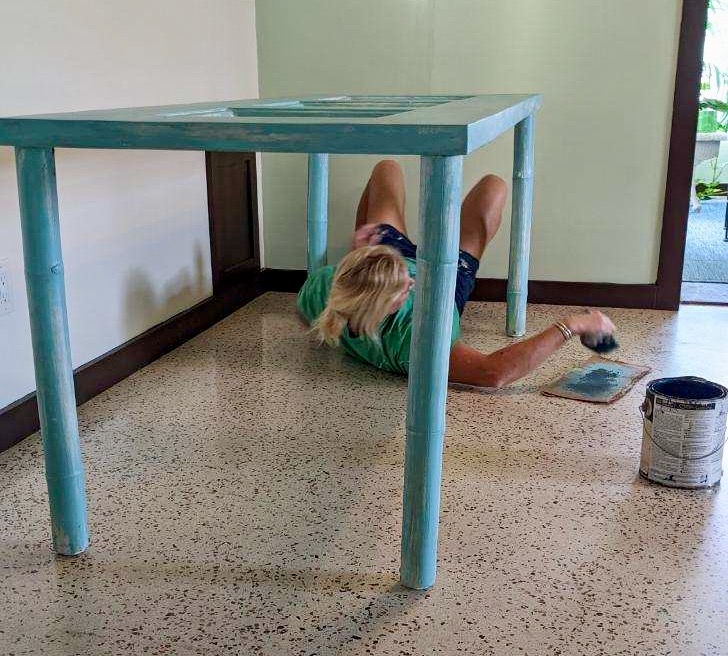
I couldn’t decide on how to assemble my table so the project sat on the back burner until late this summer (and I was busy with other projects, too). Inspiration comes to me in the strangest of ways, I saw some bamboo poles for sale on Facebook Marketplace and realized that those would be perfect for table legs since they’d mirror the glass inserts.
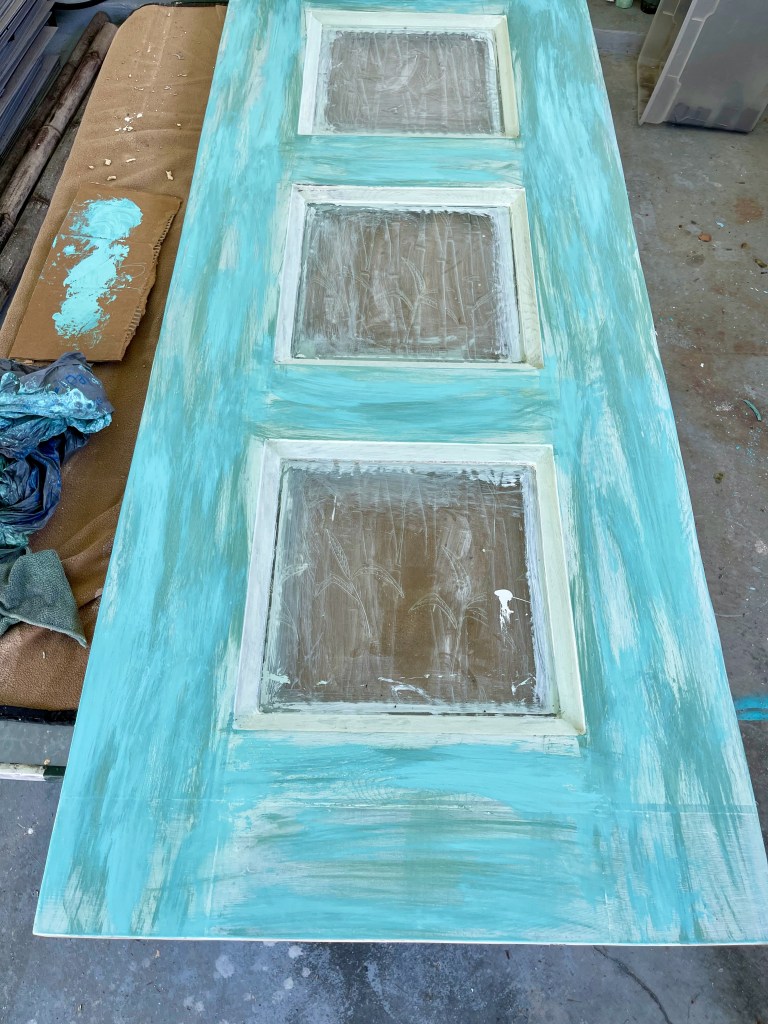
Finally, with a design idea in mind I started working on the table: I stripped off the multiple layers of paint, cut it to fit the glass from the storm door, sanded (and sanded and sanded), and painted. Once I was satisfied with the outcome, I repeated much of that process with the legs.
Since bamboo is mostly hollow (except at the growth joints) I screwed PVC plumbing end caps to the table. The bamboo slid over the caps snugly and were glued and screwed into place. I repeated a similar process on the bottom and attached felt pads to the feet. In addition I mounted brackets to each leg for extra support. To highlight the glass bamboo inserts, I hung mini lights on the underside of the table.
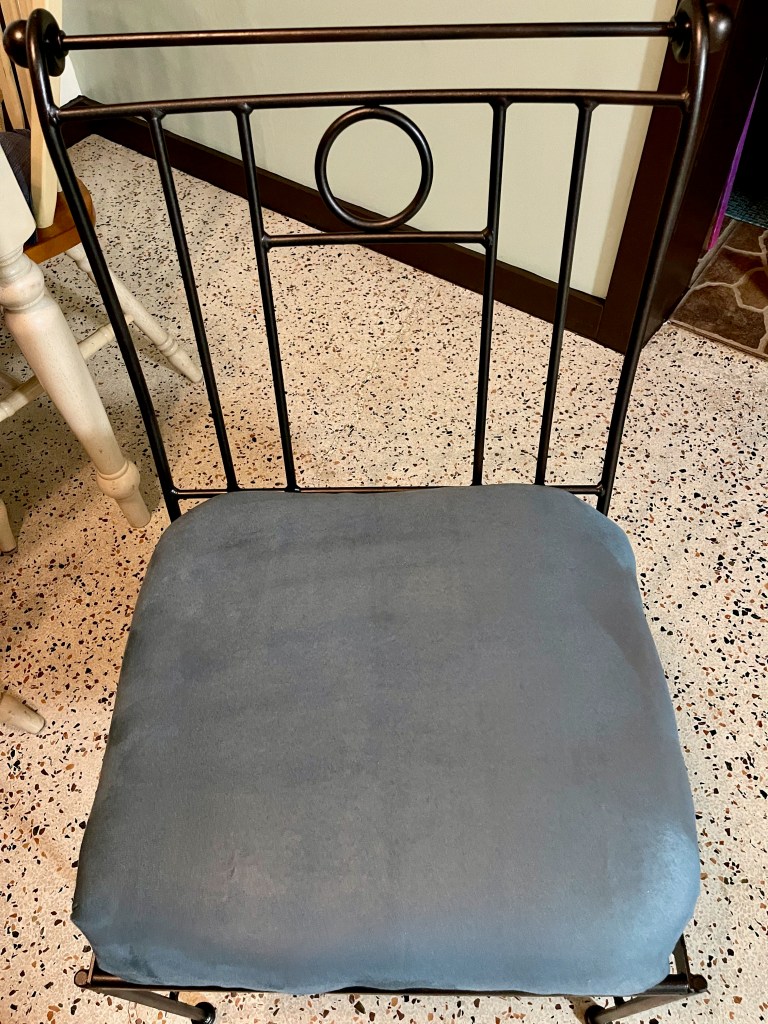
As I was nearing completion of the table it occurred to me that I’d need things to sit on. A few days later I picked up 4 metal chairs for free. A bit of paint, some new cushion and fabric and I was in business.
Shortly before Thanksgiving I sold my old dining room set (for $10 more than I paid for it) and moved the new table into place. Total project cost: $40 (I had to buy the bamboo, lights, brackets, PVC, and fabric – everything else I already had or was free). Actual cost? Priceless! I’m delighted with it and it is definitely one of a kind!
Note: I will be making a bench for the far side of the table (again using bamboo legs) at some point in the future.























 3rin's View...