Comes in Waves

IMG_6702

My daily beach walks are never just a casual stroll through the sand. I detest litter and have been picking it up since childhood. Chalk it up to my peculiar temperament, but I can’t relax in a messy home and it is next to impossible for me to unwind in a trashy outdoor space. Since the beaches here receive unceasing deposits of flotsam, I carry a bag with me on my rambles.

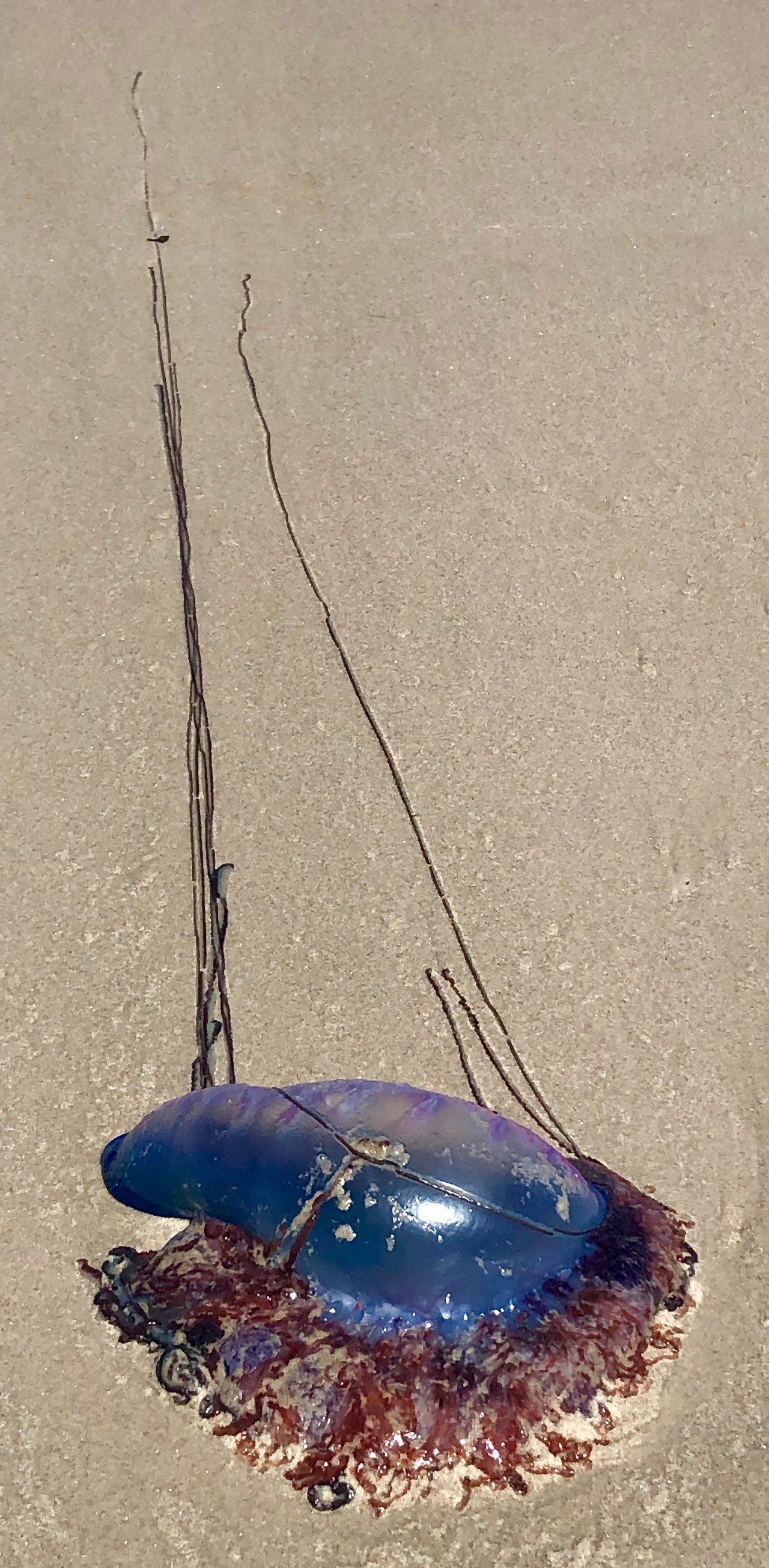
I can rely on there being a myriad of plastic pieces and shreds of plastic bags as well as a staggering amount of cigarette butts. Every. Single. Day. Sometimes I’m surprised by a cool, random object (like money). The prevalence of three specific items ebbs and flows: hair ties, acrylic nails, and band aids. I don’t understand it, but every so often there is an upswing of one of those items. Today happened to be band aid day; I collected a whopping 23 of them. They come in waves (literally, and umm, literally).

Pretty, Deadly

IMG_0866

This Eastern Coral Bean (Erythrina herbacea) is very similar to the Western Coral Bean (Erythrina flabelliformis) I grew up with in Tucson. Interestingly, the Eastern has been found growing in isolated populations in Southern Arizona, believed to have been imported through trade by the Mogollon culture. Both species owe their common name to their vibrant red seeds. The plant is full of toxic compounds that can cause paralysis when ingested.

The seeds have been used to make personal adornments, like necklaces, for thousands of years. I once read that Spanish missionaries made rosaries out of them and when they kissed the beads they inhaled the powder and were sickened. Perhaps poetic justice for forcing Catholicism and fealty to the crown onto the indigenous cultures?


Nesting Season

IMG_0903

I discovered this egg rolling in the waves on the beach a few days ago. Based on a bit of research, I’ve determined it came from a Laughing Gull (Leucophaeus atricilla). They are the most prominent birds here and we are smack in the middle of nesting season. In fact, part of the Rockport Beach peninsula is closed right now to protect the nesting area. Several stages of the season were observable.

IMG_3263

Mating Laughing Gulls, Rockport, Texas May 2019

Is it just me, or does she look irritated?

To actual nesting:

IMG_3256

Laughing Gull Pants in the Heat While Nesting, Rockport, Texas May 2019

The pair will take turns tending the nest during the three to four week incubation period. I have yet to see any hatchlings but I hear that they are exceedingly well camouflaged so it will prove to be a challenge.

Moonfire

IMG_6622

Moonfire, Mustang Island, Texas April 2019 (note moon and moonwake to the right)

A few weeks back I had the distinct pleasure of attending Moonfire. It was the first one since I moved down here (it was cancelled in February due to bad weather and March was skipped because it conflicted with Spring Break). My friend Deno (who is the unofficial Port Aransas mascot), is the host of this long-running-full-moon-bonfire-beach party. We were fortunate to have Dan Sullivan playing for us (one half of the talented band, The Detentions). What a fantastic way to spend an evening! As Dan said, beach life doesn’t suck.

Dan, playing a snippet of Coast, one of my favorite song by The Detentions!

My Favorite Pecan

IMG_6396

The (Original) World’s Largest Pecan, Seguin, Texas March 2019

According to the sign next to this nut, Spanish explorer Cabeza de Vaca was the first European to describe the pecan, noting they were “good food”. Apparently, he had plenty of time to get familiar with the nut since he was held captive along the Guadalupe River for nine years.

Built in 1962, this statue is five feet long, two and a half wide, and weighs in at 1,000 pounds. For comparison, I placed an actual pecan and some nut meat that I found nearby on top. This is undisputedly my favorite pecan ever!

Let me tell you why: We had pecan trees when I was a kid and while gathering the nuts was a fun scavenger hunt, the shelling was excruciating. The tedious, messy, and finger-staining job fell to me. As Thanksgiving and its promise of pie neared, my weekend was shot. Seated at the picnic table, I had a 5-gallon bucket of pecans on my right, an empty one on the other side, and in front of me on the table sat the weapon of torture; the Texas Nutcracker.

This contraption was a gift from my favorite Aunt to Dad one Christmas. To say I did not think fondly of her when using it is an understatement. The procedure: pull back slider, insert pecan length-wise into grooved bed, attach the two heavy-duty rubber bands firmly around the peg on the base and the slider mechanism, pull the slider back six inches, (ooh, and this part is important) remember to move fingers before releasing slider.

With a loud snap, the slider pounded into the hard shell. If all went well, my fingers did not get pinched, pieces of shell did not fly out and scrape my skin, and the shell was cracked enough for me to pry it open and retrieve the mostly intact nutmeat halves (which Mom strongly preferred over pieces).

The spent shell I dropped into the empty bucket, destined to return to the tree as mulch. Ah, but I was not yet done, I still had to carefully remove the dark and bitter-tasting pith from the deep grooves in the nutmeat. Finally, the finished product plinked into the bottom of a large stainless steel bowl. One nut done; hundreds or thousands (it felt like millions) of nuts to go. It should come as no surprise that I still abhor pecans (and detest pecan pie).


Sea Butterflies

IMG_0797

The endlessly colorful Coquina clam (Donax variabilis) lives along the southern Atlantic and Gulf of Mexico coasts. Since the two halves are often found still attached after death, it earned the common name Sea Butterfly. This small, saltwater bivalve (no larger than an inch) lives under the sand in the littoral (or swash) zone and is considered a keystone species since so many others rely on it as a food source. The Shark Eye Moon Snail, for instance, drills into the clam, injects digestive juices, and then slurps out the mush (note the holes in some of the shells in the above photo). Willets, on the other hand, gobble coquinas whole, letting their gullet grind the shells, before regurgitating the undigested pieces in chromatic clumps.

IMG_9506.jpg