Cartilaginous Fish Parts

Since shark skeletons are comprised of cartilage not bone, their parts aren’t that commonly found on the beach. The one exception to that rule is shark teeth, but those are made of dentin, a calcified material which is harder than bone. (Side note: The average shark goes through over 25,000 teeth in a lifetime.)

As you can see in the first photo, the cartilage is added in layers, which creates a tree-ring-like signature that can aid in assessing the shark’s age. Some researchers are even extrapolating environmental information from the isotopes captured in each ring. Nature is so cool!

Happy 4th!

Or, as it’s known in my weird little circle of friends, Happy Dennis Day! No matter how you are spending it, I hope everyone has a relaxing holiday. Stay safe out there!

Sea Beans

Since it is a barrier island, lots of interesting items wash ashore on Mustang Island. I don’t typically find many shells there but I still enjoy poking in the wrack line looking for treasures. I tend to get a bit excited when I uncover a sea bean.

I haven’t been able to identify all of the ones in the above photo but a few have amazing stories. At the top of the picture, the two ball-shaped seeds are Sea Coconuts (Manicaria saccifera) which, unsurprisingly, come from palm trees in Central America.

The two maroon, heart-shaped seeds to the left of the Sea Coconuts are known as Sea Hearts (Entada gigas). They are the seeds of the monkey ladder vine which grows in Brazil. While the whitish, brain-shaped seed to the right is known as Blister Pod (Sacoglottis amazonica) which grows along the Amazon River.

Think about that for a moment, these seeds float down the Amazon River, out into the Atlantic Ocean, before curling into the Gulf of Mexico, and eventually ending up on the beach for me to find. A journey of at least 3,600 miles. I wonder how long it takes them to make the trip?

Pelican Pier

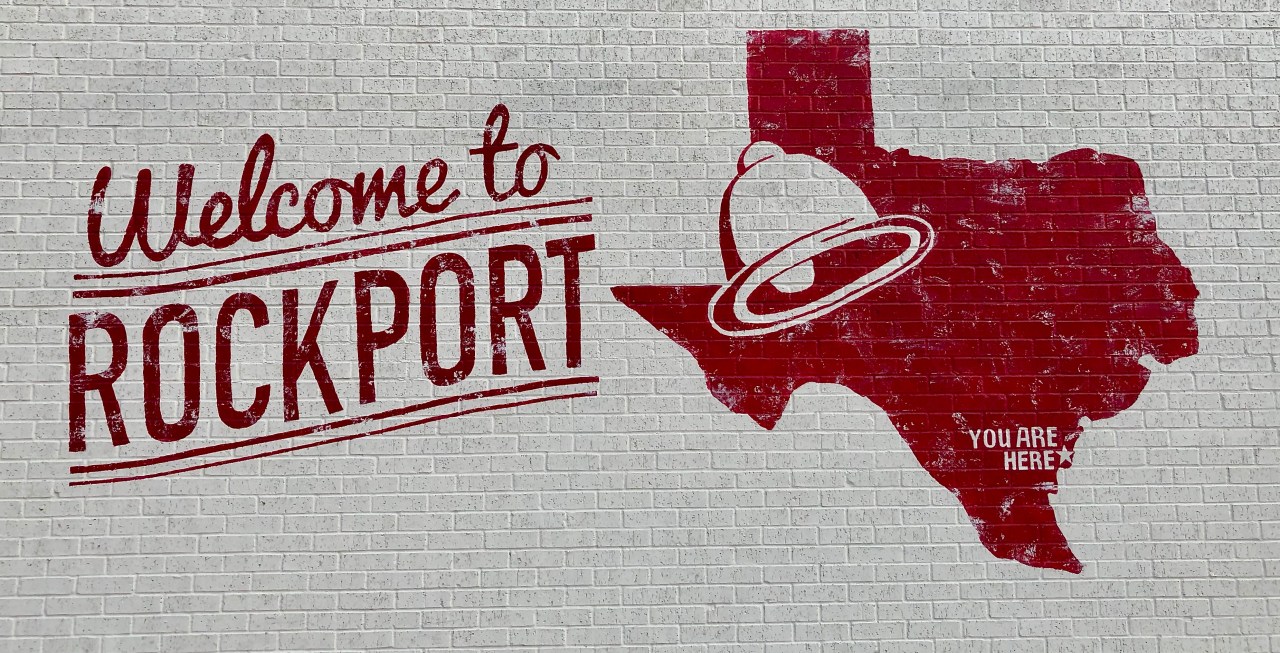
There are a number of private fishing piers jutting out into Little Bay here in Rockport. Most of them were severely damaged by Hurricane Harvey in September 2017. Pelican Pier is one of the few to be fully rebuilt.

IMG_4108

Pelican Pier, Rockport, Texas July 2019

While the pier may have earned it’s moniker as a preferred resting spot for pelicans in the past, it certainly wasn’t true this year. Both the American White and Brown Pelicans opted to share a nearby derelict pier. More restful, I presume. While the American Whites migrated north around Easter, some of the remaining Browns still haul out there.

IMG_1367

Gulls, Brown Pelicans, Cormorants, American White Pelicans on Pier, Rockport, Texas March 2019

Will Detour for Beer

As I mentioned yesterday, I had a good reason for my roundabout way home from New Braunfels. My impetus was the Spoetzel Brewery in Shiner, proud brewer of Shiner Bock (which is the best selling bock in America, according to the brewery tour). I’ve toured quite a few breweries across the country, so I figured I’d add another one to my tally. Yes, I’ve even toured the original breweries of the big three, which, regardless of what you think of their products, are worth visiting, if just for the historical perspective.

Spoetzel is celebrating its 110th year in production, making it the oldest independent brewery in Texas. After struggling in the late 1980s, the company was purchased by a San Antonio businessman who turned it around. They are now producing 1.2 million barrels a year which is distributed in all 50 states (they just added Hawaii), and they are continuing to expand.

As the largest business in tiny Shiner, the brewery had to innovate. They sell their spent grain to cattle ranchers, the used yeast goes to dog and cat food manufacturers, and they recycle their own wastewater (using the methane produced to heat the mash). As usually happens on these tours, I was able to sip special beers that aren’t bottled.  A free tour with free samples = a great way to spend an afternoon!