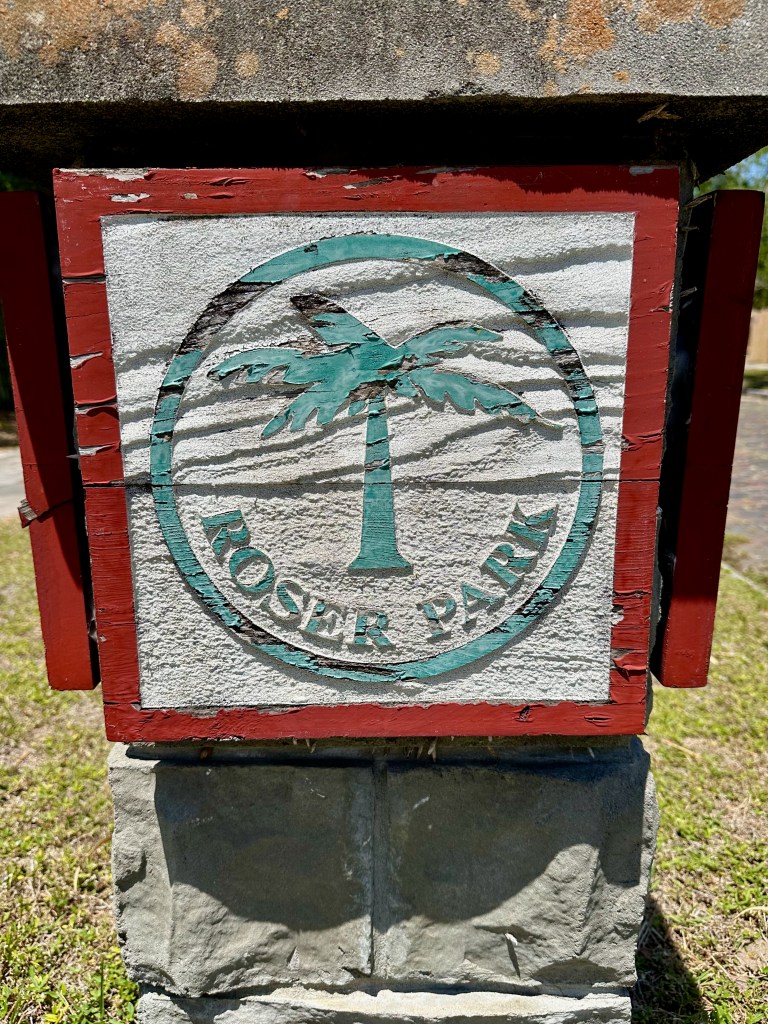

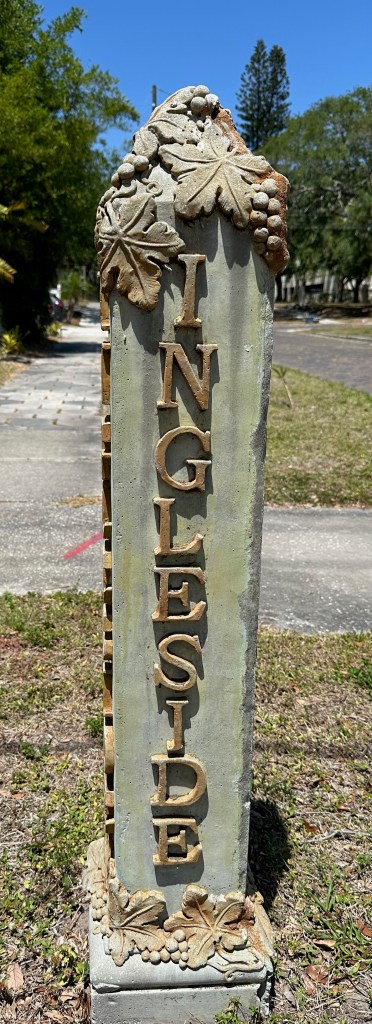




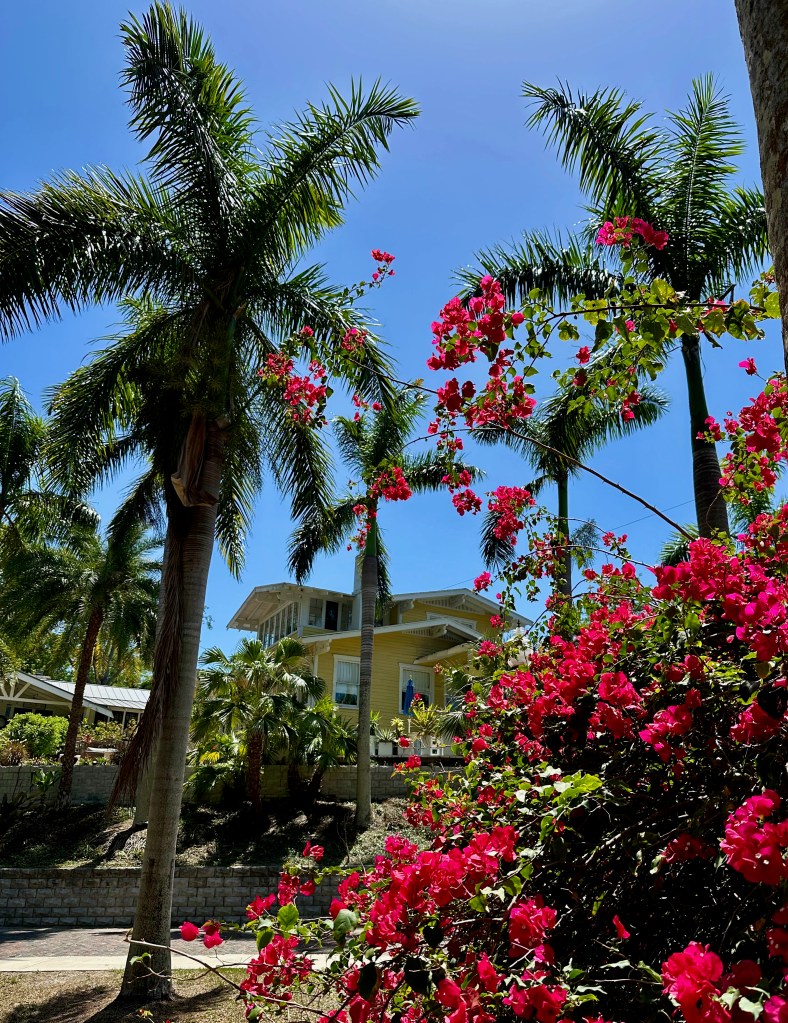
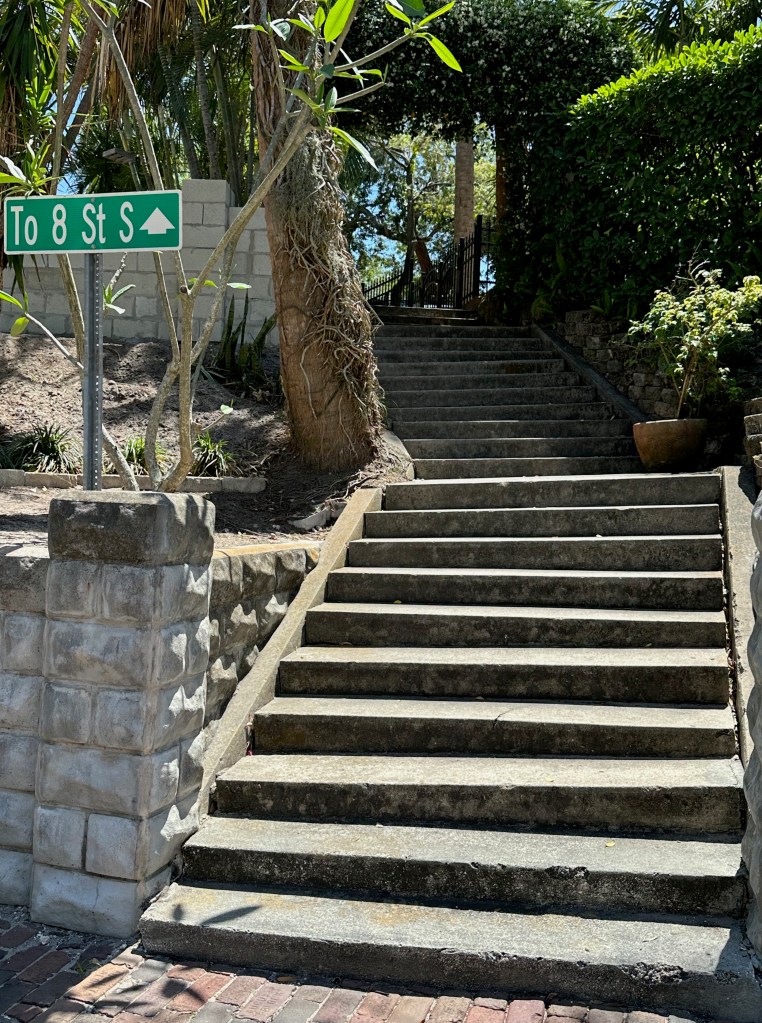

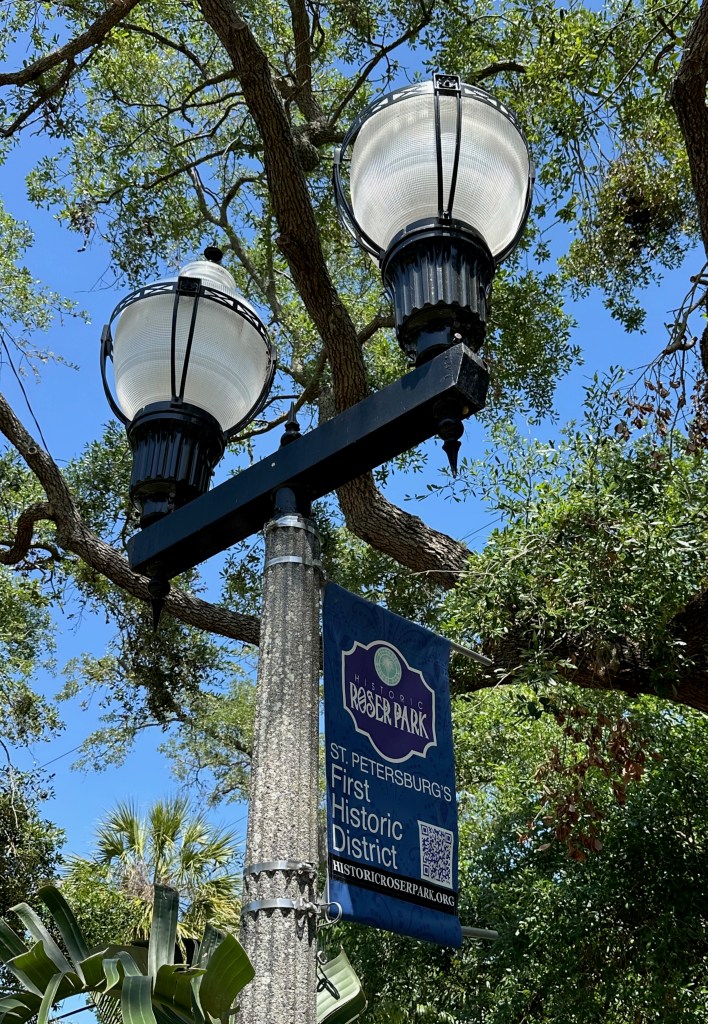


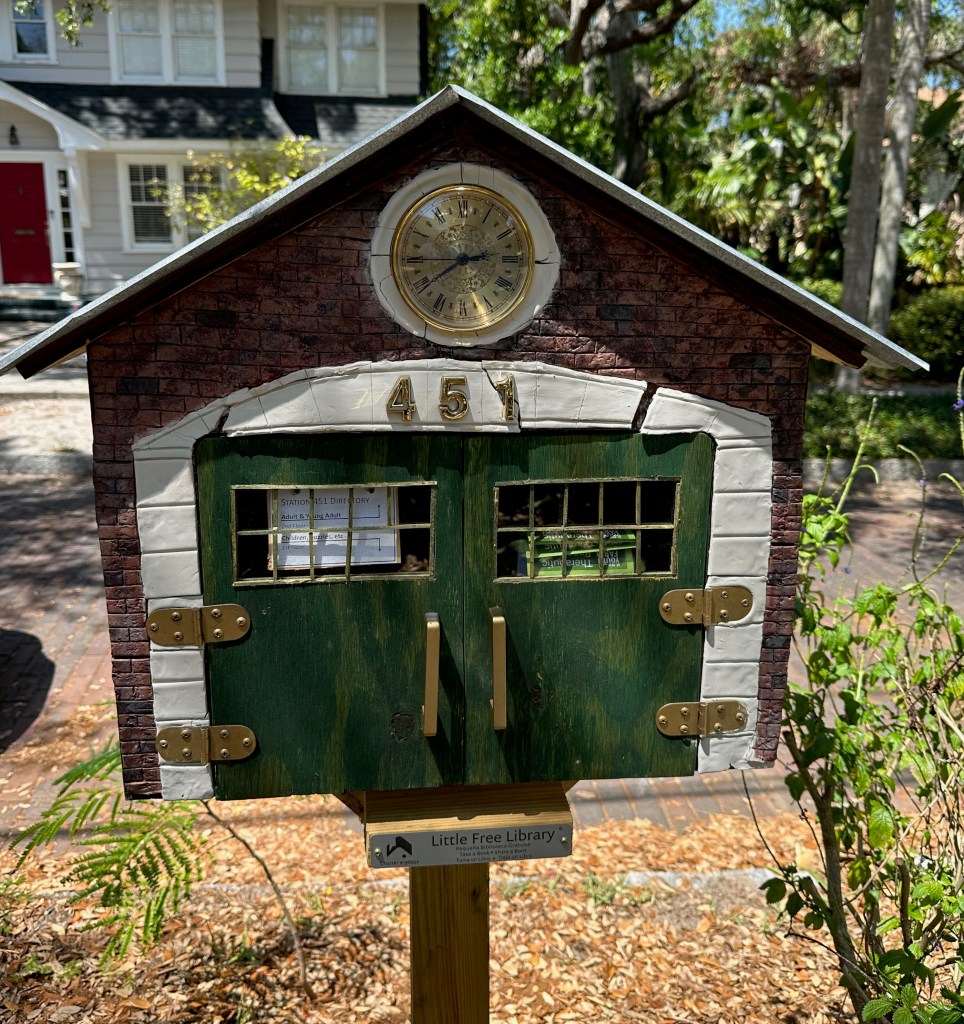

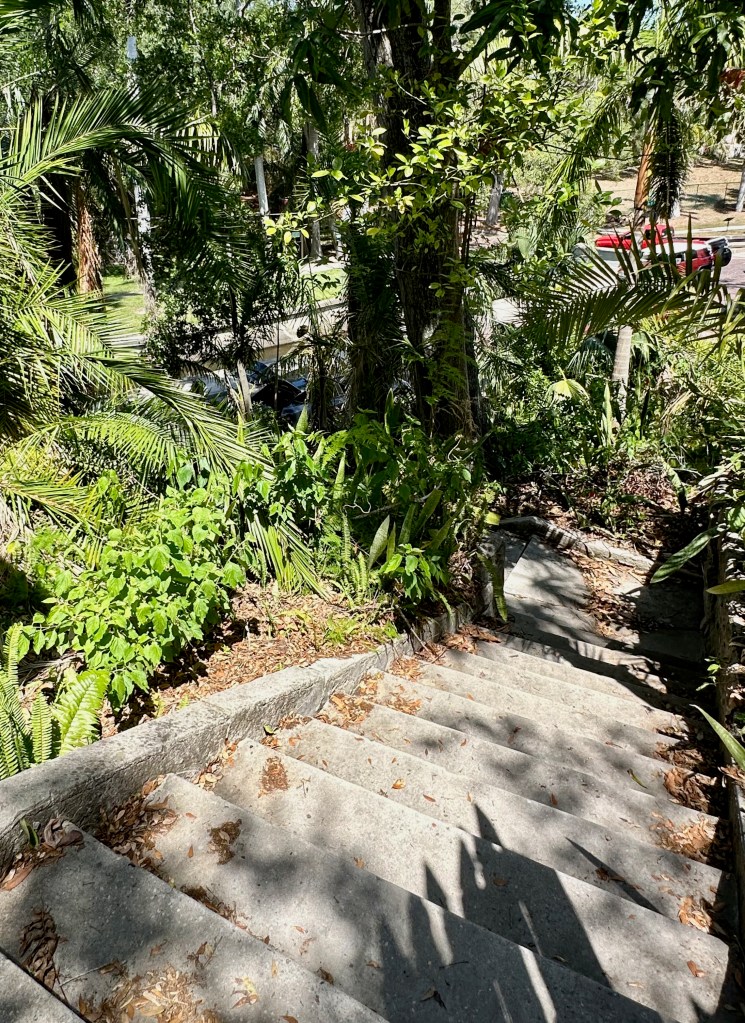

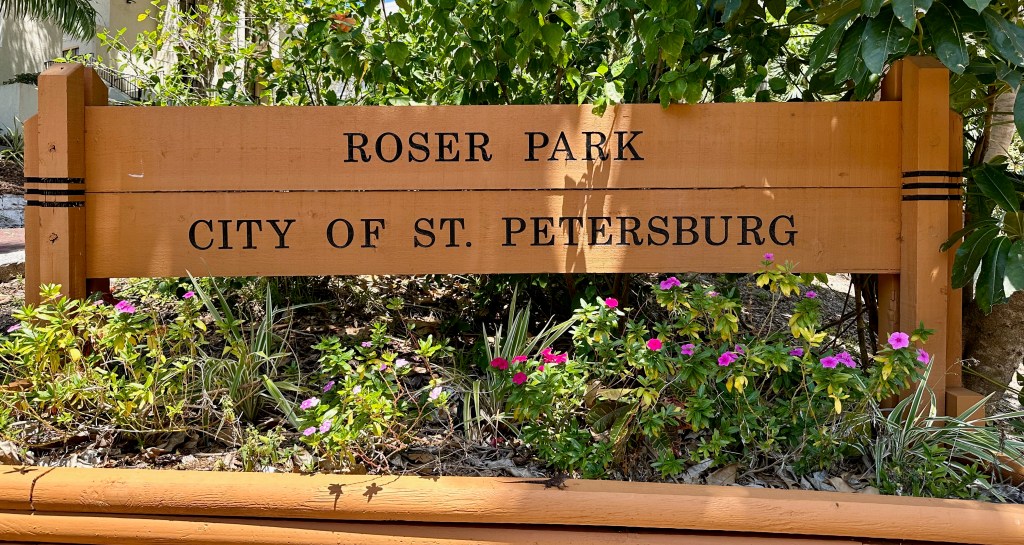
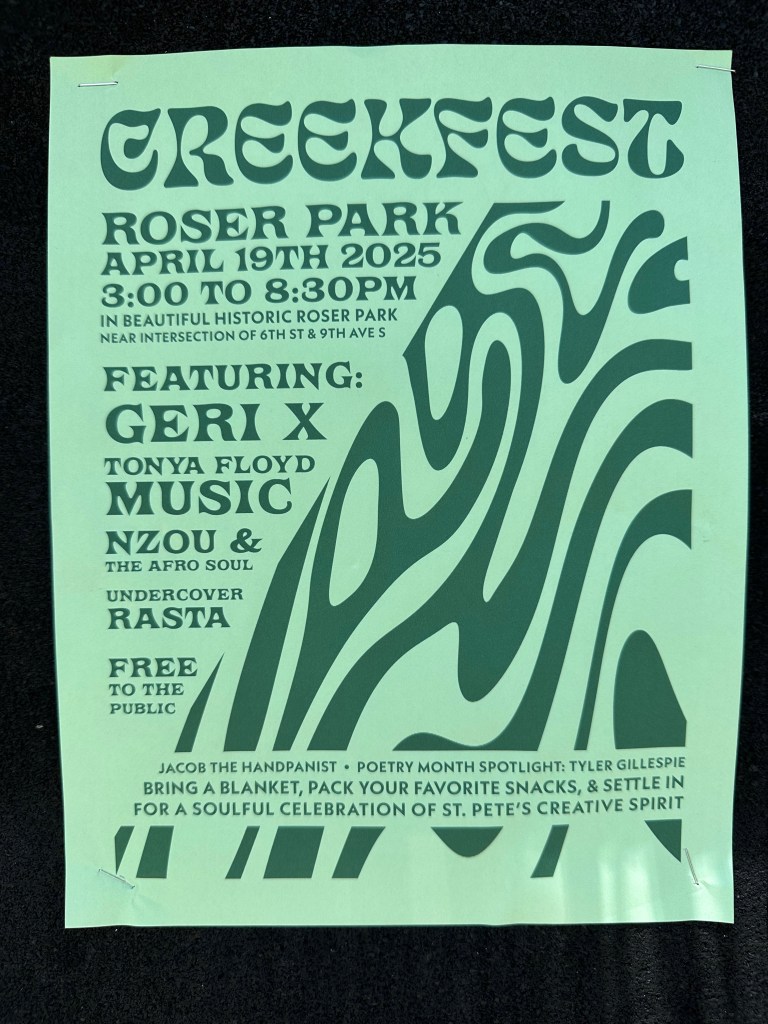
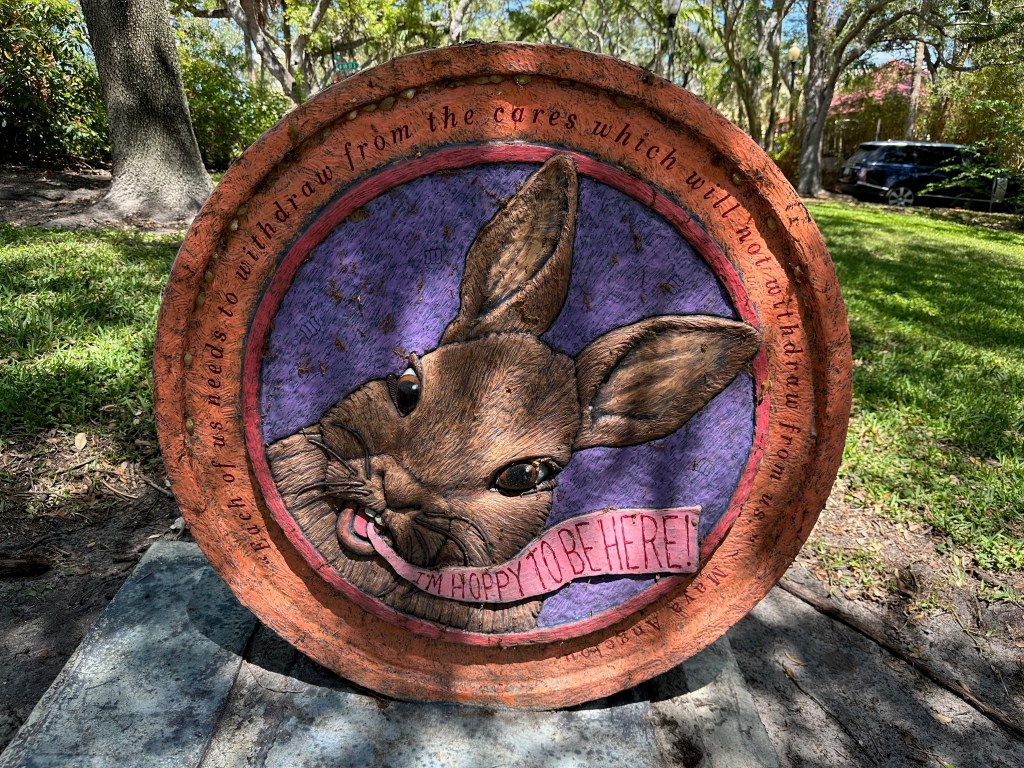
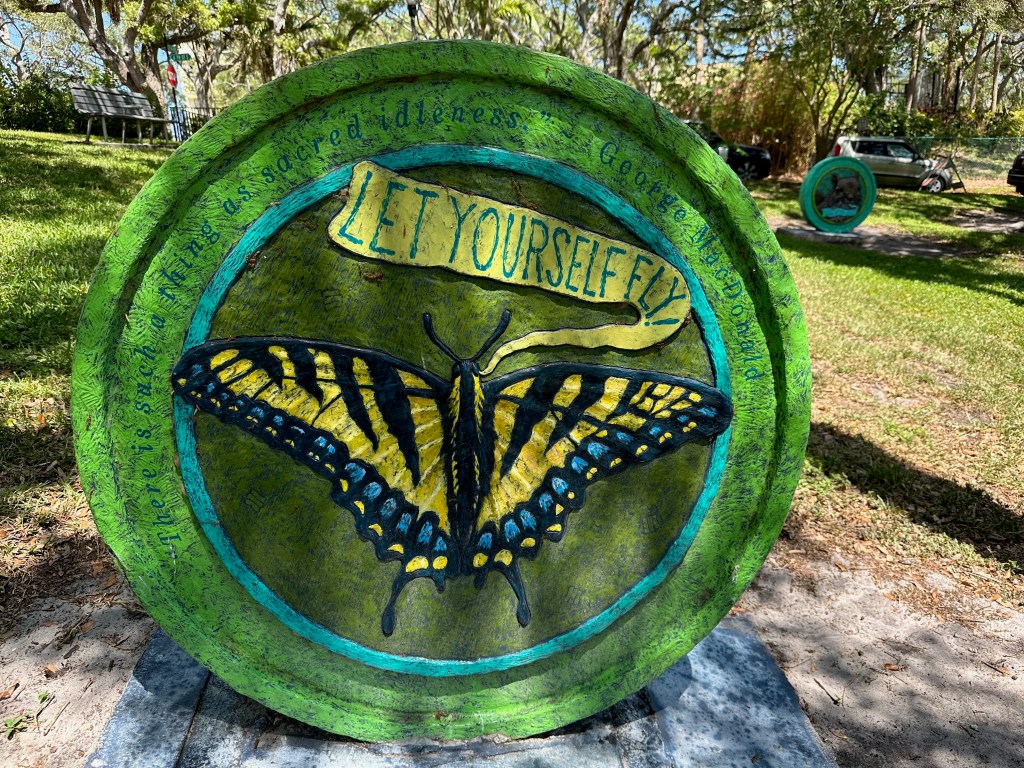
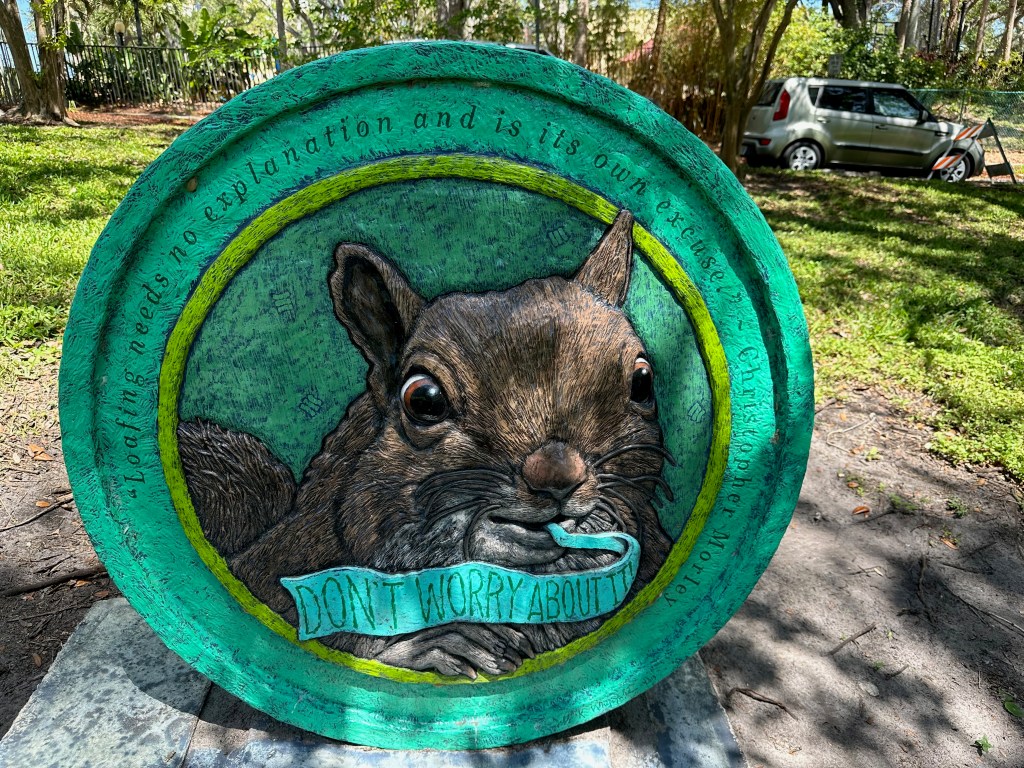
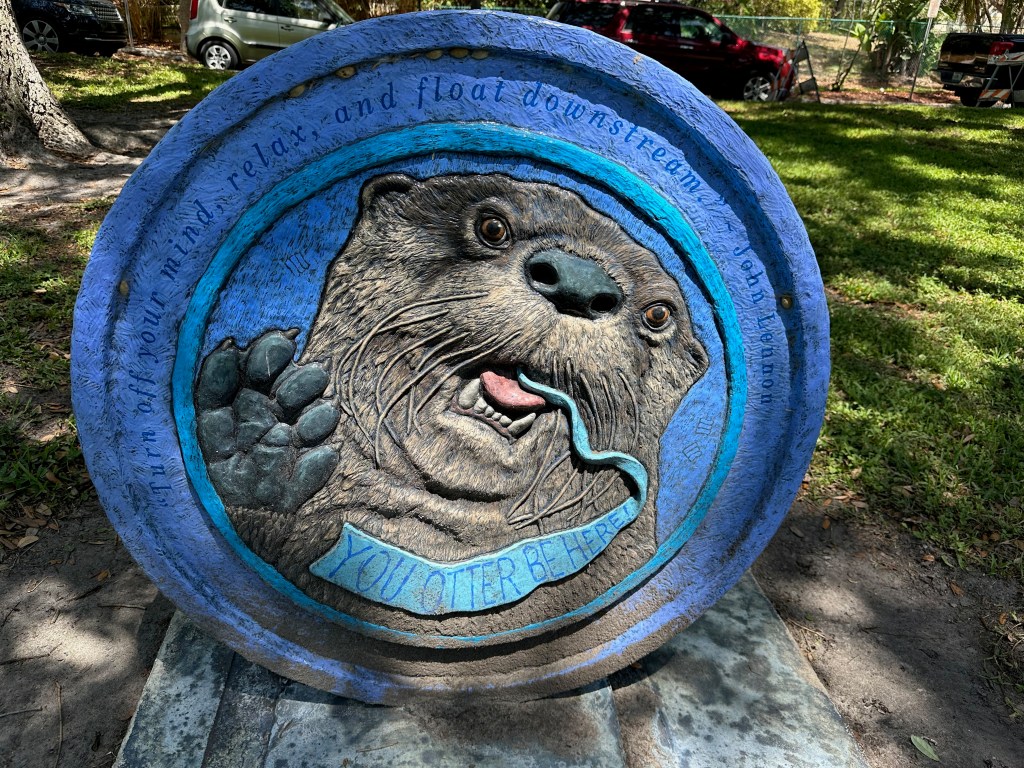



This past Saturday afternoon, I was drawn to Creek Fest, an afternoon of live music in the Roser Park neighborhood. Since I arrived early, I went for a stroll along the narrow, shady streets of the historic district.
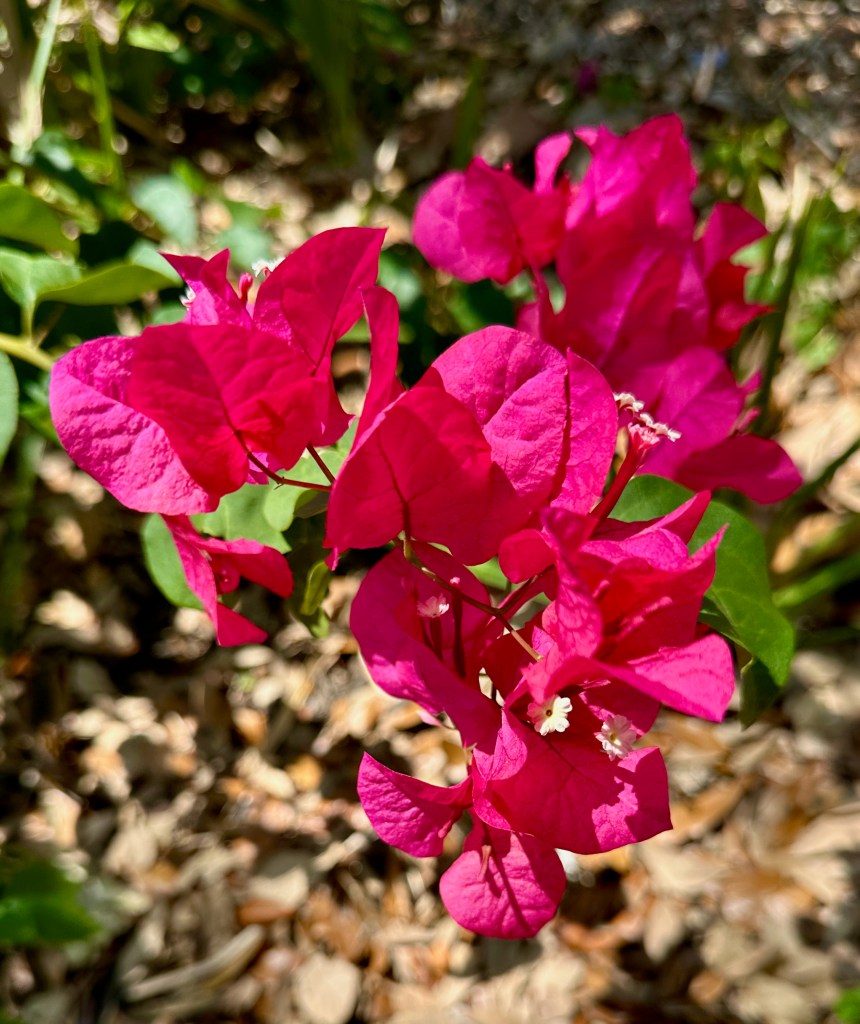
This area south of downtown was transformed by Charles M. Roser, who fell in love with the jungle-like gully of Booker Creek shortly after moving to St Pete in 1911. The vision for his development was quite impressive; each house was required to be unique and of high quality, lush tropical foliage was enhanced by planned plantings with a focus on colorful blooms, brick paved streets followed the natural, winding path of Booker Creek, and finally, for the good of the community, he set aside land for a park, a school, and a hospital (all of which still exist in some form).
Mr. Roser was not alone in his appreciation of the location, the Tocobago people had lived along the fertile banks of Booker Creek for hundreds of years, as evidenced by the artifacts and large shell mounds they left behind.
My favorite stop of my informal tour was the Bradshaw House, a large classic, colonial revival home named for one of St. Pete’s early mayors. Not only has it been lovingly restored but it has a fun history. It was once known as the Zilch House. The name bestowed by a group of bachelors who rented the house starting in 1925. They creatively called it that, so they could say they were the last listing in the phone book (remember those huge tomes?).
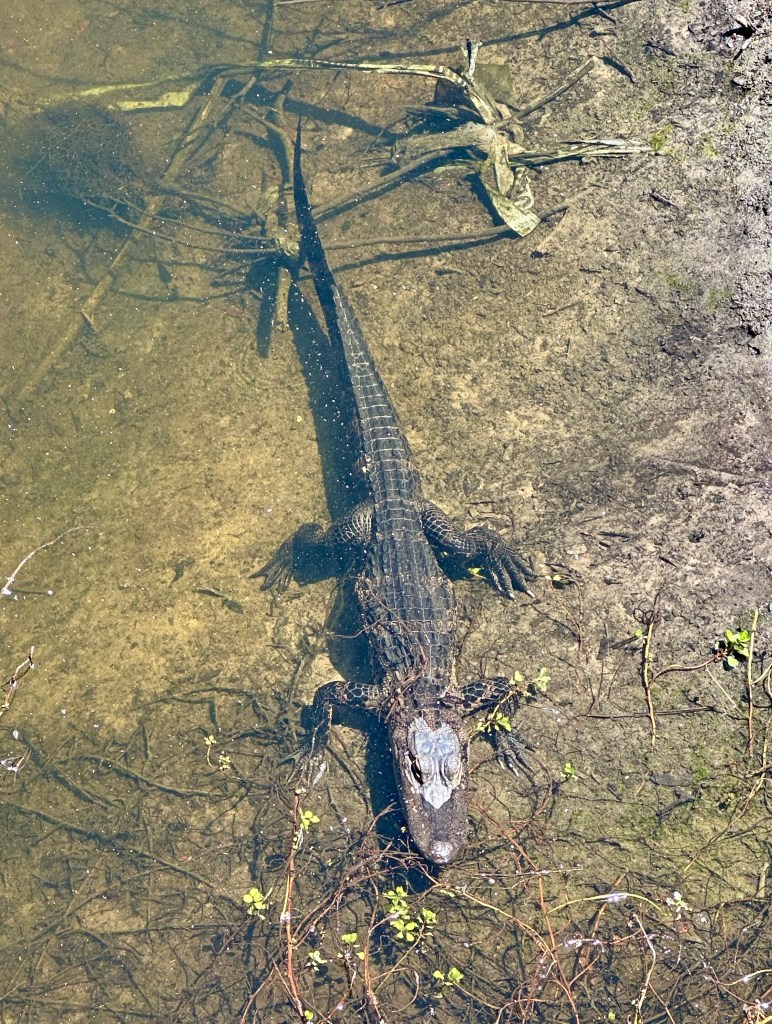
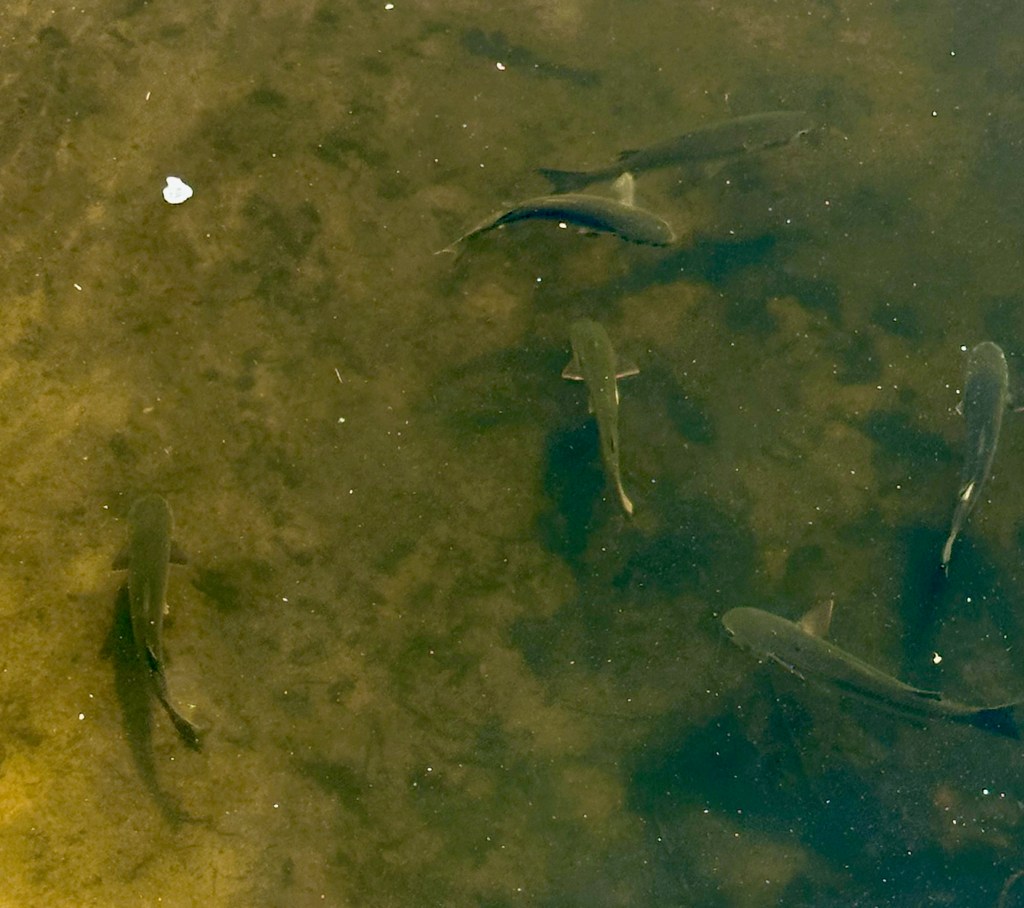
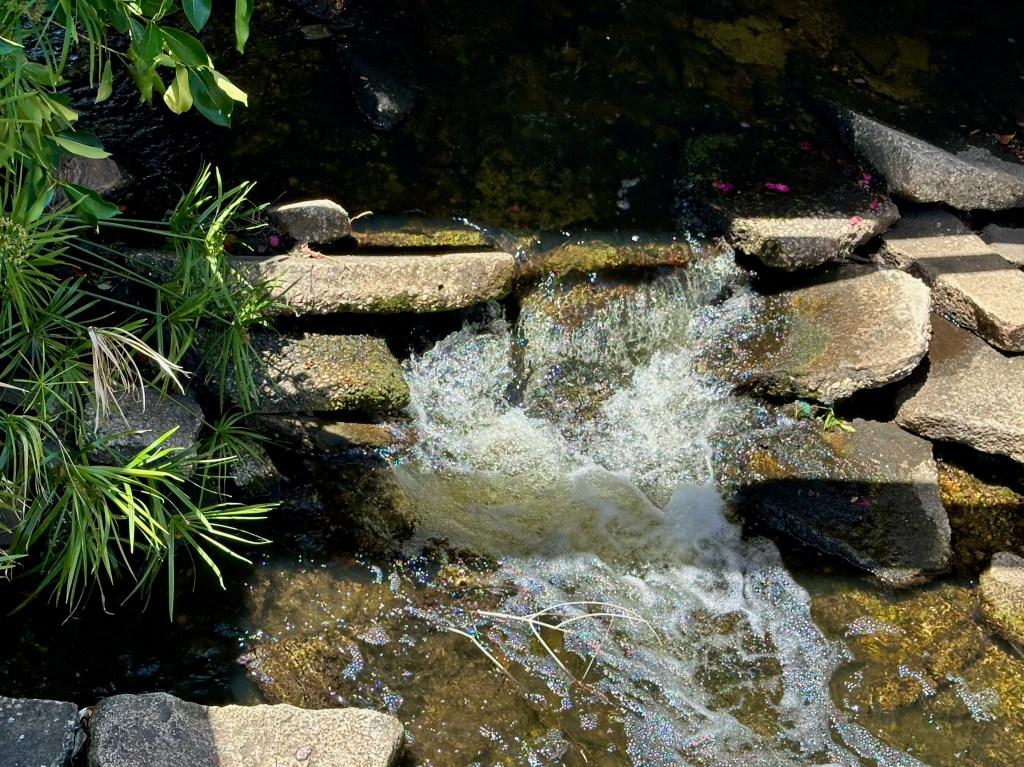
While the area’s history and lush foliage were charming, I most enjoyed watching the trickling of the creek. I was not alone in my appreciation of the water, I noticed several turtles, ducks, and even a young alligator. The rest of my afternoon I spent relaxing on the lawn, listening to live music while the delicate, tropical scent of plumeria wafted in the air. Over a century later, I think Mr. Roser would be pleased with how things turned out.