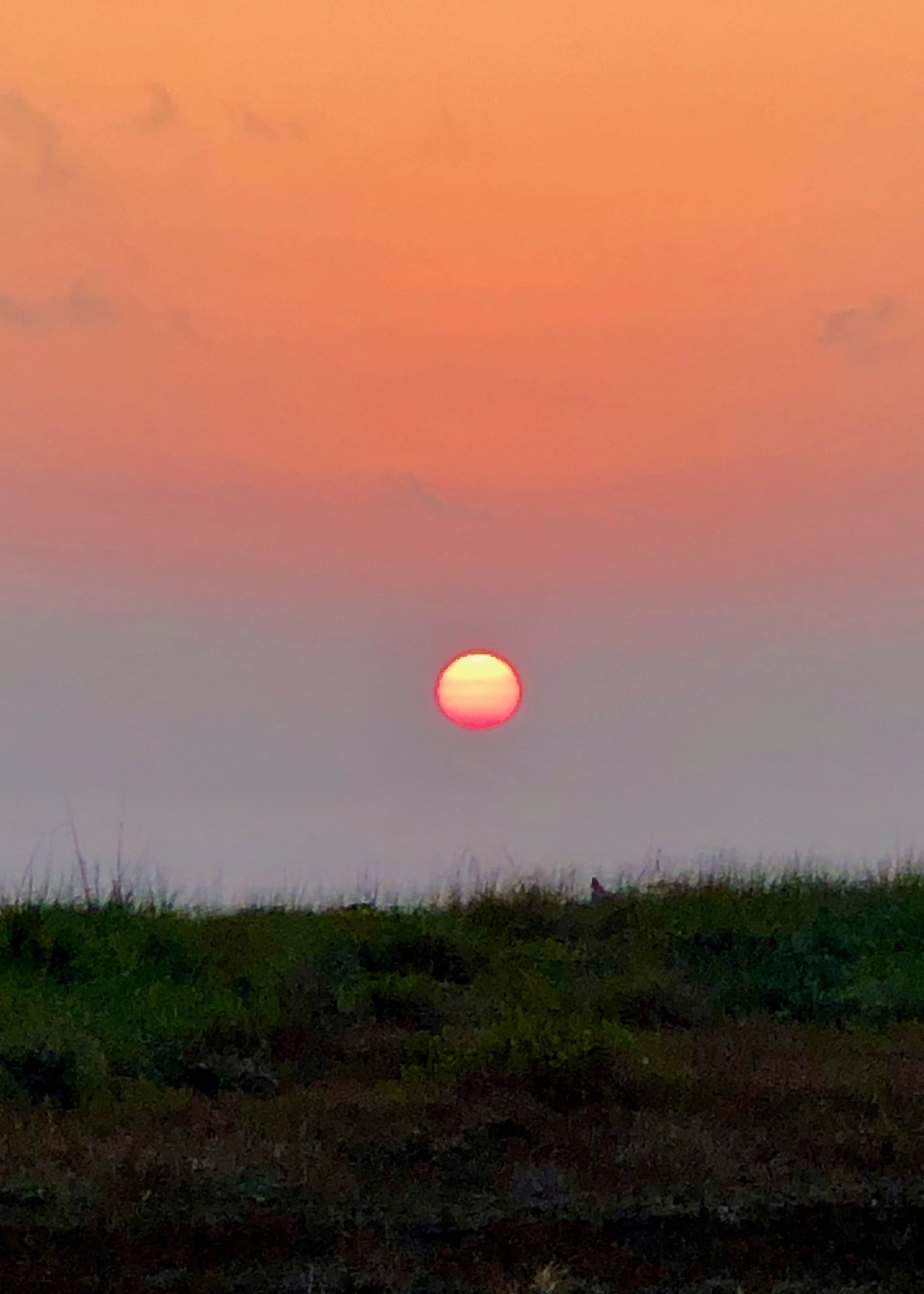
Relaxing View

IMG_7785

Gulf of Mexico, Treasure Island, Florida March 2020

I don’t know about you but I’m happy to close the door on March. Here’s hoping that April is kinder to us all. Stay safe and healthy, my friends!

Note: While our beaches closed to the public ten days ago, they are allowing local residents access to the beach with one important caveat, we must stay on the wet sand. As a very nice officer explained to me, the ocean is not closed so anything that the water touches is fair game. Just as long as I observe social distancing rules.

Dappled Beauty

Last week, I was so busy looking up at the trees that I almost stepped on this striking Eastern Cornsnake (Pantherophis guttatus). Before I was even consciously aware that anything was in the trail, my brain forced my body to take two giant steps backwards.

I suppose my conditioned response was the result of growing up in the Sonoran Desert where my encounters with rattlesnakes far outnumbered my meetings with non-venomous serpents. Knock on wood, but I’ve never been bitten or even struck at, though that distinctive rattling sound kicks my heart rate up every time.

Sadly, this snake is often confused with the venomous Eastern Copperhead and killed. One of the traits that differentiates the two is the eyes. If you get close enough (or, may I suggest a zoom lens) look for round pupils versus the cat-like eyes of the copperhead.

By the way, guttatus is Latin for spotted or dappled. What an attractive snake!

IMG_7731

Colorful Eastern Cornsnake, Largo, Florida March 2020

Florida Forest Hare

While touring yet another new-to-me park I came across this dainty Eastern Cottontail (Sylvilagus floridanus). There are two rabbit species found in Florida, the other being the smaller darker, Marsh Rabbit (Sylvilagus palustris) which, as the name implies, lives in wet areas and is a surprisingly good swimmer.

Confusingly, even though the Eastern Cottontail is a rabbit, the genus name is Latin for “forest hare”. While both rabbits and hares are in the order Lagomorpha there are significant differences between them. Hares are born with sight and fur (or hair, if it helps you remember) while rabbits are born blind and naked. Hares also tend to be larger (like the jackrabbits I grew up with in the Sonoran Desert).

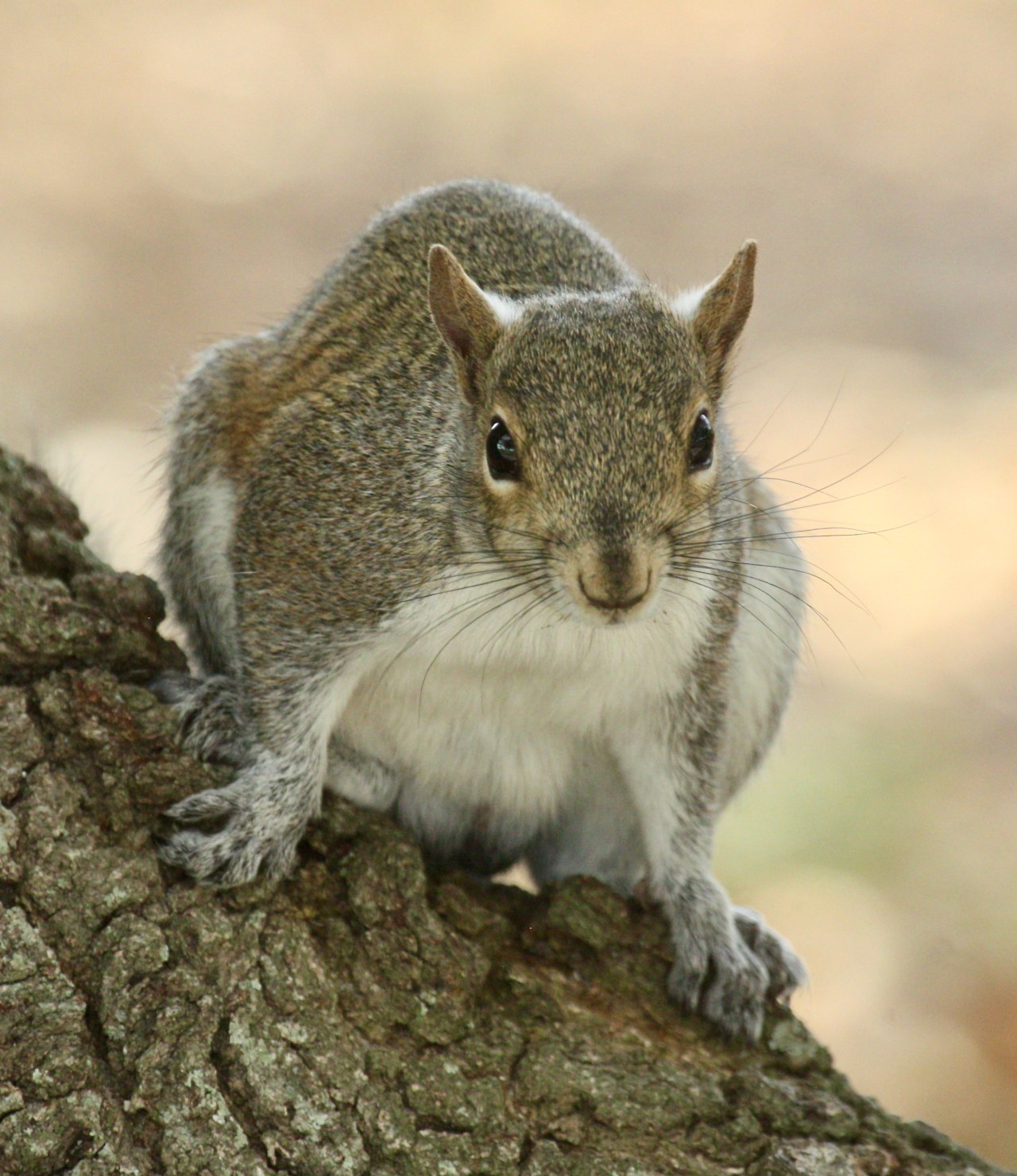
IMG_8092

Pause for Paw Cleaning, Dunedin, Florida March 2020

Free Roaming Bovine

ES1UdQbXgAIFczk

Obviously, we all need something to smile about these days and if this story doesn’t moove you then I don’t know what will! Apparently this speedy and wily girl has been roaming the streets since late January and as far as I can tell, she’s still on the lam(b). Run, cow, run!

This story brought to mind a fun song I was introduced to years ago when Dana Lyons held a concert in Tucson. It was a catchy tune filled with puns so, of course, I loved it! Believe it or not, Cows with Guns actually charted in England back in the 90s.


More Than Pretty

IMG_7687

Bee Attracted to Pickerelweed Flower, Largo, Florida March 2020

Pickerelweed (Pontederia cordata) is an aquatic plant, native to North America, that can be found from coast to coast, south to north, primarily in areas with quiet waters. Sources say it is supposed to flower in late summer (June through October) but these were already blooming. I know its been warm down here (in the mid 80s) but late March is nowhere near summer!

This is not just another pretty flower, it is also a good nectar provider for pollinators and their leaves offer shelter to small fish. On top of that, the nut-like seeds are edible as are the tender young leaves. Most sources recommend cooking the latter like greens* and serving them with butter. Because butter makes everything better, no?

*Greens, for those of you not knowin’ no better, is the southern term used for collard greens.


Social Distancing Fail

IMG_7662

I stumbled across these Eastern Lubber Grasshopper (Romalea microptera) nymphs yesterday while wandering a local park. The adults measure about three inches long, making this one of the largest species of grasshopper in North America.

As for this horde, females lay hundreds of eggs in clusters in the soil. After hatching the nymphs huddle together as they are a desired food source for spiders, other insects, and birds (who have ravenous youngsters to feed this time of year).

Since the species is unable to fly (would be defying the laws of physics at their adult size) they have devised some creative mechanisms of self-defense: they dine on toxic vegetation which provides them a venom they can spit, they also hiss, and assume an attack position when threatened. Yeah, I’d leave them the heck alone!

As a result, the adults are very rarely predated upon. Excepting the Loggerhead Shrike, which is just a badass bird in every way – we should all be glad they aren’t any bigger than they are or we’d all be in trouble!

By the way, lubber derives from old English which means lazy or slow moving. They are fascinating creatures which have mastered some excellent techniques for survival. However, at social distancing? Epic. Fail.


IMG_7668

Snakebird

Anhinga (Anhinga anhinga) earned its nickname Snakebird for swimming with its entire body submerged, with only its sinuous neck and head showing. Like cormorants, they do not have waterproof feathers which is a boon for diving and swimming (waterproofing captures little air bubbles which make a bird more buoyant). However, it means a lot of time drying out in the sun since if they get too waterlogged, they can drown. A delicate balance, to be sure.

Oddly, the Anhinga is a waterbird with a penchant for heights. It often catches afternoon thermals and soars high in the sky in a distinctive cross shape. The name Anhinga comes from the Tupi language in Brazil and translates as “devil bird” – though I don’t know how it earned that moniker.

IMG_7472

Heart-shaped Anhinga Wing, St. Petersburg, Florida March 2020

The Cuban Invasion

The Cuban or Brown Anole (Anolis sagrei) is, as the name implies, native to that Caribbean island. This highly invasive lizard was first reported in the Keys in 1887. It remained largely relegated to southern Florida, until 2004 when it was documented all the way up in the Panhandle. It is now one of the most commonly seen lizards throughout the state.

The secret to their success? They reproduce rapidly and, as I read, they’ll eat “nearly anything that will fit in their mouths” (insects, fish, eggs, and even other lizards). Sadly, for the slightly smaller, native Carolina Anole (Anolis carolinensis) that means they’re on the menu, too.

The relatively recent arrival of the Cubans in central and northern Florida has forced the natives to quickly adapt. Carolina Anoles have moved further up into the canopy and in just 15 years their footpads have increased in size to help them with their new, predominately arboreal lifestyle. Hopefully, this separation of territory will lead to a détente that will allow them to coexist.

IMG_7415

Look At That Spiral!

Unexpectedly Chromatic

IMG_7361

Peacock Body

I noticed a sign touting the significance of a spot across Boca Ciega Bay from me back in December but it wasn’t until this week that I finally explored it. While most people visit St. Petersburg’s Jungle Prada Park for the boat ramp, the small park is packed with history. It is purportedly the landing place of the Spanish Narváez expedition of 1528 and it protects the majority of a Tocobaga shell mound (the other section is owned by the Anderson family).

For my fellow history buffs: The Pánfilo de Narváez expedition left Spain in 1527 with the intent of establishing Spanish forts along the Florida Gulf Coast. To say it was ill-fated is an understatement. They lost two ships in a hurricane near Cuba and further storms forced them to land along Boca Ciega Bay.

Dispirited, Narváez declared the area most unsuitable for settlement (Ha, tell that to the 4.5 million people currently living here!) and pushed on, determined to cross the gulf over to Mexico. That attempt killed all but 80 (including Narváez), the remaining survivors were swept onto Galveston Island.

We know this because, amazingly, there were four men who made the trek on foot through Texas (and possibly into New Mexico and Arizona) before finally reaching Mexico City in 1537. The leader of that group, Álvar Núñez Cabeza de Vaca, later wrote about his experience as the first European to travel that part of North America. His account is exceptional in that he focused on the native peoples and their customs, a boon to anthropologists and archaeologists.

I had hoped to take a guided tour of the private portion of the mound, however it was understandably closed due to COVID-19 concerns. I did follow a handsome fellow around for awhile, though for the life of me, I can’t figure out what peacocks are doing there! I enjoyed the show though.

IMG_7351

He’s Handsome and He Knows It!