Tiny Telson

Juvenile Horseshoe Crab, Fort De Soto Park, Florida June 2021

While I’ve encountered the remains and molts of adult Atlantic Horseshoe Crabs before this was my first meeting with the young of the species. It was so perfectly camouflaged that I only noticed it when it bulldozed through the sand in an effort to avoid getting stepped on.

I couldn’t resist spending a few minutes with this little one before releasing it on its merry way. While formidable in appearance even at this age, the tail (or telson), is mainly used for steering.

Pretty, Pernicious

The Water Hyacinth (Pontederia crassipes) originated in the Amazon Basin but has since been introduced around the world, for better or worse.

While beautiful (and in some cases, useful) this species has amazing regenerating super powers: not only is it one of the fastest growing plants on the planet (up to 16 feet in a day), it can also spread by stolons as well as by seed. All of which make control or eradication near impossible.

This rapid reproduction means the species can quickly cover a body of water, disrupting an entire ecosystem. On the plus side, they excel at removing heavy metals from waterways which can be helpful in a water treatment system. The stems are fibrous and can be woven into a multitude of useful items.

Looks like Floridians better start learning to weave!

Poor Wile E. Coyote

Not My Photo – CTTO

There are a couple sand sculpture festivals here in Treasure Island every year and I am always in awe of what can be created out of grains of sand. This might be my favorite one yet – so simple and yet such an iconic image (Note: I did not see this in person, found it on the internet).

While humorous, I thought it might be a good time to remind folks that it is sea turtle nesting season, therefore it is important to fill in any large holes on the beach. Turtles can get stuck in the holes (and trust me, lugging her body across the sand, digging a nest, and laying 100 eggs is more than enough work for her).

Cute Crustacean

Recently spent a relaxing day at my favorite spot in nearby Fort De Soto Park. As on my previous visits, I encountered something new and interesting to learn about.

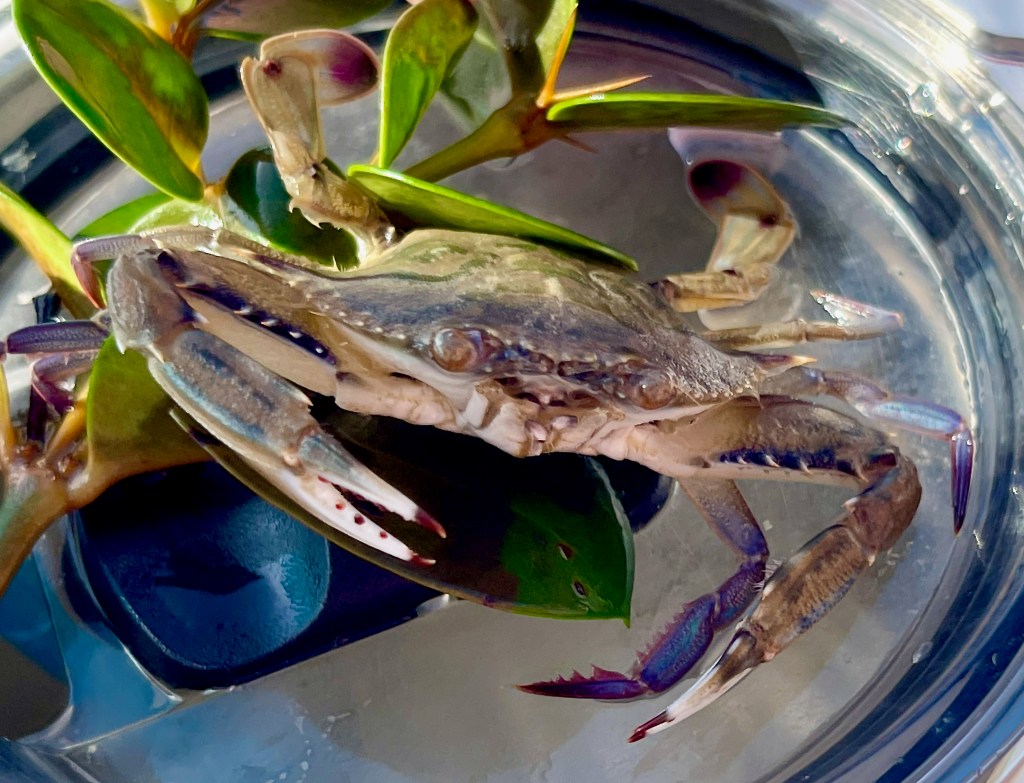
This time the critter introduced itself by scuttling over my toes while I was wading in the bay. While the Longnose Spider Crab (Libinia dubia) may not win any beauty contests, it is perfectly camouflaged for the silty seagrass beds it lives in.

According to my bit of research, they are known to attach pieces of vegetation to further enhance their disguise. Pretty crafty little crabs!

The wildest tidbit about this species is that they have been found happily residing inside Cannonball Jellies. The hows and whys are still not fully understood but it would be a safe place to grow up and the food is free. Not sure how the Cannonball benefits, other than maybe bragging rights, “Hey, guys, look at me. I’ve got a crab in my head!”