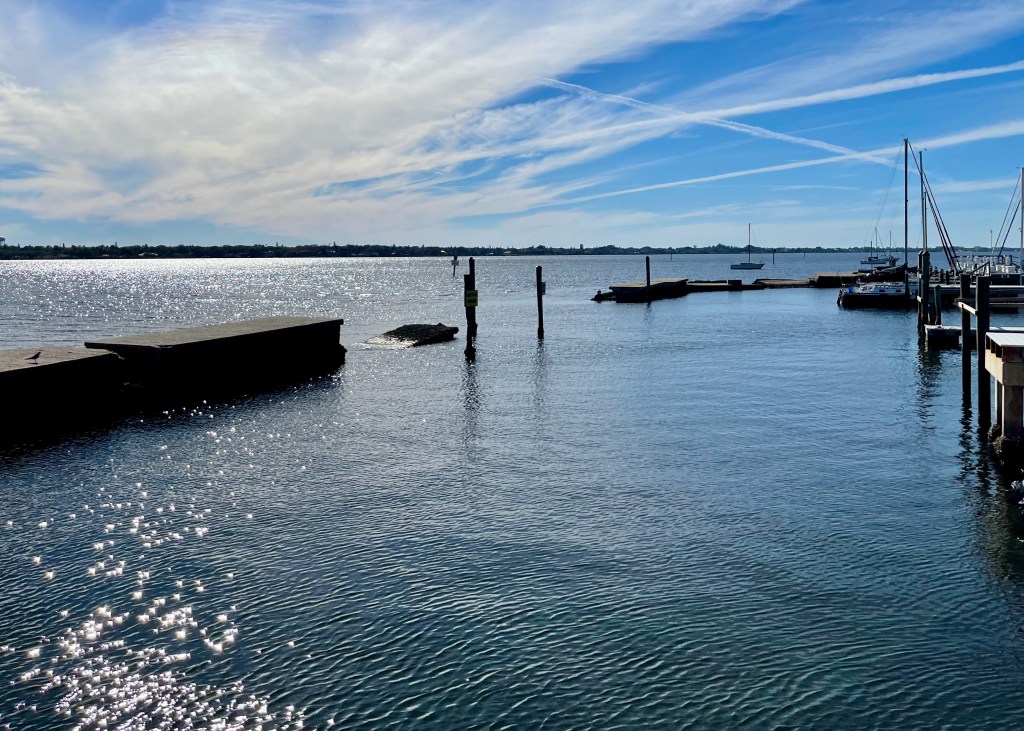
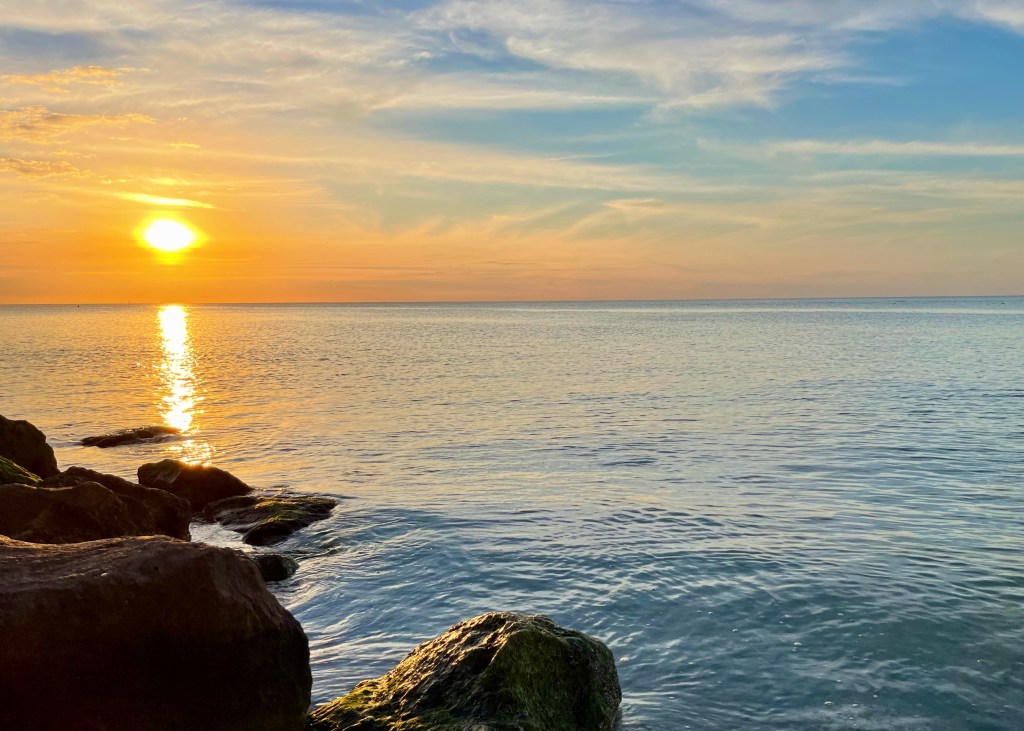
It was a bit breezy which kept us close to shore since there were some novices in our group. The sunset’s afterglow was stunning, the conversations were fascinating, and we were escorted around the bay by a couple of dolphins. What a fantastic way to spend an evening!
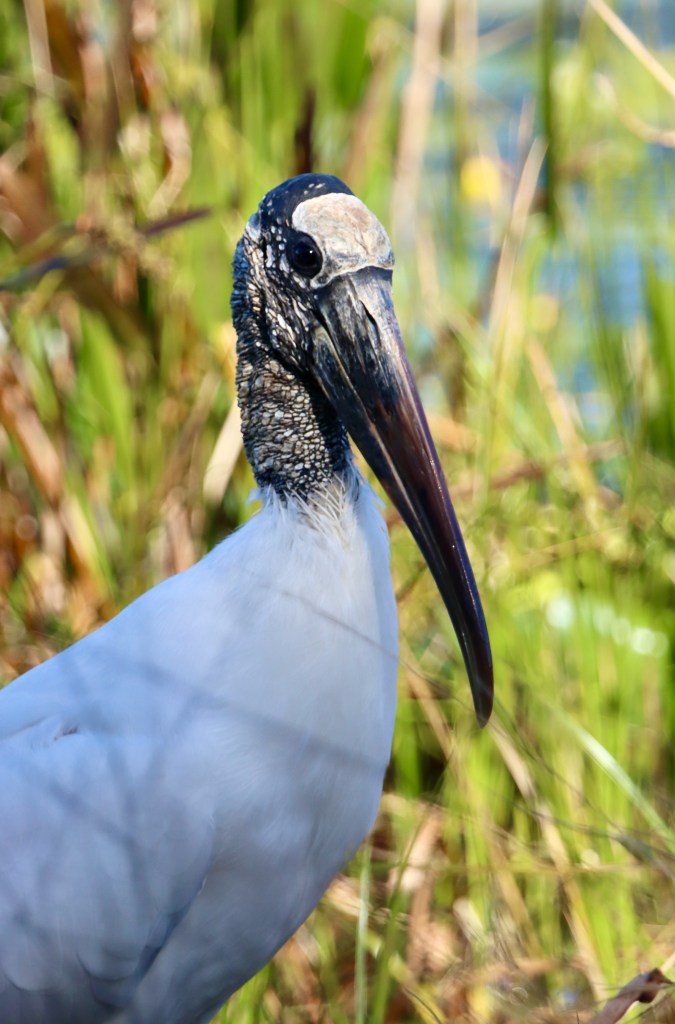
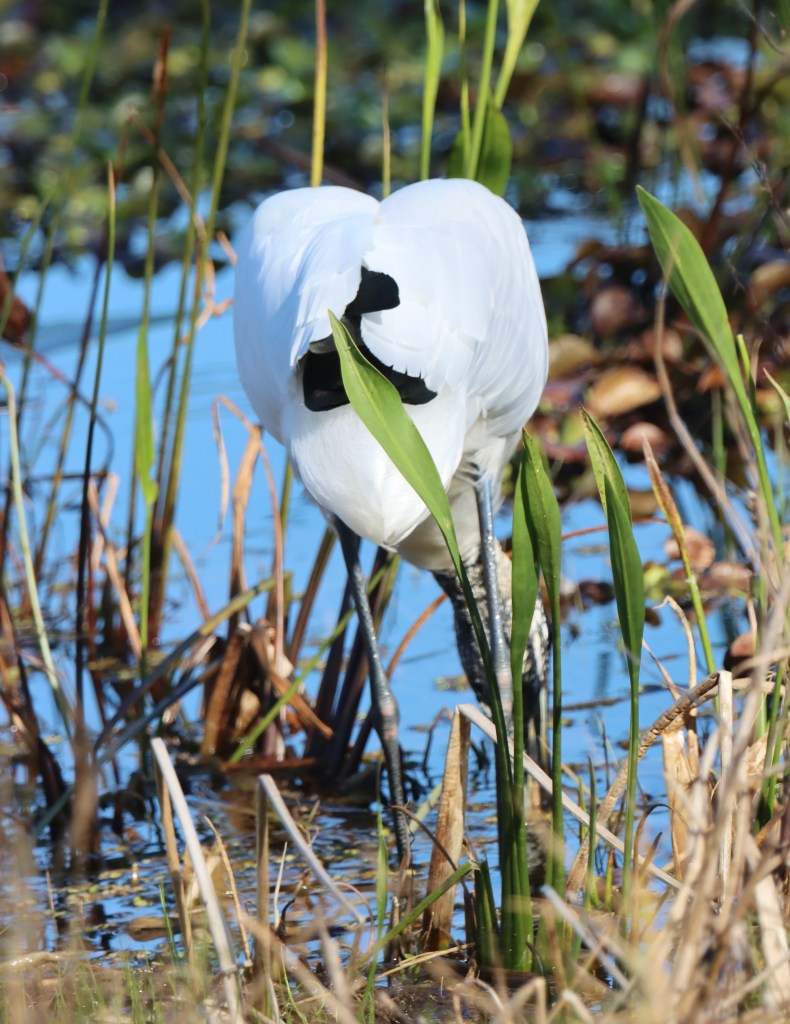
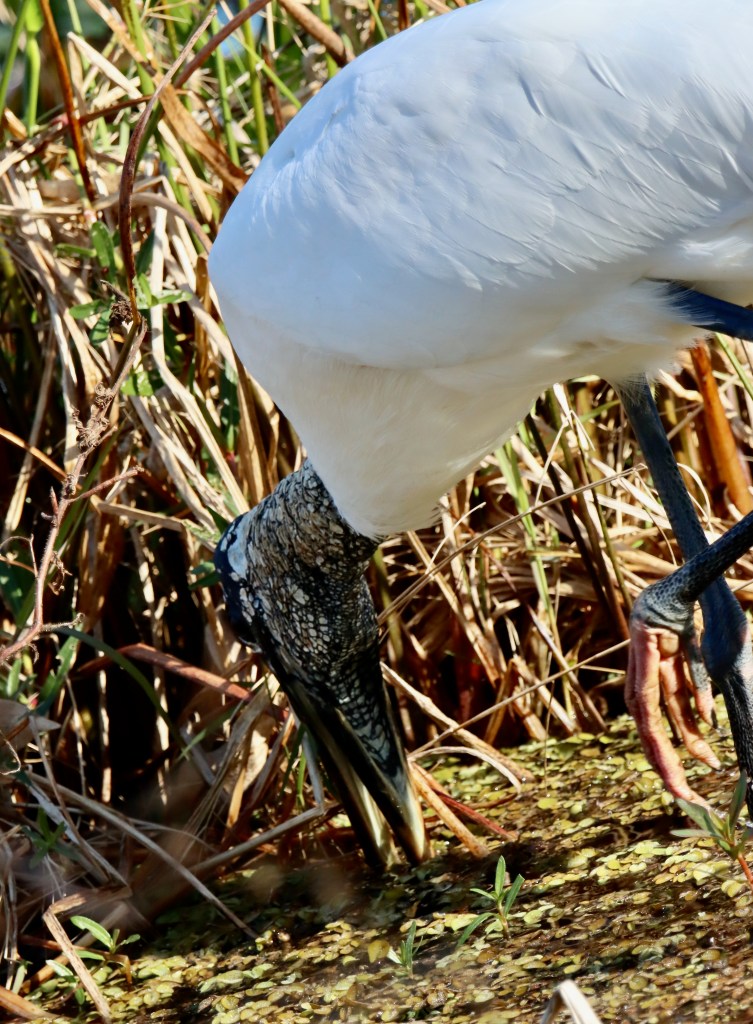
After visiting with the swamp puppy at Walsingham Park a couple days ago, I spotted a Wood Stork (Mycteria americana). Since I’m fascinated by these stocky, prehistoric looking, bald-headed birds I wandered over for a closer look.
I’ve had limited success photographing them in the past so I was thrilled that this mature, adult bird was intently feeding and completely ignored me. This single-mindedness was probably due to the fact that nesting season has begun and, if this bird is lucky, it will soon be feeding several hungry hatchlings.
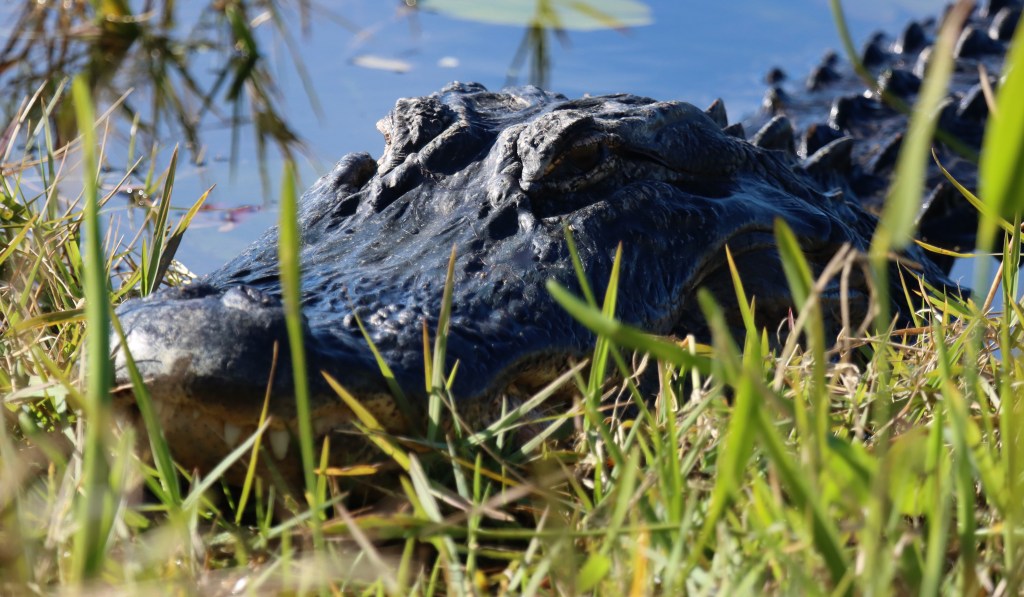
While reading up on the species I learned that these intelligent avians carefully select their nest trees, preferring ones in alligator occupied territory. Apparently, gators are very good at keeping egg-stealing raccoons away. As they say, “The enemy of my enemy is my friend.”
Hatchling success is important since this bird was recently on the Endangered Species List. Thankfully, they have rebounded and Florida has the largest population. In 2019, 1,000 nesting pairs were documented here in the Tampa Bay area, the densest in the state. I don’t blame them, this is a beautiful place. Like I said, smart birds!
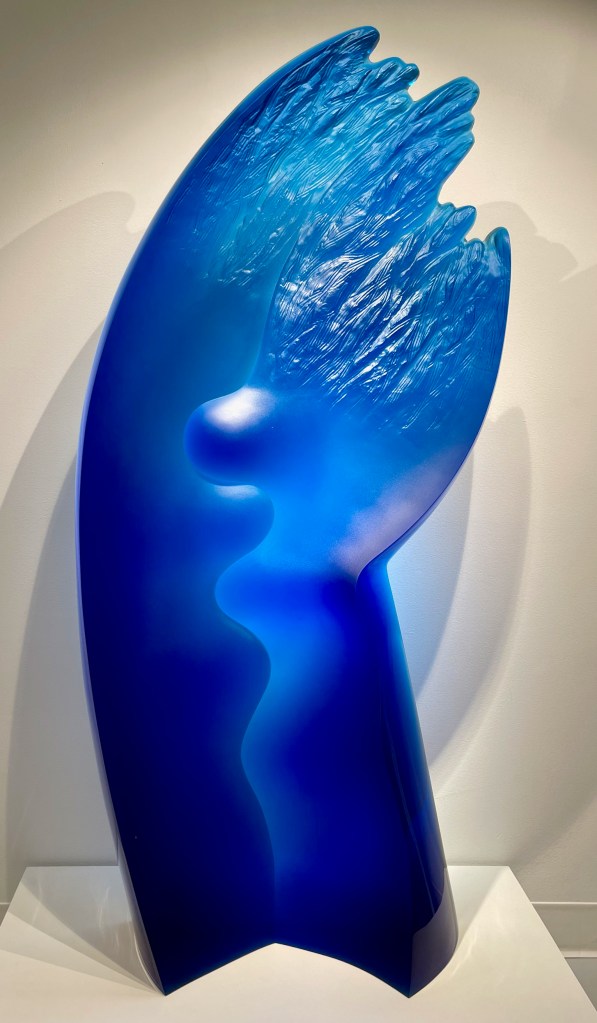
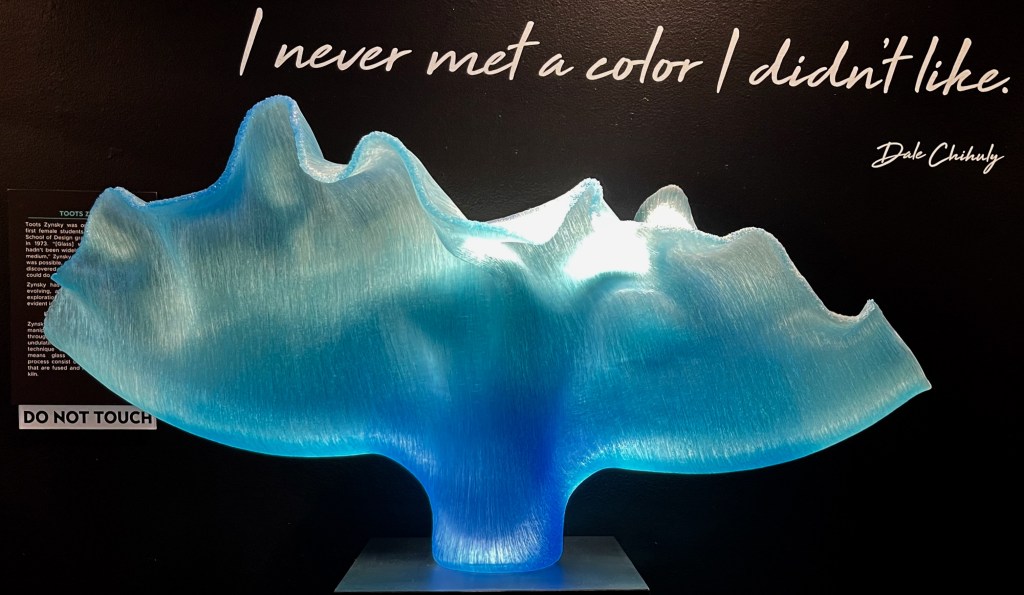
Even with those experiences I was blown away by the creativity on display. I am naturally drawn toward items styled in a more natural bent and, of course, ones in shades of blue. The hyper-realism of Matthew Eskuche’s Trashglass series gave me pause, what a disposable world we live in.
The display that absolutely mesmerized me was Portal Icosahedron by Anthony James. It is a modern recreation of a mathematical experiment in unity by Plato, “twenty identical triangular facets…an ideal compositional system of perfect symmetry in three dimensions.” Every step I took around the piece offered a completely different view.
Looking down into a seemingly infinite portal I was reminded of the One in a Million scene from Star Wars: A New Hope when Luke Skywalker does the “impossible” and fires the shot that destroys the Death Star. Hey, I grew up with those movies, what can I say, they made an impression.
There will be a new exhibit opening soon and I will definitely return to explore some more!



















 3rin's View...