
Found on Rockport Beach, Texas August 2019
The beach gifted me two rings last night. So, apparently, we’re married now. At least I look forward to seeing the beach every day (not all married folks can say that about their partners).
Found on Rockport Beach, Texas August 2019
The beach gifted me two rings last night. So, apparently, we’re married now. At least I look forward to seeing the beach every day (not all married folks can say that about their partners).


I came across this colorful pair at Aransas National Wildlife Refuge last month. Despite their Latin binomial, the wings of the Blue Dasher (Pachydiplax longipennis) are really not that much longer than others. Perhaps a more appropriate name would’ve referenced their frosty blue coloration. Or, here’s your word for the day, their pruinose blue coloration. Good ahead, look it up, I’ll wait…cool word, right?


I stopped by the Bent Oak Rookery last month to see how things were progressing. It was quite a bit noisier than my first trip since this time the nests were filled with hungry fledglings.
I cringed watching this feeding process as the young Great Blue Herons (GBH) vigorously attacked their parent with sharp pointed beaks in their quest for regurgitated food. I kept thinking that someone was gonna lose an eye.
Years ago my friend Julie was on the receiving end of a beak up her nose while helping to rehab a GBH. So I know they can cause a substantial amount of damage (and not an insignificant amount of pain).
I never wanted to have kids but let me also state for the record, I never want to be the parent of a GBH.


I snapped these Laughing Gull (Leucophaeus atricilla) photos a month ago at Rockport Beach. Our local beach is actually a man-made peninsula that juts into Aransas Bay, forming a protected area known as Little Bay. Much of the Little Bay side of the peninsula is closed to recreation during breeding season to allow Laughing Gulls, Black Skimmers, terns, egrets, and herons a quiet space to raise their young.
I suppose quiet may be a relative term since the raucous calls of these gulls are loud and pervasive. I caught the earlier part of nesting season back in May. If all goes well for them, in two or three years these young ones will be nesting here also.


Last weekend I was fortunate to attend Riddles in the Sand (RITS) in Galveston with a few good phriends.* While this wonderful weekend was filled with good music, phriends, and lots of silly phun it was also a major phun-draiser. The Galveston Bay Parrot Head Club hosted the 22nd annual event, which raised over $20,000 for local charities.
In case you don’t know, Parrot Head is the term used for Jimmy Buffett fans but membership in a Parrot Head club isn’t all about music. Each club (phlock) is officially chartered with the tagline, “Party with a purpose.” Phlocks host various phun-draisers every year, giving back to their local communities. As of 2018 there were over 200 phlocks around the world and in the past 16 years the phlocks have raised over $53 million dollars. That’s a lot of phun!
I joined the Parrot Heads of Port Aransas right after moving down to Rockport in February. At our Spring Phling (one day event) in March we danced, played games, and in general had a ball while raising $5,000 for the local food bank. Not a bad way to spend time with new phriends!
*Note: ph is used instead of f, since it stands for parrot head.

Gulf of Mexico from Mustang Island, Port Aransas, Texas August 2019
The shallow water along the Texas Gulf Coast is typically brownish from all the disturbed sediment. Occasionally, the conditions are just right and the water sparkles in inviting shades of blue. Time to dust off your thesaurus, these are the colors I see: turquoise, cerulean, azure, beryl, aquamarine, teal, aqua, and cyan. Did I miss any?

Red Saddlebags (Tramea onusta), Aransas National Wildlife Refuge, Tivoli, Texas July 2019
This showy skimmer was doing his best to protect his segment of pond. I tried to catch the glint of sunlight on his gossamer wings but to no avail. Regardless, if I was a female of his species I would’ve been impressed with his fiery red patches!
Talking about wearing out my Discover card yesterday reminded me of the Bruce Cockburn song, Pacing the Cage (though I’m partial to the Jimmy Buffett version myself). There’s a melancholy to it that I can relate to.
“I’ve proven who I am so many times
The magnetic strip’s worn thin”
“I never knew what you all wanted
So I gave you everything”

I recently had to request a new Discover card – I had worn out the strip on my old one (the chip still worked but not every place has a chip reader). Since I use this card for everything, it gets a lot of use. There were several designs to choose from but I knew immediately that this one would be mine. That view kinda takes the sting out of paying for things…
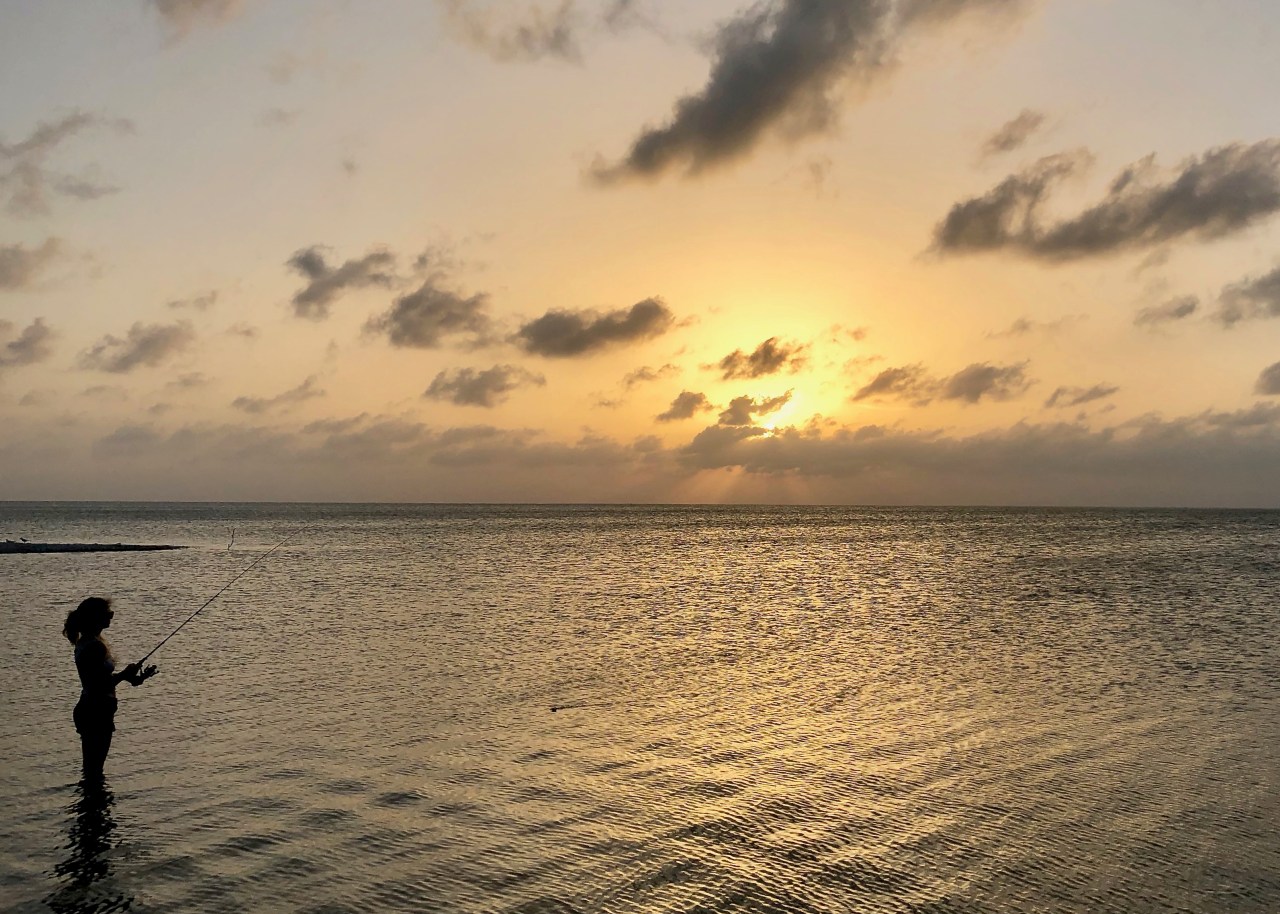
Fishing in Copano Bay, Rockport, Texas July 2019
 3rin's View...