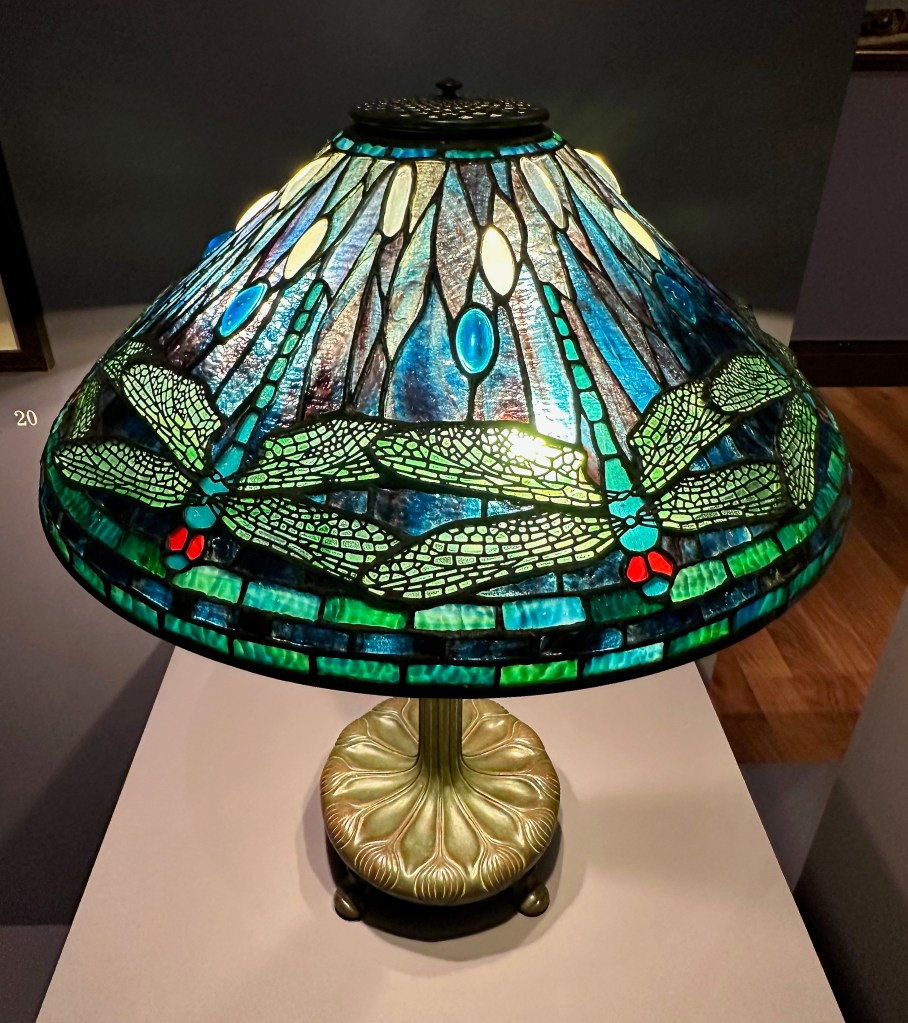
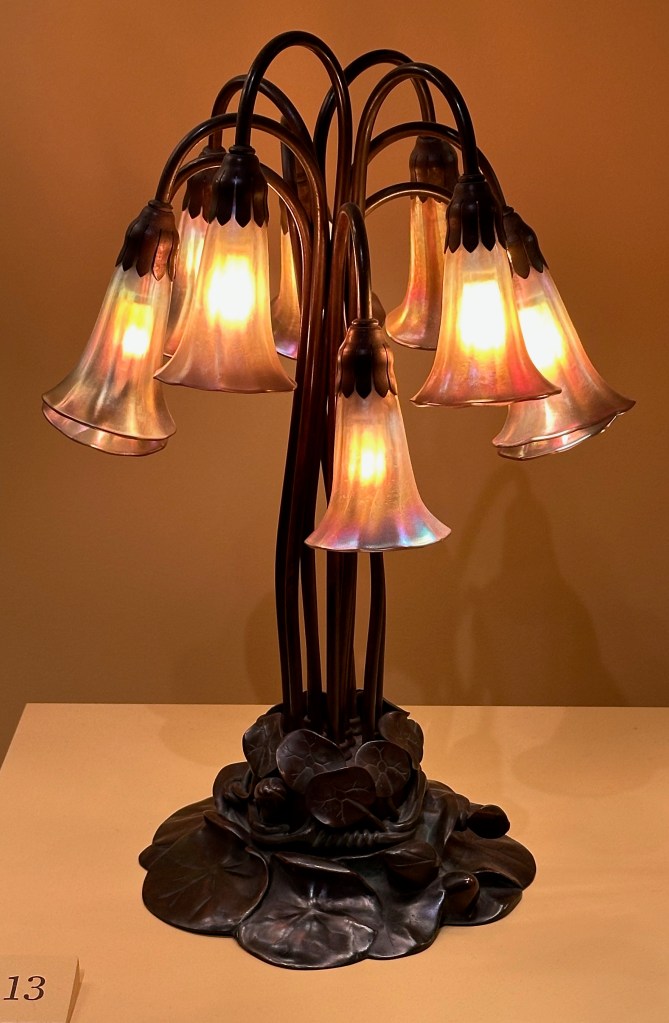
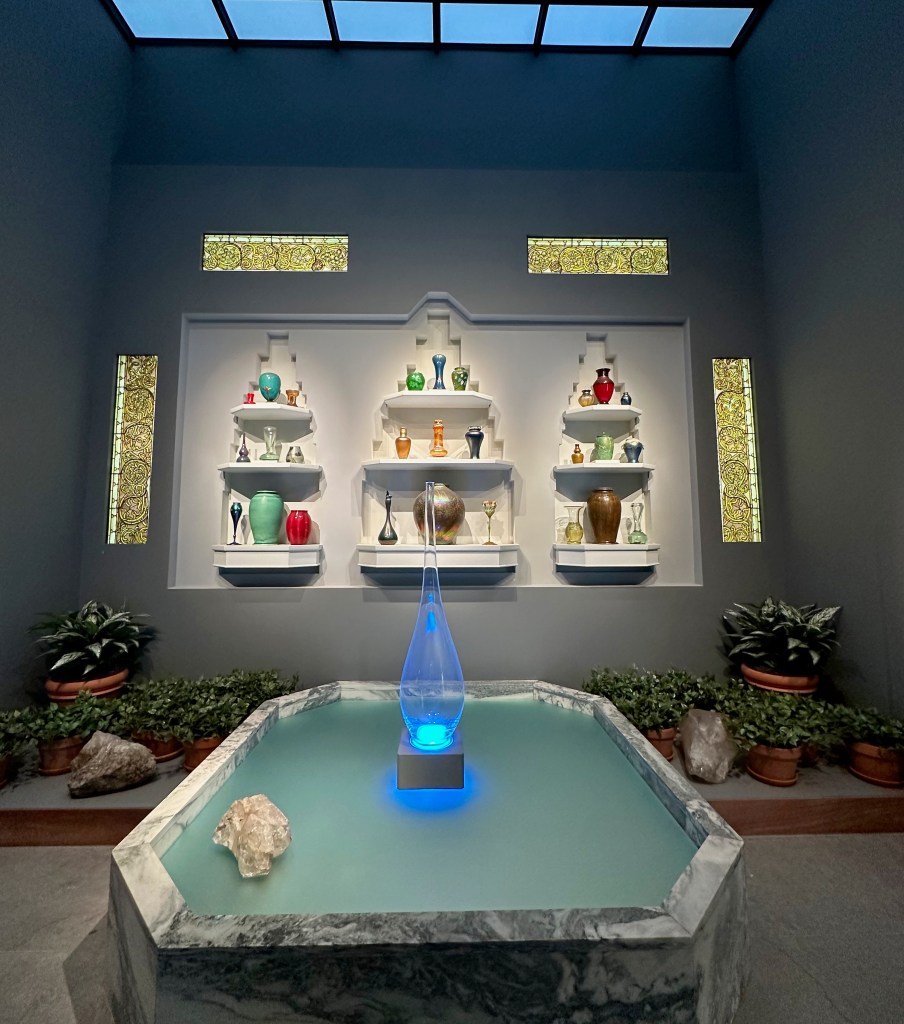
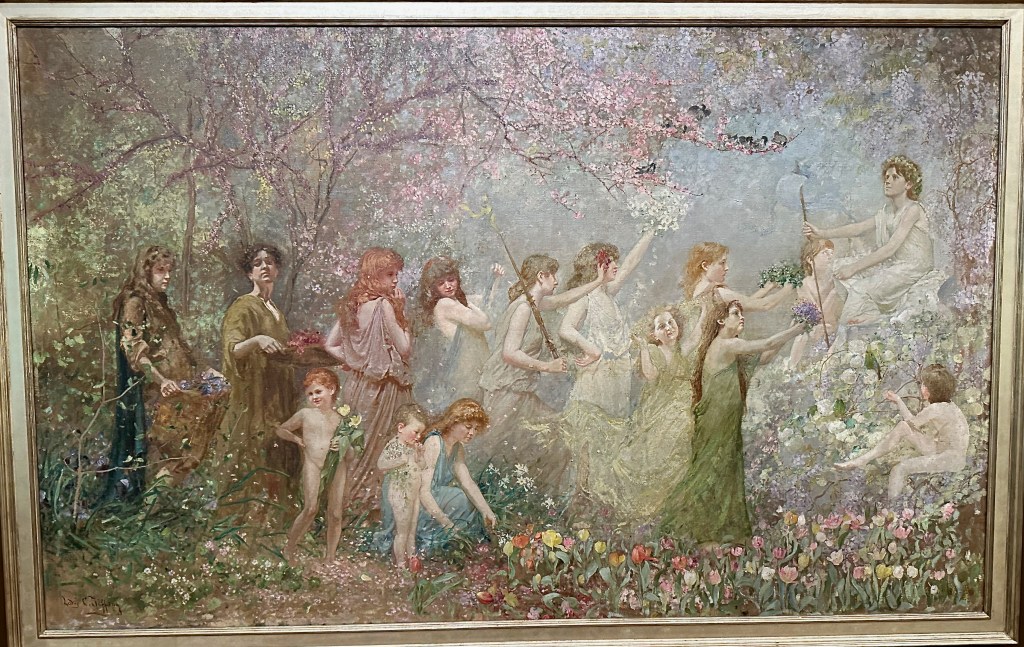
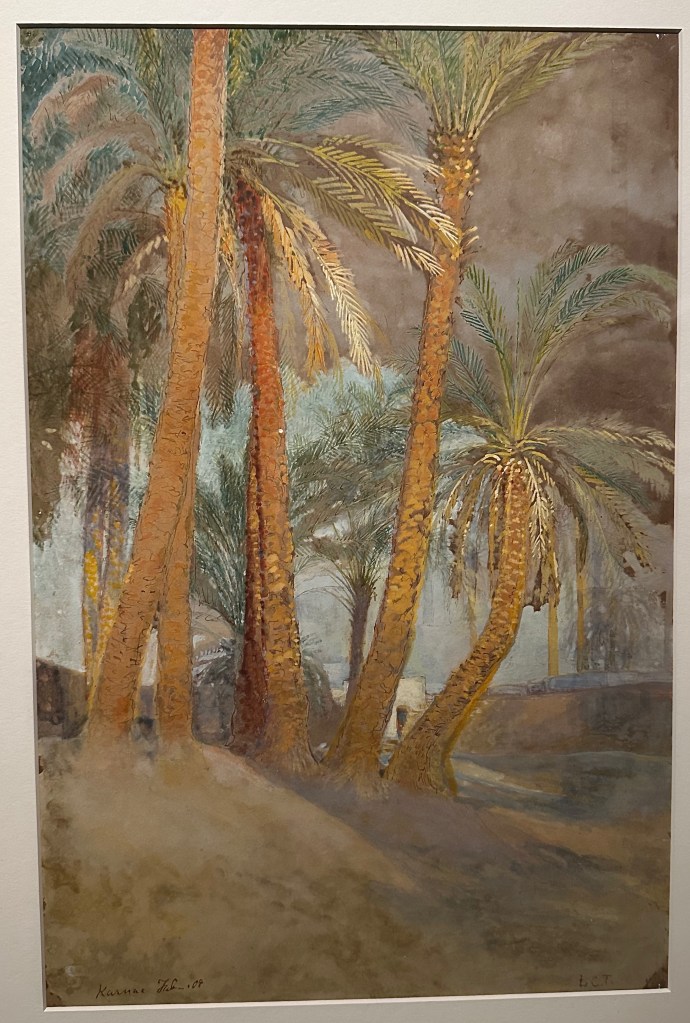
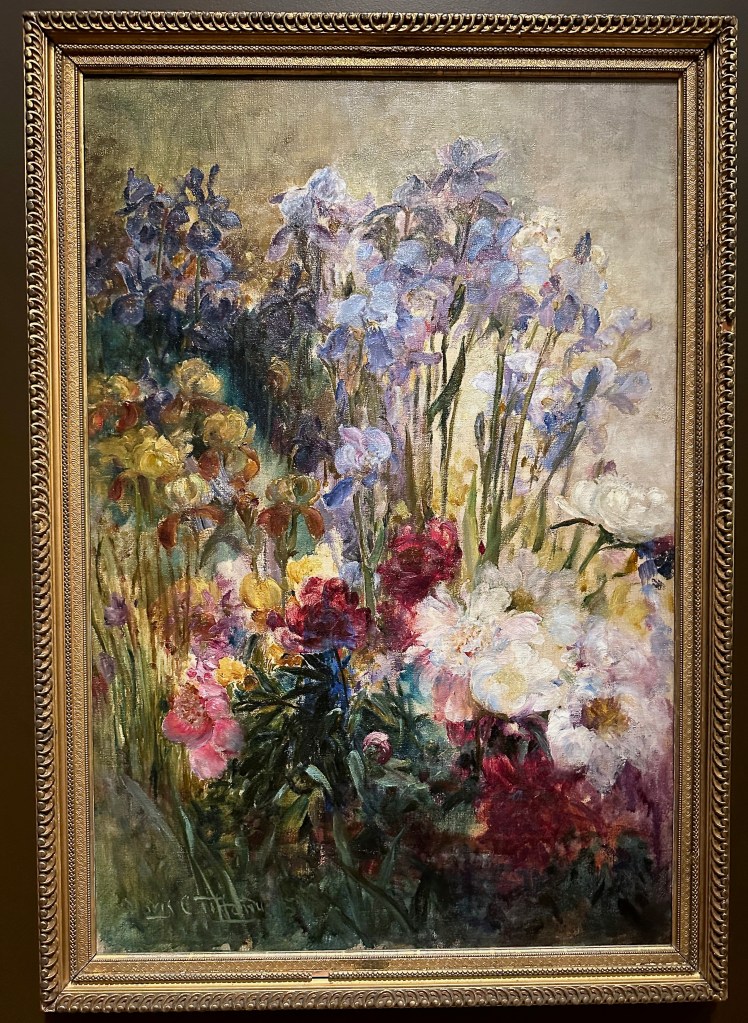
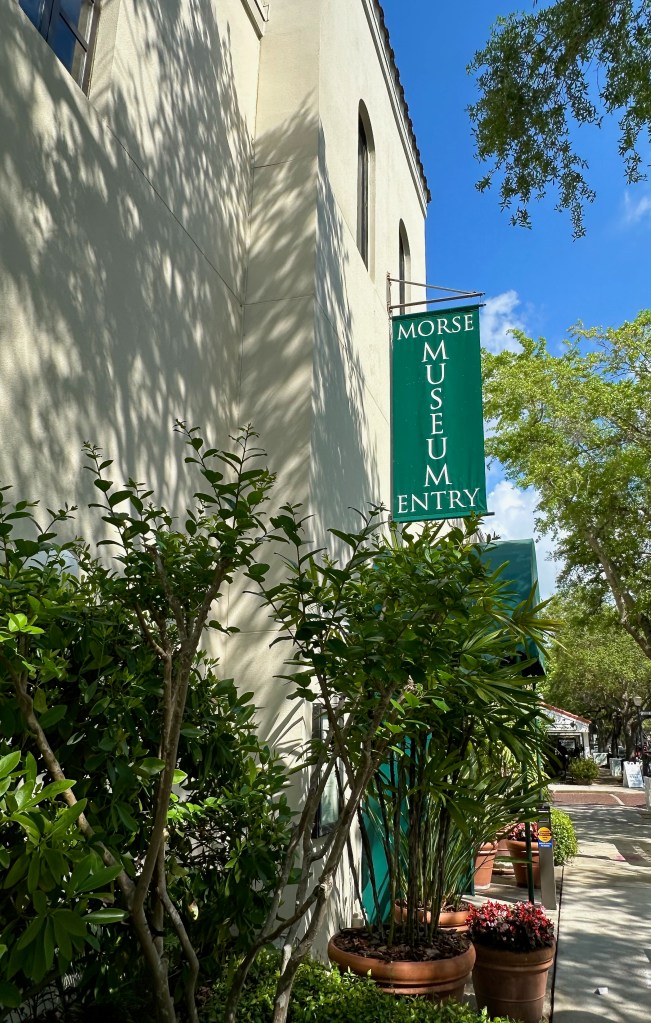
It might seem odd that the world’s largest collection of works by Louis Comfort Tiffany are displayed in a small city in Florida. After all, the incredibly talented Tiffany (painter, decorator, architect, photographer, furniture designer, potter, jeweler, and of course, glass artist) lived and worked most of his life in New York City.
Interestingly, the connection starts in Chicago where Tiffany broke onto the world stage at the 1893 World’s Columbian Exposition. His father had a large display area for his finely-crafted Tiffany & Co jewelry, part of which he willingly shared so that his son could display his massive leaded-glass chapel.
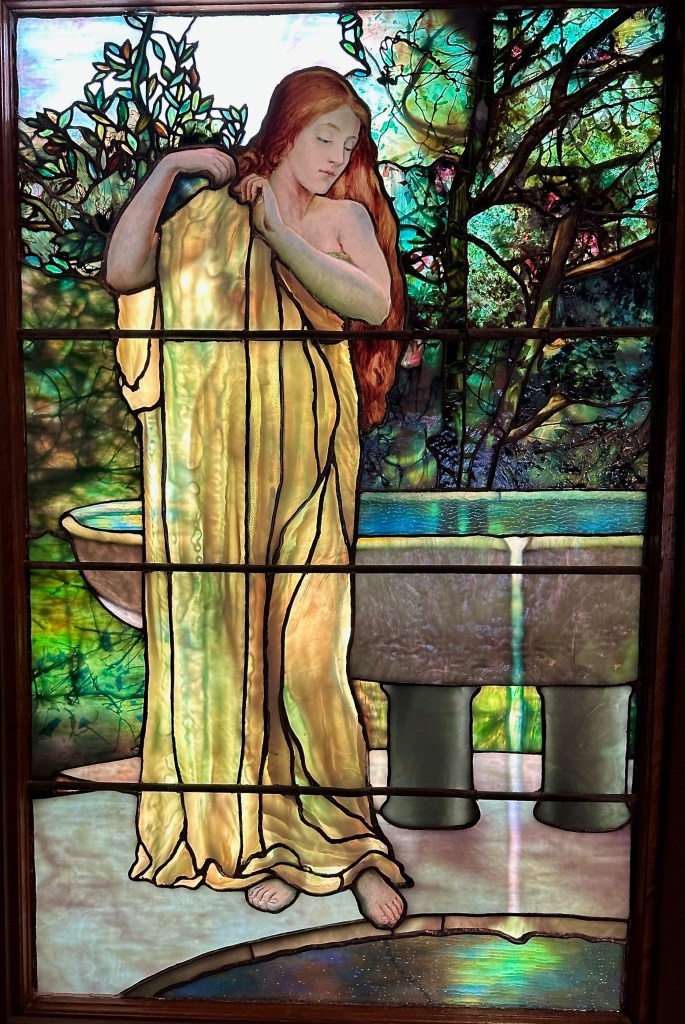
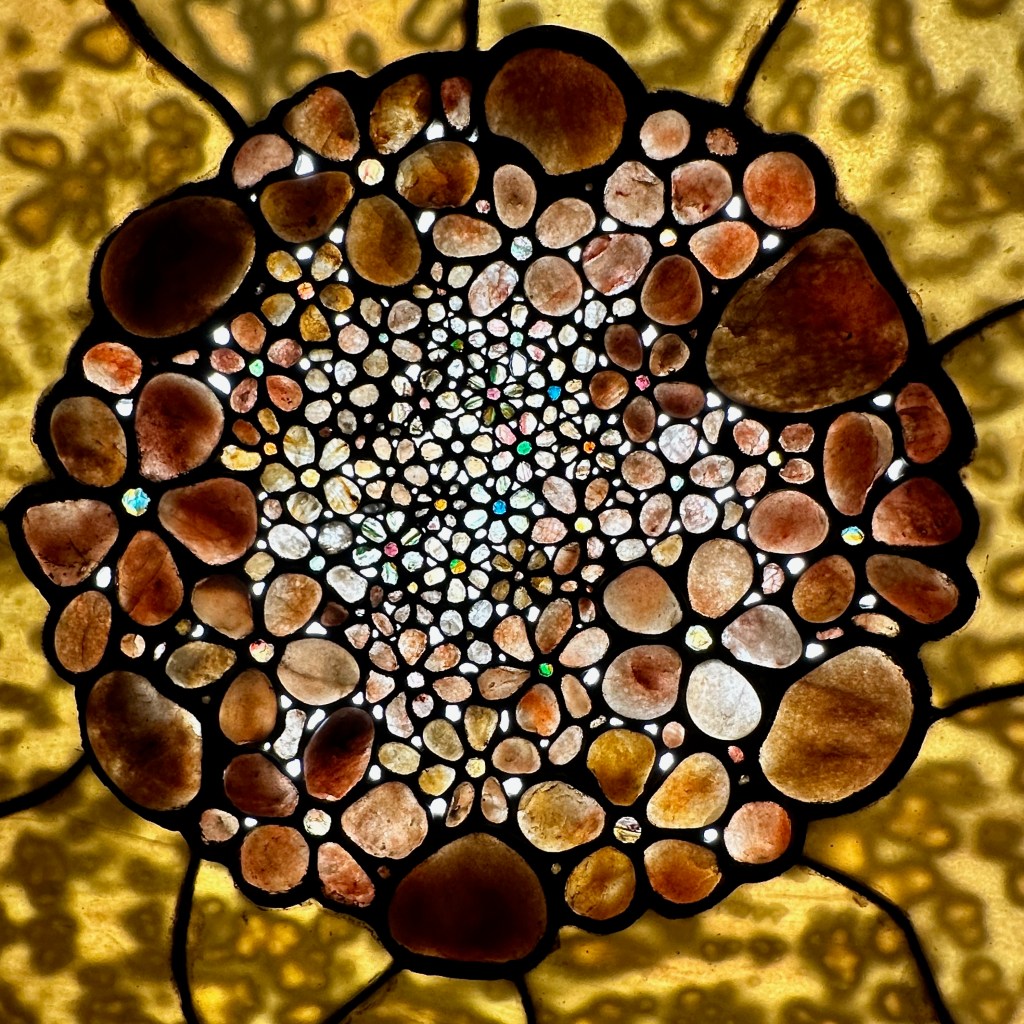
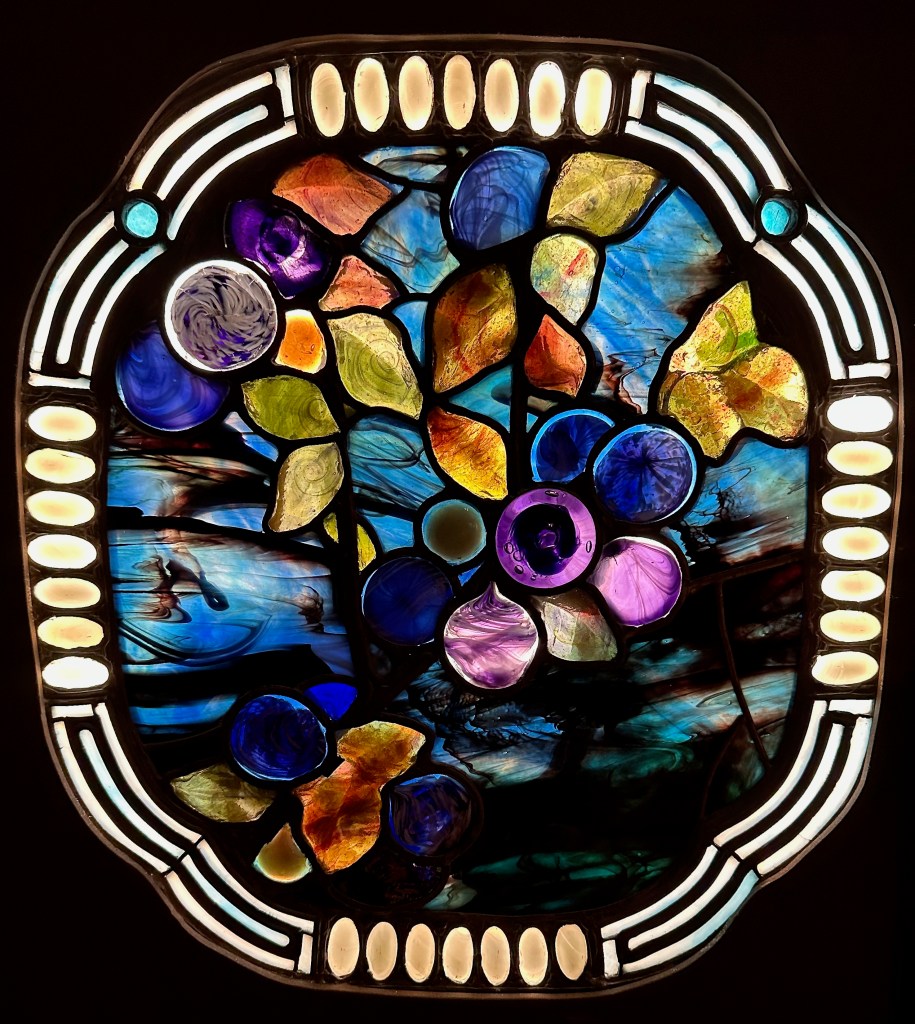
Besides its sheer size, the chapel astounded the world with its intricate and vivid glass scenes. Tiffany eschewed traditional stained glass (plain glass that was painted), instead using colorful glass of his own making. He called his patented technique for richly swirled panes of glass, opalescent. By layering different hues of opalescent glass with a leaded technique he could create shadows and add depth to achieve a more realistic scene.
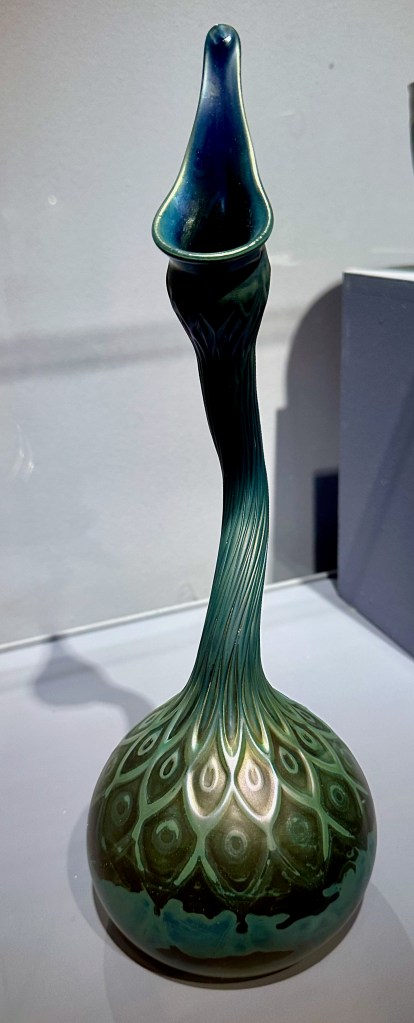
His new technique and nature-inspired artworks (like vases featuring peacock feathers) caused quite a stir in the art world. Undoubtedly, the work of the 45 year-old artist would have also caught the attention of Charles Hosmer Morse, a wealthy Chicago industrialist.
After the exhibition, the newly famous Tiffany returned to his various glass and furnishing business ventures in New York. 1902 was a momentous year for Tiffany, he changed his business name to Tiffany Studios and also took over Tiffany & Co after his father’s death. With his sizable inheritance he began construction of Laurelton Hall, his monumental 84-room mansion on Long Island. Tiffany not only designed the building but the furniture, windows, lamps, rugs, and other elements. He was nearing retirement and viewed the home as his masterpiece, a way to showcase art from his long and varied career. A life’s work he referred to as a “Quest for Beauty”.
About this time, Morse purchased a large parcel of land in Florida and worked with other founders to lay out a small town. Winter Park was established with strict architectural rules that emphasized the area’s natural beauty.
In 1918, after officially retiring, Tiffany created a foundation at Laurelton Hall, where young artists could reside and gain inspiration for their own works. One of those lucky fellows was Hugh McKean, who studied there while Tiffany was still alive.
Tiffany’s death in 1933, coincided with the depths of the Great Depression and major changes in artistic tastes. By 1943, the previously successful Tiffany Studios was bankrupt and everything from the estate was sold to cover debts. Unbelievably, Tiffany and his exquisite glass art were heading to obscurity.
In 1945, Morse’s granddaughter Jeanette Genius McKean and her husband Hugh moved to Winter Park, bringing with them a flock of colorful peacocks. Hugh became the first director of the town’s art museum, which was dedicated to his wife’s influential grandfather. The museum featured works from the family’s collection, primarily focused on the Arts & Crafts movement (which included some early Tiffany pieces).
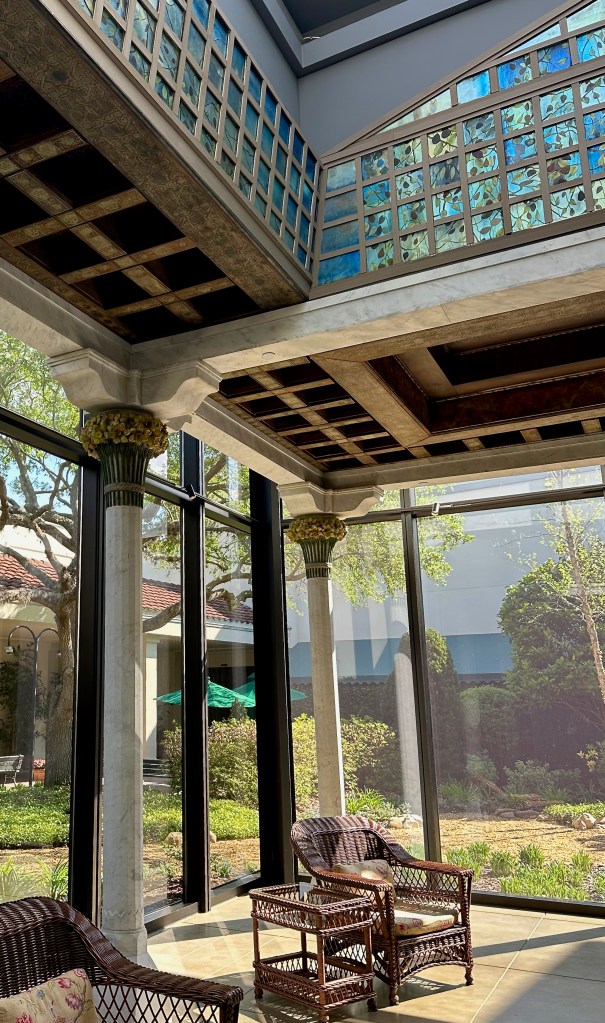
The impetus for the museum’s present focus was a letter written to Hugh by Tiffany’s daughter in 1957. A fire had gutted the vacant Laurelwood Hall, and she beseeched Hugh and Jeanette to salvage some of his once famous leaded glass windows before they were demolished. While walking through the devastation, the McKeans made the decision to save not just windows but other Tiffany-designed architectural elements, like patio columns and fireplace mantels.
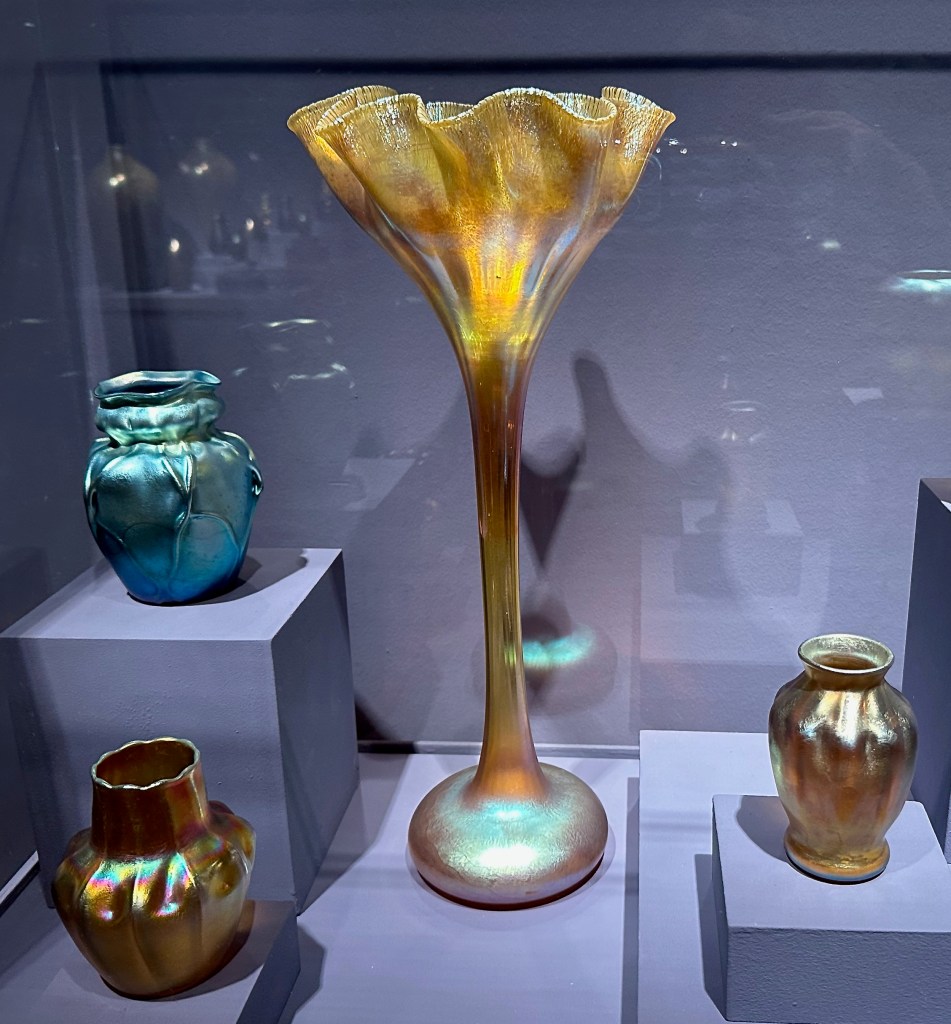
That project spurred the artistically inlined team to acquire other Tiffany pieces from around the world to feature at the museum. Their efforts revived interest in Tiffany’s work, today his glasswork is once again highly prized. Roughly 100 years later, the museum is introducing Tiffany’s nature-inspired “Quest for Beauty” to new generations.
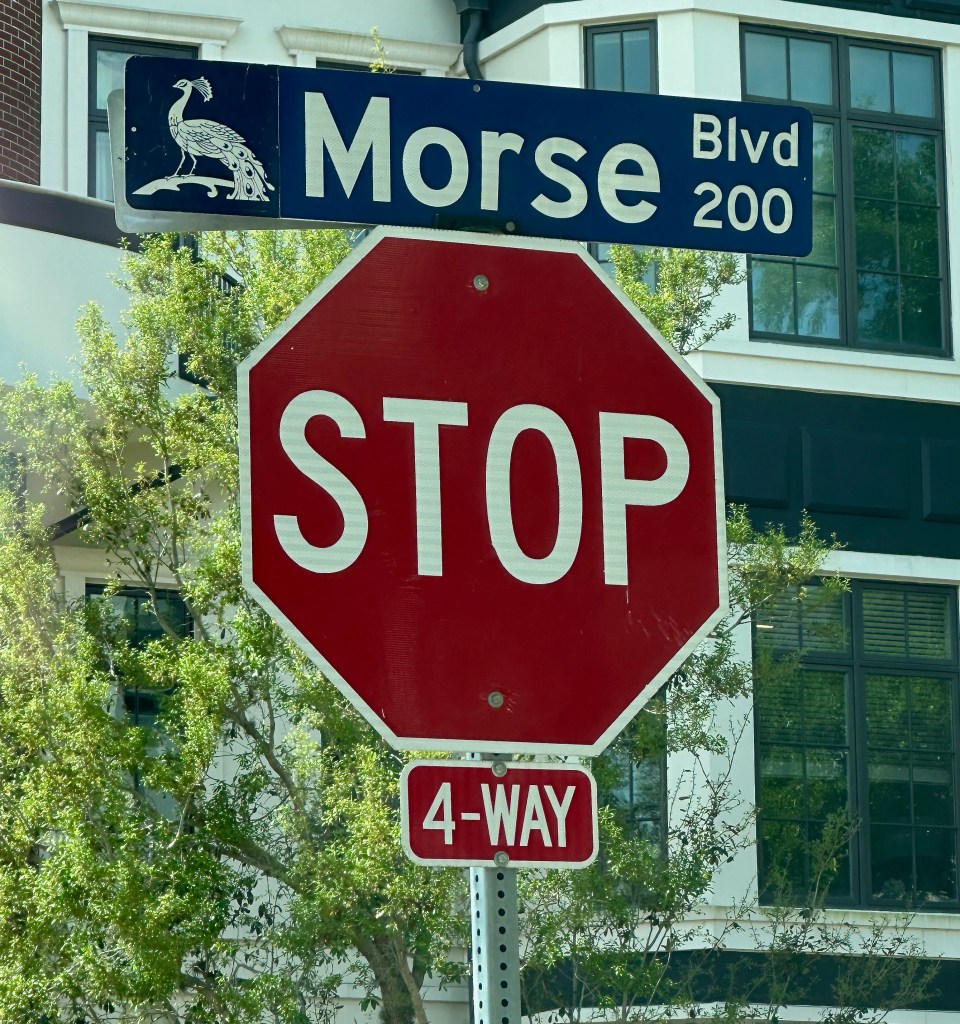
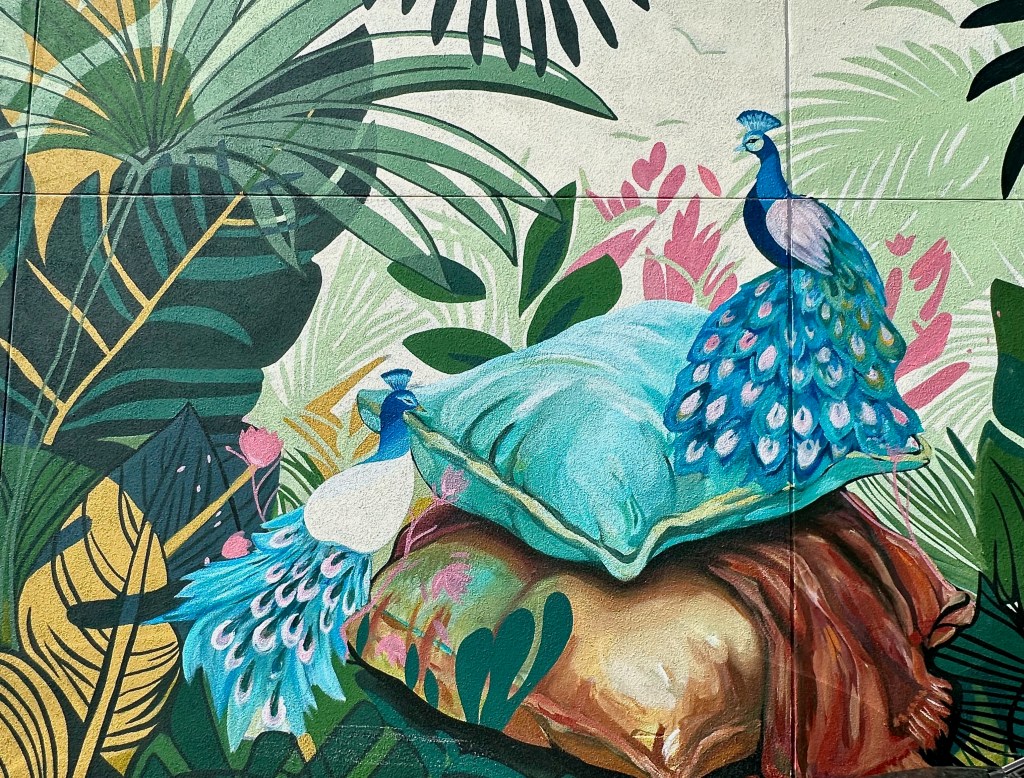
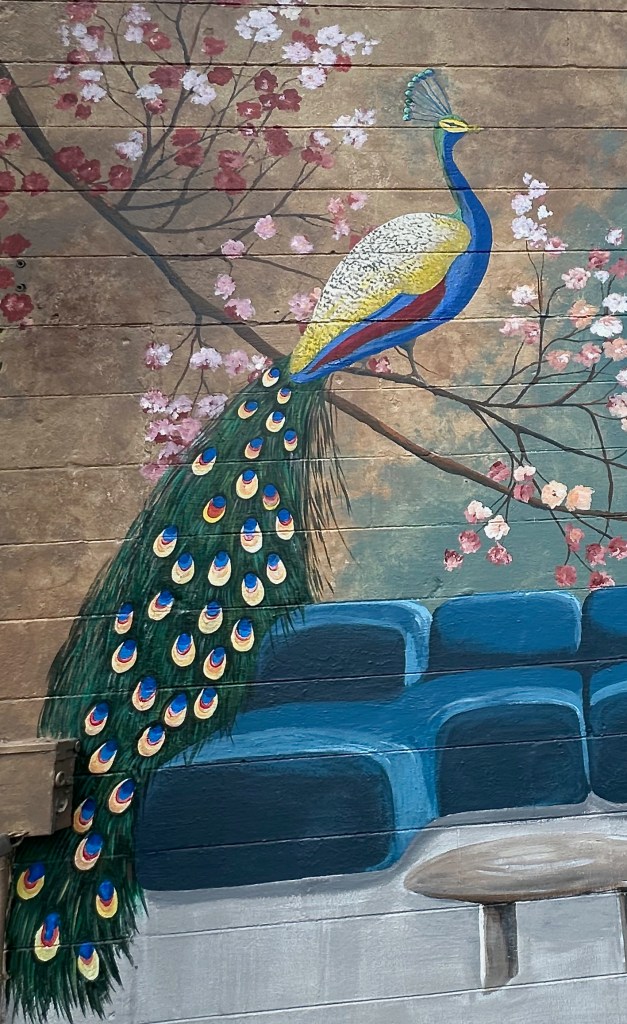
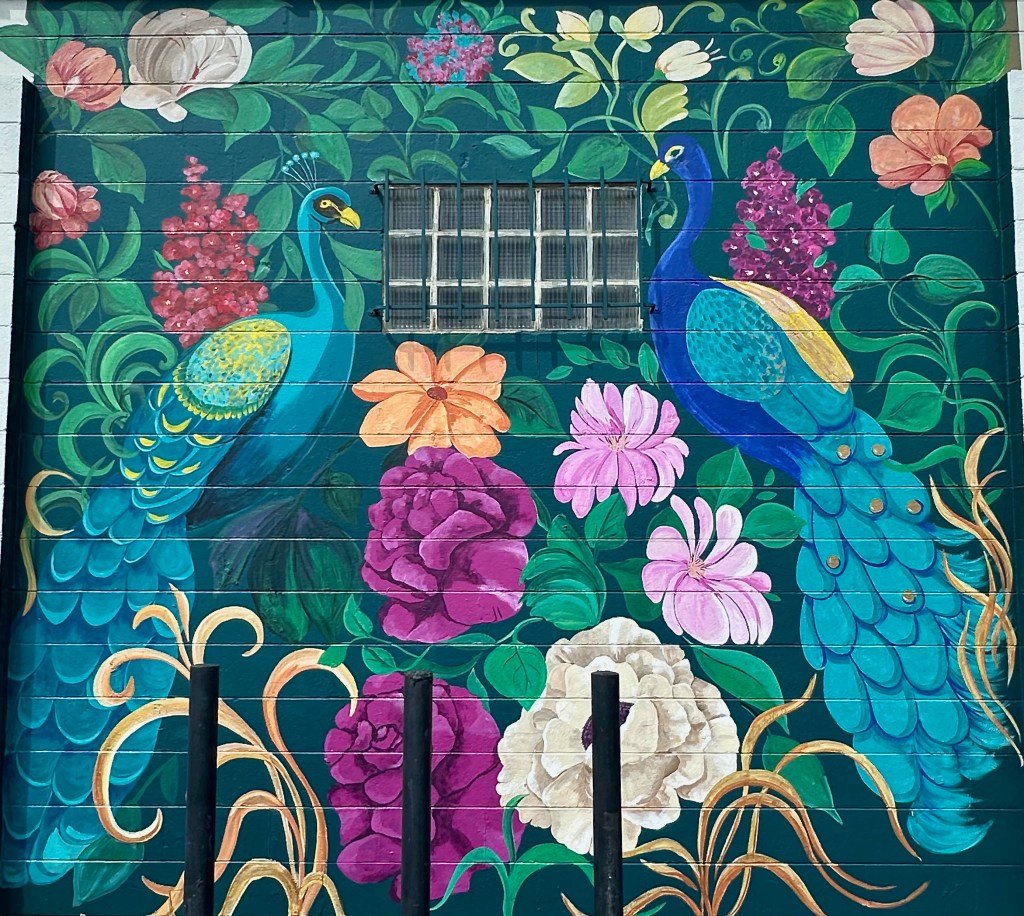
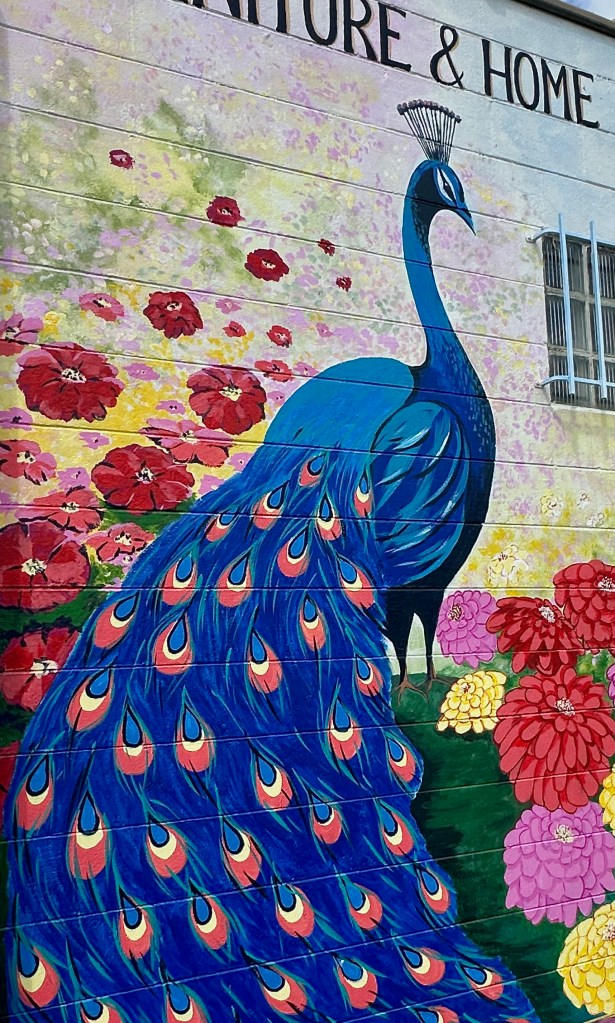
Meanwhile, those colorful peacocks became a staple of life in Winter Park. The peacock is officially the town’s mascot, prominently featured on street signs and in beautiful murals all over town.
 3rin's View...