The “Marshan”

As the common name implies, I discovered this Florida Marsh Rabbit (Sylvilagus palustris paludicola) in a riparian area the other day. The second part of the binomial also references its preferential habitat as palustris is Latin for “of the marsh”.

These strong swimmers live in the marshes and swamps of coastal regions of the southeast. I had hoped to see it swim but no such luck. Though, now that I know where it lives I will be on the lookout during my next visit.

Please forgive my partially obscured photos, this was a secretive animal and I feel fortunate to have seen it during the day as they tend to be more active at night.

Compared to the Eastern Cottontail (Sylvilagus floridanus) I photographed a couple weeks ago, it is easy to discern the Marsh Rabbit’s smaller ears and darker, more rufous, overall coloration.

IMG_8068

Eastern Cottontail, Dunedin, Florida March 2020

Pretty Predators

I snapped this collection of photos from a couple local parks over the past few weeks. I am always pleased to see so many of these ravenous beauties around – if not we’d be swarmed with multitudes of mosquitoes and no-see-ums! They are ferocious predators, in both their aquatic larval stage and as aerial adults.

I do wish I had better shots of a few but I still included them to show some of the diversity. Granted, this is only a small smattering of the 150+ species that have been documented in Florida. Note the colorful differences between the males and females.

Occasionally, if the light is just right, I can capture the metallic sheen of their wings glinting in the sun.

Top to bottom, left to right: Great Pondhawk (Erythemis vesiculosa), Ebony Jewelwing (Calopteryx maculata), Wandering Glider (Pantala flavescens) Female and Male, Blue Dasher (Pachydiplax longipennis), Rambur’s Forktail (Ischnura ramburii) Male and Female, Eastern Pondhawk (Erythemis simplicicollis), Eastern Amberwing (Perithemis tenera), Four-spotted Pennant (Brachymesia gravida), Halloween Pennant (Celithemis eponina), Female and Male.


Go, Speed Racer, Go!

While roaming Walsingham County Park last week I saw six Southern Black Racers (Coluber constrictor priapus), though I’m sure I missed many others. Since this species is active during the day it is the most commonly seen snake in Florida. I think I saw more than usual since they are in the midst of their breeding season (March through May).

As their common name implies, their first defense is to flee and man, are they fast! It was a definite challenge to get a few good shots of these speed demons.

Too Much Time on My Hands

IMG_8097

Decal Spotted in Treasure Island, Florida April 2020

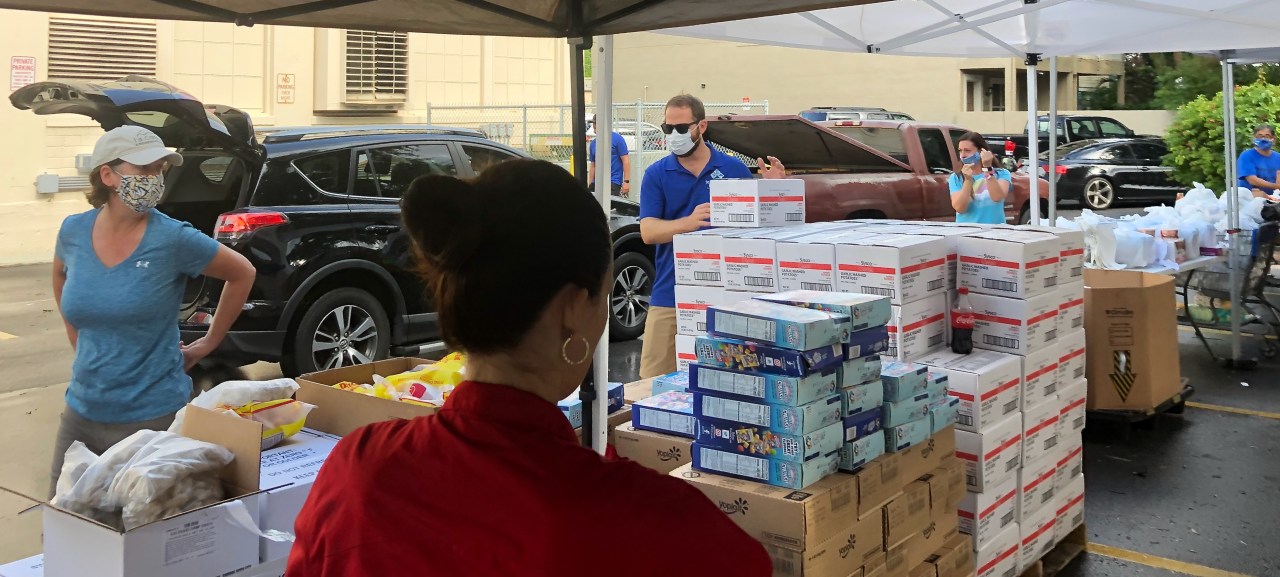
I was stuck at one of Florida’s infamous, long traffic signals on my way to volunteer at the local food bank the other day. Bored out of my mind I noticed this sticker on the car ahead of me. I love word games like Boggle so I set out to see how many words I could make out of Passholder. Humble brag, I remain – as yet – unbeaten at that game (which is why no one will play it with me anymore).

I also have a bit of a potty mouth, so the first word that jumped out at me I won’t write here (if you’re curious, just drop the P-D-R, no need to rearrange any letters). Needless to say, I continued making words for the rest of my drive.

My list is 279 words long (not including that first word). All words are three letters or longer and yes, I allowed plurals. I imagine many of you have extra time on your hands right now, so why not give this a whirl? I’m curious to see your list!

Under My Lone Palm

IMG_7532

My Siesta View, St. Petersburg, Florida March 2020

Until I received clarification from the sheriff about the county-wide beach closure I avoided my beach for an entire week. Considering that the beach was the main reason I moved here and that I only live two blocks from it, it was quite a challenge.*

On the plus side, the rule forced me to explore some nearby areas that I had been ignoring. Thankfully, I discovered a sweet little spot on Boca Ciega Bay where I could hang my hammock and relax (while practicing safe social distancing). My view of the sky reminded me of a Jimmy Buffett song…

“From under my lone palm I can look out on the day,

Where no bird flies by my window,

No ship is tied to my tree…”


* Please note, I am not making light of COVID-19. And I sincerely hope that you and all your loved ones are well.

Watch What You Say to Squirrels

Since I’m avoiding humans (per social distancing guidelines) I’ve begun chatting with the local wildlife. Met a squirrel the other day, our conversation went something like this:

IMG_7609

Me: Hey, Squirrel. What’s up with you?

Squirrel: Nuthin’, just hanging out. I’m bored.

Me: There’s a lot of that going around. This stay at home stuff is driving people nuts.

Squirrel: Nuts?! You haf nuts? Gimme des nuts!

IMG_7208

Me (backing away slowly): No, no. Not edible nuts, it was a figure of speech…

Lesson learned. Hey, I didn’t promise it would be scintillating.

Limpkin Biopic

An afternoon at Walsingham County Park in Largo provided me with an interesting view into the life of a Limpkin (Aramus guarauna). As usual, I snapped pictures of things that caught my eye as I strolled around. It wasn’t until I returned home and did a bit of research that all the pieces slotted together.

There were empty shells of the non-native Channeled Apple Snail (Pomacea canaliculata) littering the edges of the pond. Since they measure in at roughly three inches and are colorful I had to risk the muck in order to photograph them. In a rare positive twist when dealing with invasive species, the native Limpkin loves to dine upon them.

Their preferred food source, the endemic Florida Apple Snail, is a bit smaller and in decline (for a wide variety of reasons). I was pleasantly surprised to learn that I caught one of their egg masses with my camera that day. Here’s hoping they all hatch and survive!

Later I was able to watch a Limpkin up close for few minutes. I was hoping to catch the snail-eating action but instead a jogger flushed my bird. I followed at a respectful distance and was rewarded with a view of shift-change at the nest. The newcomer (not sure it is possible to identify gender, no apparent sexual dimorphism that I could discern) settled in after making a few decorative changes to the foliage.

I plan to check back soon (if quarantine restrictions allow) and see if there are any hatchlings. I just never know what show nature will have in store for me!