
Archive for ‘Observations’

Native Nut

While at Hillsborough River State Park a few weeks ago I learned about a new-to-me North American native, the Pignut Hickory (Carya glabra).

The rather unflattering common name was bestowed upon it by early settlers. The bitter tasting fruit is so unpalatable that it was relegated to pig slop.

Despite that, the trees were of high value since the wood is not only hard and strong but also elastic. The wood proved extremely durable for wagon wheels and agricultural tools, very important in early America. These days, the wood is prized by elite athletes around the world for sporting goods, such as skis.

Touring a Landmark

Last week, I had the opportunity to visit Bok Tower Gardens over in Lake Wales. Wawa, an East Coast gas station/convenience store chain, sponsored several free admission days at this historic landmark this summer. I was fortunate to grab a ticket.

The 14-acre property that encompasses the top of Iron Mountain was purchased by Edward Bok in 1922. He became enamored with the area while staying at his winter residence in Mountain Lake, the nearby gated community.

In keeping with Bok’s “gospel of beauty”, he hired Frederick Law Olmsted Jr. to transform the native shrub land into lush gardens, multiple ponds, and meandering pathways.

The central feature of the park, the Singing Tower, was Bok’s idea in homage to his childhood home in the Netherlands. Sparing no expense, it is one of the largest carillons in the world. The heaviest of the 60 bells weighs 22,400 pounds, while the smallest weighs a mere 16.

It’s a testament to Bok’s prestige (as former editor of the Ladies’ Home Journal) that none other than President Calvin Coolidge spoke at the opening ceremony on 02/01/1929. It was estimated that 75,000 people attempted to attend the event, completely overwhelming the tiny community of Lake Wales. According to reports, cafes ran out of food and gas stations ran out of fuel.

Perhaps that’s why Wawa sponsors these free days at the Gardens?

Carillon Concert

Sightseeing

Just a few things that caught my eye while exploring the Hillsborough River last week. It was a lovely day, made possible by cool(er), cloudy weather, a brief but appreciated respite during a hotter than usual summer.

Hillsborough River

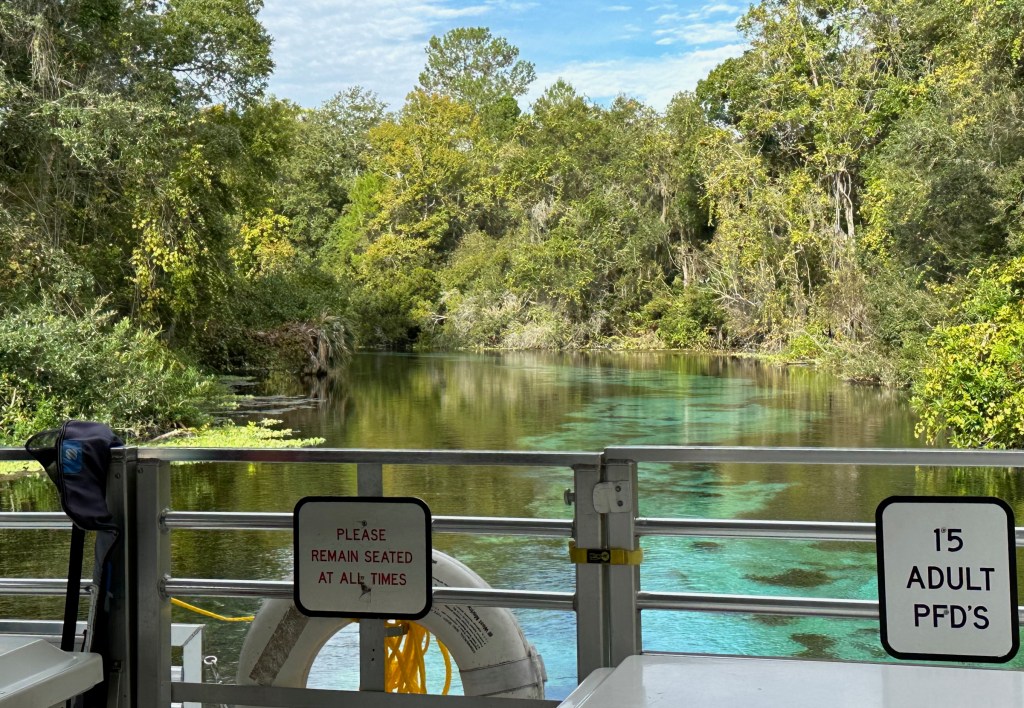
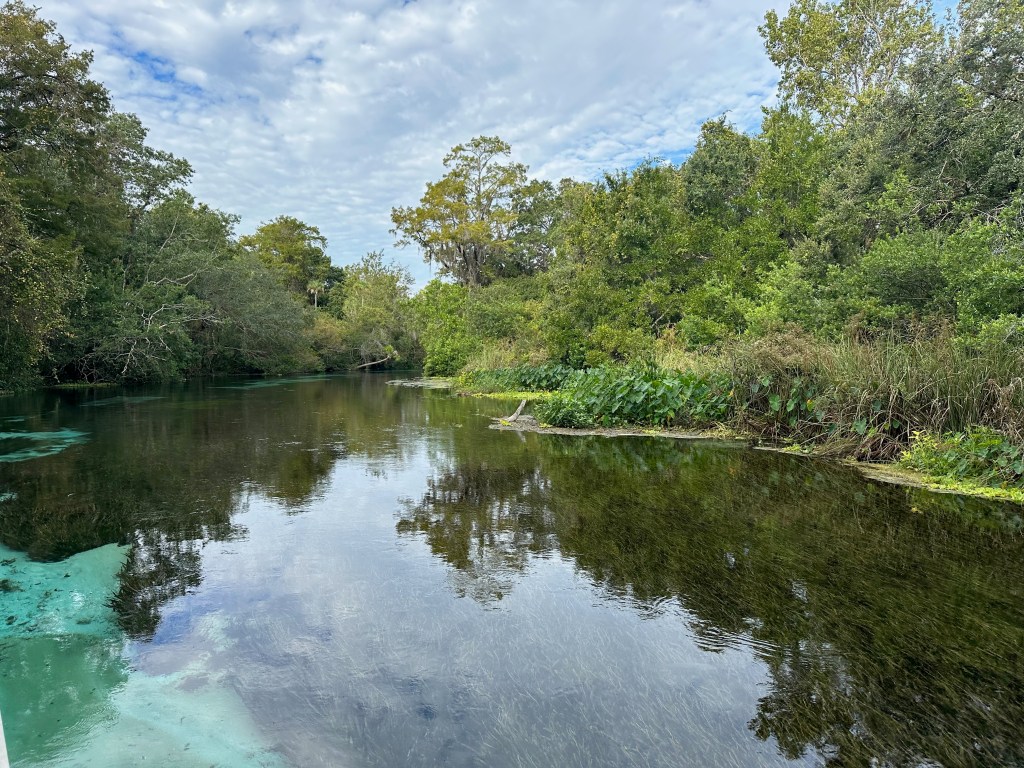
After exploring the trails at Hillsborough River State Park last week I decided to follow the river on my way home. I stopped off at four river access points, all sections of the Hillsborough River Wilderness Park.

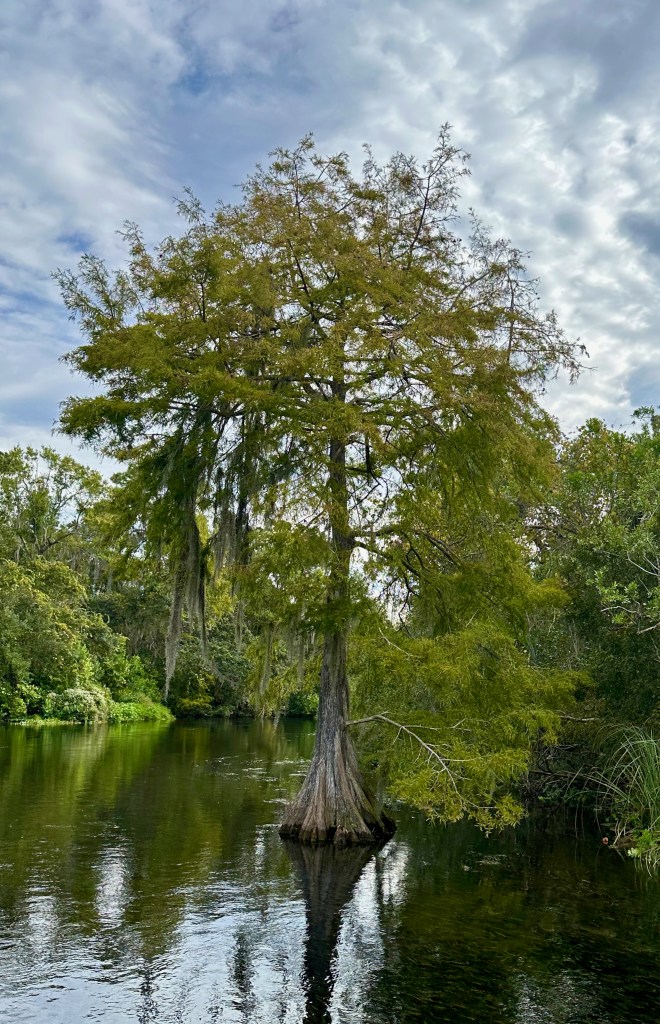
With the exception of the rapids at the state park, the rest of the river is a wide, slow-moving expanse. It’s considered a blackwater river since it wanders through swamps and wetlands.

I think the thing that surprised me the most was that I didn’t see a single alligator (but I’m sure they were there). Thank goodness these areas were set aside early on, since the Tampa urban area has claimed every square inch.

Slow Moving Swirl
Sped Up Swirl

Classy Place

Last weekend, I took advantage of an overcast morning and drove over to Hillsborough River State Park. The place had been on my must-visit list for quite some time so I was delighted to finally get there.

The park was established in 1938 to protect a rare, natural feature in Florida, Class II rapids. As you can imagine, in a state with the lowest “high point” in the country (354′ at Britton Hill), Florida rivers do not have a lot of opportunity to drop.

In an effort to preserve the siliceous limestone outcropping that underlies the riffles, wading and swimming are not allowed on the property. This interesting local geology also inspired the name of the nearby town of Thontosassa, which derives from Seminole-Creek language meaning “flint” “some”.

As with its other early parks (like Hammock Highlands State Park that I visited last summer), the state took advantage of the Civilian Conservation Corps to develop the land. There are numerous CCC-constructed features still visible throughout the park, most notably the suspension bridge.

Hillsborough River, Class II Rapids

SPT Airboat Line

In light of how packed the southern tip of the Pinellas peninsula is now, it’s amazing how hard it was for the early settlers to convince others to join them.

The main difficulty was accessibility; depending on the route there are at least 5 miles of gulf that separate this area from the mainland while the overland journey is over 25 miles. In the 1860s, whether by steamboat or horse drawn wagon, travel would take most of a day.

It wasn’t until May 1, 1888 when the Orange Belt Railway was completed that the journey was shortened to a mere 3 hours. (Though, according to the St. Petersburg Museum of History, it took over a month for the first train to reach the town, loaded with freight and just one passenger.)

So, it’s easy to understand why St. Petersburg was eager to embrace air travel. In late 1913 the town was approached P.E. Falser and Tom Benoist, the inventor of the eponymous airboat. The duo landed on St. Pete/Tampa as the perfect location to test their novel idea, a regularly scheduled air service.

Just 10 years after the Wright brothers took flight, the deal was signed creating the St. Petersburg-Tampa Airboat Line – the world’s first airline!

The first plane left St. Pete on the first day of 1914, cutting travel time down to a mere 23 minutes! Benoist commented, “Some day people will be crossing oceans on airliners like they do on steamships today.” Sadly, the SPT Airboat Line only flew into May of that year but the airline industry was born.