I went out to the beach the other day for a bit of peace and quiet. I ended up spending time with a flock of Laughing Gulls instead. Their incessant, raucous calls make me wonder, don’t they ever tire of hearing themselves?
Archive for ‘Nature Notes’
Fiddler Crab Lives Here
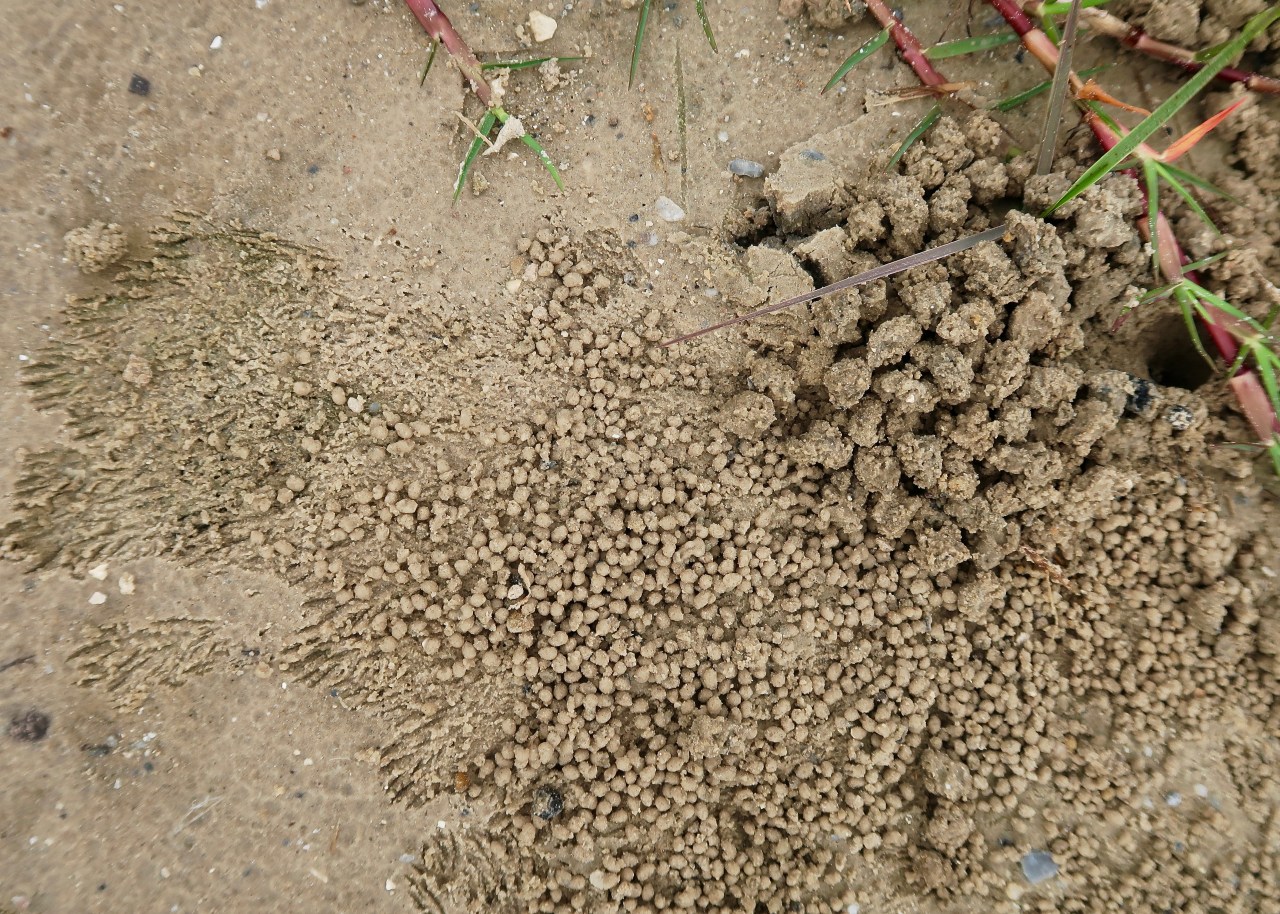
Denizens of saltmarsh edges, Mudflat Fiddler Crabs (Uca rapax) are excavators extraordinaire. Much of their lifestory is evident in the landscaping outside their burrows. Scritches in the sandy mud form when they claw up and ingest the soil. After siphoning out any organic matter, they roll up the leftover sediment and spit it out in little balls. The larger balls in the photo are the byproduct of burrow expansion.
Sadly, I didn’t see the crab so I couldn’t tell you the sex of the burrow owner (while female claws are both the same size, males have one enlarged claw called a chela). A male attracts a mate by waving his big appendage around. No correlation to the human male. Nope, none at all.
Stinkhorn
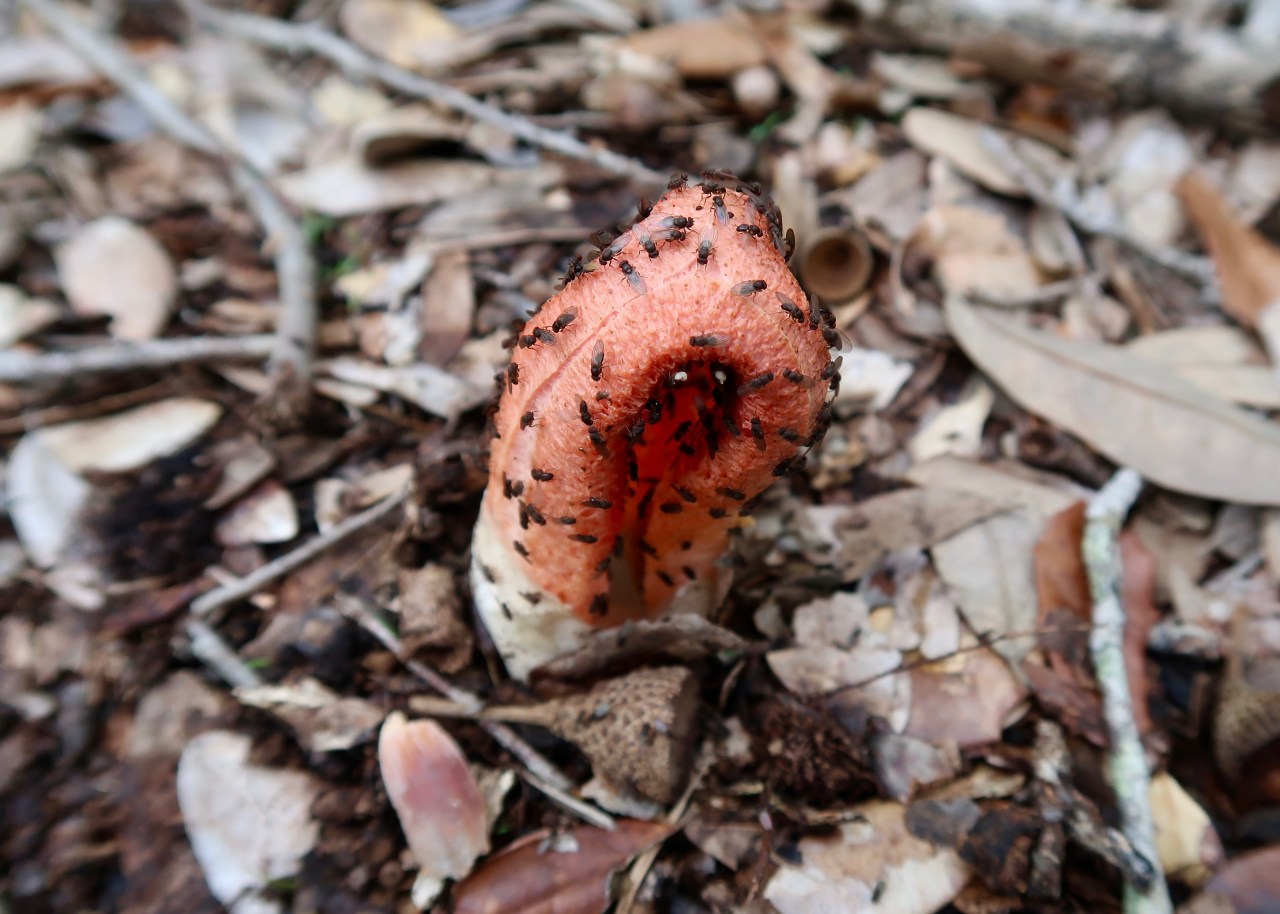
Rather appropriately named, Column Stinkhorn (Clathrus columnatus), uses a foul-smelling slime to attract flies. The flies then help the fungus spread by carrying away spores. Though this advanced stage of the fungus is considered too putrid to eat, the underground “egg” is considered edible. Um, yeah, I’ll take your word for it.
Shucked Shells

Oysters are one of the seafood crops harvested in the nearby bays. In efforts to protect the long-term health of the oyster fishery, the Texas Parks and Wildlife Department has closed six of the minor bays along the coast and is actively rebuilding oyster reefs. That time-consuming and expensive process will get a boost from the recently enacted law that requires seafood distributors to either return oyster shells equal to 30% of the amount purchased or pay $1.36 per sack (a sack can weigh no more than 110 pounds). So far, many of the distributors are opting to pay the fee, since oyster shells command a good price for use in the vitamin supplement market.
Plump and Stout
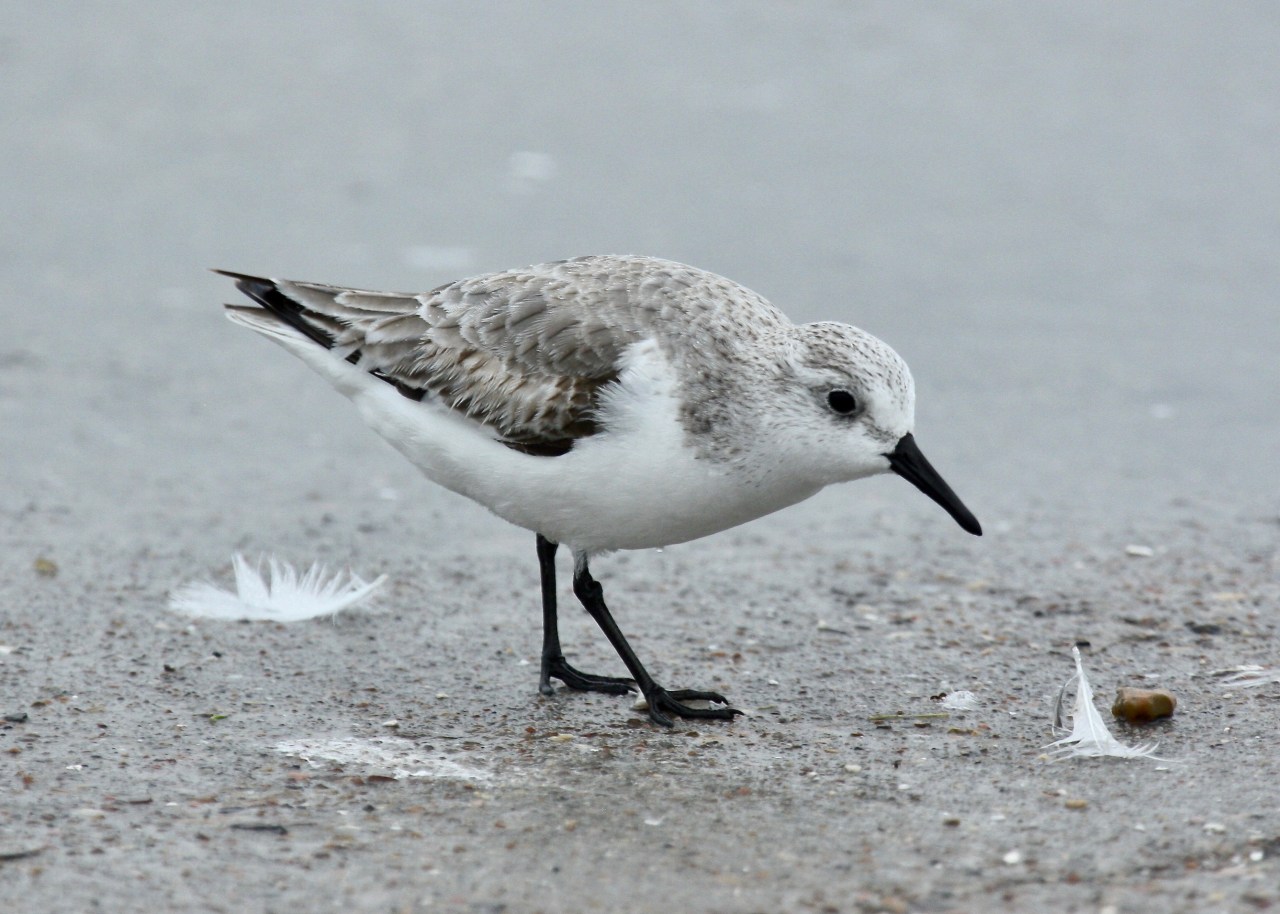 I know bird guides use those words to describe Sanderlings (their body and bill respectively) but I happen to find them adorable. If you haven’t watched it yet, check out Piper, the Pixar video about peeps that won an Oscar in 2017 for Best Animation.
Bath Time
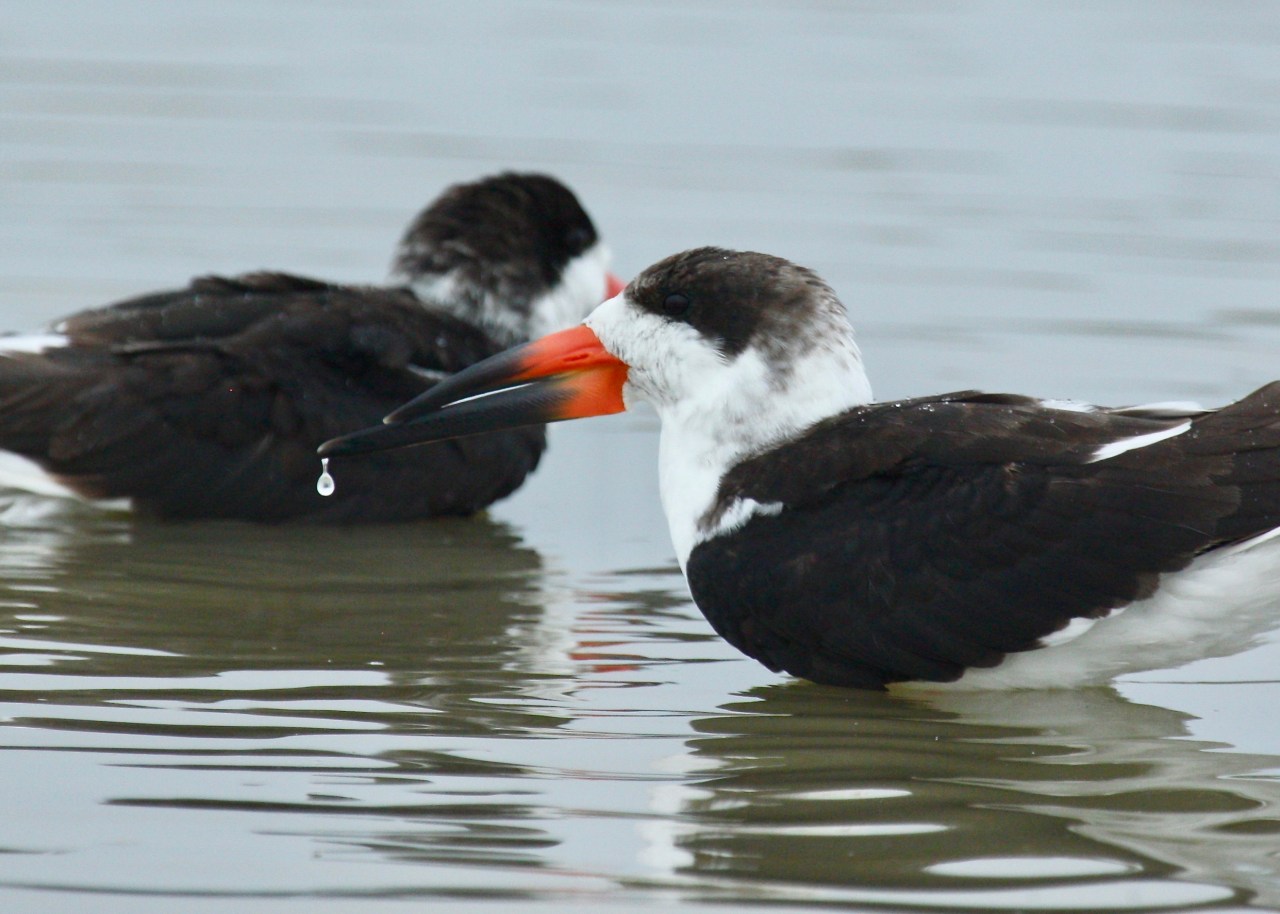
I spent an hour at Rockport Beach mesmerized by Black Skimmers bathing. Their name derives from their unique feeding method. They hunt by feel; flying low, skimming their mandibles in the water. When they touch a fish their bills snap closed. As a strategy, the percentage of success is low but hunting by feel means they can hunt at night while most other birds can’t. Read more about their distinctive qualities in this lighthearted article by Nicholas Lund.
Crabby

I found the first of what I am assured will be many Hermit Crabs here at Rockport Beach. Most likely this is one of the several Pagurus species that move into shallow water during their winter breeding season. It was the only one I saw, hopefully a mate is out there somewhere. Good luck little crustacean!
Protective Momma
This gator mom kept a close eye on me as she chased off a Great Blue Heron (the flapping wings about five seconds into the video). Her hatchlings were safely tucked in the hummock behind her. She does a nice impression of a log at the end.
Shark Valley, Everglades National Park, Florida 2018
River of Grass
Shortly before Christmas, I finally had a chance to tour Everglades National Park.* It has been on my list of places to visit ever since I read an article in an issue of National Geographic magazine as a kid. Sunny skies and mid 70s temperatures were a welcome change from the dreary, gray, and cold weather of my Central Oregon Coast home.
Spanning 1.5 million acres, the park is the third largest in the Lower 48 (after Death Valley and Yellowstone). I spent the morning exploring the sawgrass prairie at Shark Valley (in the northern section of the park). Though it was the dry season, I was not disappointed. There were alligator moms protecting their broods, dozens of wading bird species (including the stunning Purple Gallinule – gasp!), turtles, and did I mention gators?
For the afternoon I zipped an hour south into the mangrove swamps along the Florida Bay coastline. I’m glad I made the drive down, the scenery was just that much different. The havoc wreaked by Hurricane Irma in 2017 was obvious – boardwalks were twisted out of shape and the damaged visitor center was still closed.
After all day exploring a tropical wilderness I was grateful to have had only one mosquito encounter! A colorful sunset wrapped up my first full day of exploring Southern Florida. Up next, Key West!
*Pre-government shutdown.

Gator Hole

Baby Gators

Baby Gator

Limpet

Tiny Turtle

Nice Teeth!

Ever Watchful

Gator Scat

Juvenile Gator

Great Blue Heron Closeup

Camouflaged!

Wading Birds: Roseate Spoonbill, Great Egret, White Ibib, Wood Stork, Tricolored Heron

Wood Stork

Green Heron

Purple Gallinule

White Peacock (Anartia jatrophae)

Gator Mates

Florida Swamp Lily (Crinum americanum)

Gator Smile

Sawgrass Prairie

Mahogany Fruit

Hurricane Irma Damage

Gator Canal

Everglades Sunset

Sawgrass Prairie Sunset

Everglades NP Sign
The Black Oystercatcher Needs a New Name
Don’t get me wrong, I enjoy watching and listening to Black Oystercatchers (Haematopus bachmani) but I hate their name. Yes, they are black in color but they don’t eat oysters, and oysters don’t need catching. This misnomer we can blame on the British (and who doesn’t enjoy blaming the British now and then).
A related species of these iconic coastal birds were named in 1731 by Mark Catesby, an English naturalist touring the southeastern United States. He described them as eating oysters and thus their new name was born, American Oystercatcher.
Previously, other species in England were called Sea Pies in reference to their pied coloration. I find that name quite charming (though sailors of the time might have confused it with a layered meat entree).

If we’re going to name the bird after its food then a more accurate name would be Black Musselpicker. Since they dine primarily on mussels and limpets on intertidal rocks. As you can see in the above photo, Black Oystercatchers blend in fairly well. I usually hear them before I see them. Their loud ringing whistles can even be heard over the sound of crashing waves.
Sadly, they are a species of concern out here on the Oregon Coast. The Portland Audubon Society is working with other groups to monitor the birds, especially during nesting season. According to 2015 data there were 500-600 individuals in Oregon. Unfortunately, I learned recently that none of the Black Oystercatcher hatchlings along the Central Oregon Coast survived this year. No matter the name, I certainly hope they remain for a long, long time.
 3rin's View...