Archive for ‘Nature Notes’

Nesting Season

The city of Rockport bought this valuable piece of real estate in 2016 to protect a heron-egret-roseate spoonbill rookery (breeding colony). The property’s prime waterfront location, looking out over Little Bay, meant the roughly 9-acre site cost a pretty penny, just shy of $3 million. For the birds who rely on the safety of this oak motte to raise their young, it is priceless. The site is especially crucial after 2017’s Hurricane Harvey destroyed many other nearby nesting locations.

Bent Oak Rookery is bustling right now as the large birds are busily constructing and caring for nests. Finding just the right stick is a very serious matter.

Sunny Star

IMG_0054

I’ll go out on a bit of limb here and identify this as Cucumberleaf Sunflower (Helianthus cucumerifolius). It is no mean feat to pinpoint the species since sunflowers are in Asteraceae*, the largest botanical family with a mere 32,000+ members. I feel moderately confident in my choice since it is commonly found here, tolerates sandy soil, and blooms this time of year. Beautiful, no matter the name.

*Asteraceae- from ancient Greek meaning star, referring to the rays of the flowers.

Frog Life

IMG_1249

In an interesting coincidence I had two encounters with American Green Treefrogs today.  I awoke this morning to discover a flock of White Ibis (Eudocimus albus) aerating my lawn. The hungry horde probed their long bills into the St. Augustine grass seeking out large insects and small creatures. This ibis was incredibly pleased to nab an American Green Treefrog. Don’t tell Kermit, he just lost a relative.

IMG_0120

This afternoon while strolling through the Ivy Lane Nature Preserve I spotted this little one living up to its name. Found in America: ✓ Skin color green: ✓ In a tree: ✓ Is a frog: ✓. Nailed it!

Kermit!

IMG_9141

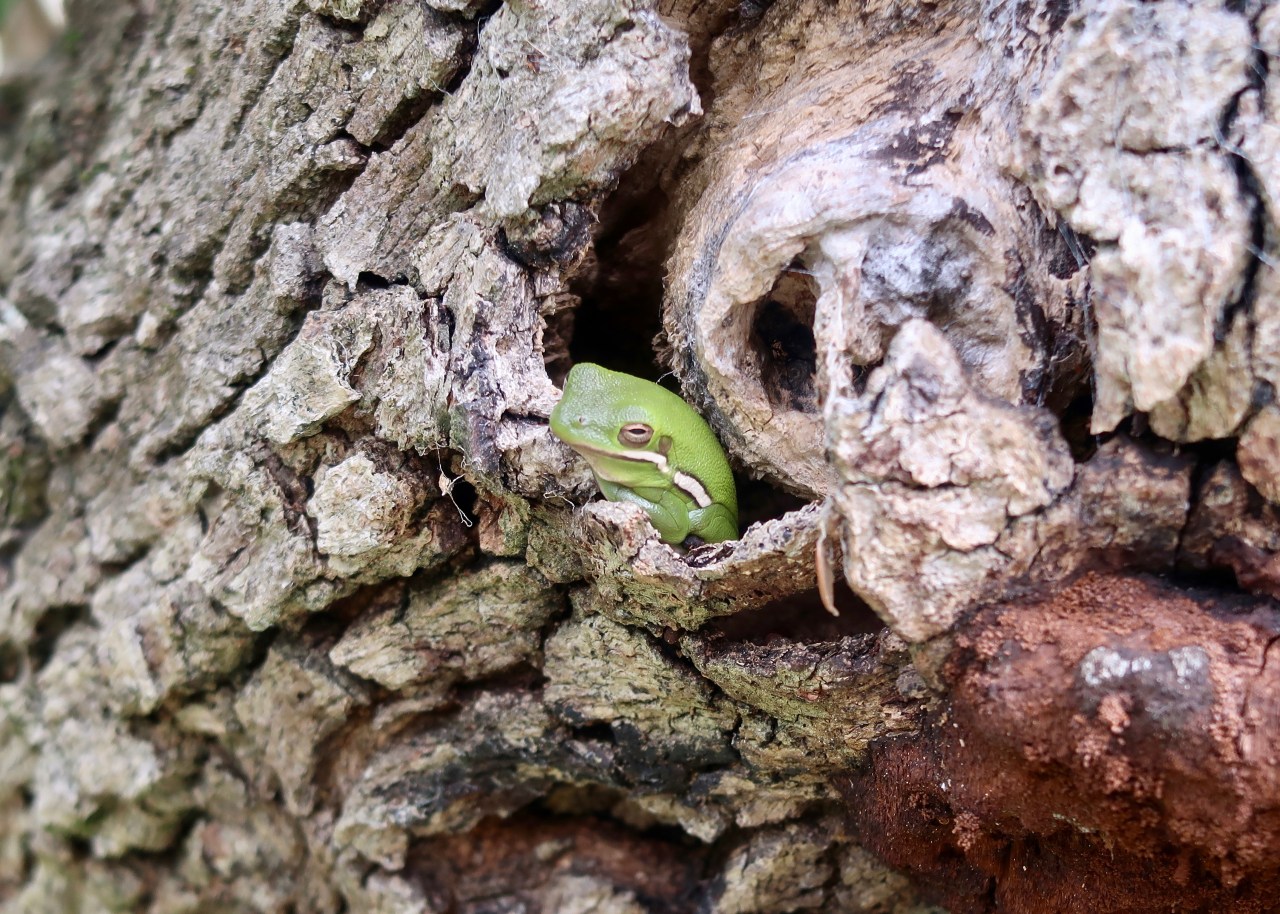
This adorable American Green Treefrog (Hyla cinerea) has taken refuge in my outdoor laundry area. We didn’t get that personal but I believe this to be a male since he is so tiny and I think I saw some wrinkling under the throat (indicating a vocal pouch which would expand so he can loudly advertise for a mate). Oh, and their call? Sounds a lot like a cowbell. More cowbell, baby! This little guy can hang out all he wants since they are ravenous insectivores. Anybody that eats mosquitoes is good by me!

Bubble Butt

IMG_9584

Last week during the Whooping Crane Festival I had a chance to revisit the Amos Rehabilitation Keep (ARK). During my first tour a dozen years ago I was charmed by the charismatic and dedicated founder Tony Amos. With his British accent, twinkling eyes, and infectious enthusiasm it was easy to become a supporter of his efforts.

Sadly, in 2017, just over a week after Hurricane Harvey caused massive damage to the ARK facilities, Amos passed away. Thankfully, all the animals at the ARK survived the storm and the organization continues to fulfill Amos’ mission of rescuing and rehabbing sea turtles and migratory birds.

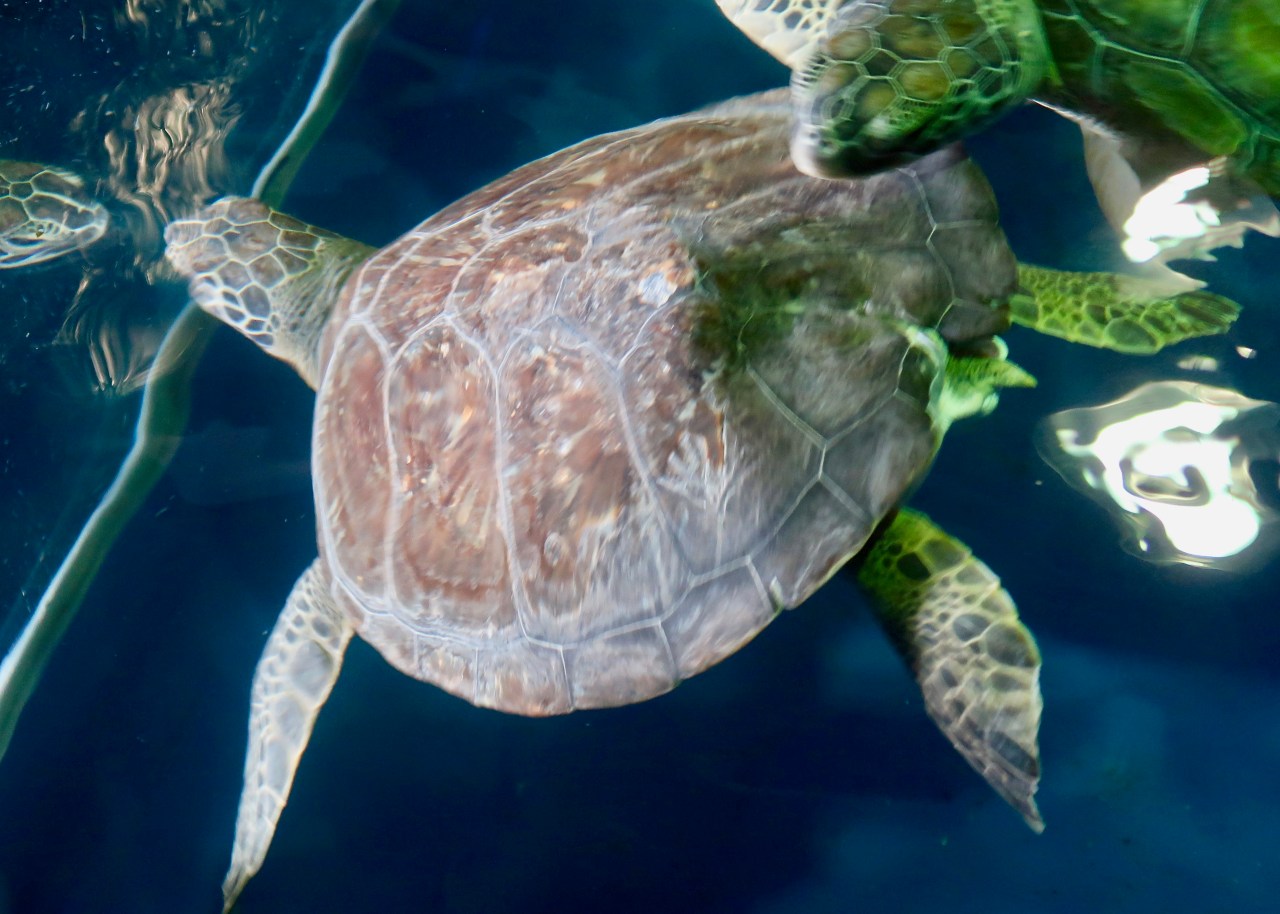
Though five of the world’s seven sea turtle species are found in the Gulf of Mexico the Green Sea Turtle (Chelonia mydas) is the most common patient at the ARK. The nearby Aransas Pass is an incredibly busy shipping channel, Corpus Christi is the 4th largest harbor by tonnage in the U.S. So it should come as no surprise that many sea turtles have been struck by boats.

The damage to their carapaces can cause air to get stuck inside, a condition called bubble butt. The air bubble makes the turtles more buoyant making it harder for them to feed and avoid predation and other dangers. Sometimes, the issue resolves itself as the turtle gains strength and the animal is released. (Note the discolored bump on the top of the shell. Not the best photo, I know but they are faster than you might think.)

Oh, Deer!

I know most wildlife enthusiasts suggest getting out first thing in the morning but I’m not much of an early bird. No worms for me, thanks anyway. Happily, I find that late afternoon/early evening is also an active time. On my most recent visit to Aransas National Wildlife Refuge I came across five different groups of White-tailed Deer (Odocoileus virginianus).

That should come as no surprise since Texas has the largest White-tailed population in North America, with an estimated four million of them. Interestingly,  I noticed that mosquitoes were quite fond of the deer (note the dark spots on the face of the deer in the second photo). Pretty sure she wanted to borrow my bug repellent.

Cute Little Face


I found a couple unusual specimens washed up on the Rockport Beach recently. Topping out at 10 inches long, the Striped Burrfish (Chilomycterus schoepfi) is a resident of coastal estuaries.

Just looking at their tiny fins one can guess that they aren’t fast or agile swimmers. It is thought that their ability to inflate (similar to a puffer fish) helps them avoid predation.

They don’t need to be fast to catch their prey of shellfish, barnacles, and occasionally, crabs. Their beak-like jaws help them chow down on their crunchy diet. Note to beachgoers, their spines can be hard on bare feet!