Author Archives

Unknown's avatar

Erin

Coddiwompling through life, guided by my love of nature and insatiable curiosity.

Dropping Acid

Back in March, a friend let me harvest some seeds from a vine in her yard after I admired its periwinkle blooms. I planted the seeds in my yard, wished them luck, and promptly forgot about them.

My front yard is full of drought-tolerant plants (mostly native) – they have to be pretty tough to survive because I don’t baby them. So, I was thrilled when I noticed the first tendrils after the rains started in May.

I now have several healthy Butterfly Peas (Clitoria ternatea)* growing in my yard. They aren’t just showy in my yard but in my kitchen, too. The flowers (fresh or dried) can be steeped to make an herbal tea with a flavor slightly reminiscent of chamomile.

While the tea is tasty and beneficial (supposed to help with memory) my favorite thing is that the tea is just as colorful as the flowers! Even better, I can change the color from blue to purple with just a few drops of lemon juice (the only time in my life that I’ll drop acid). While I like both colors, I’m definitely partial to the blue. How about you?

If you need me, I’ll be in the kitchen playing with my food (technically drink, but you know what I mean)…

*Yes, the first part of the binomial does refer to women’s genitalia – yet another example of why we really need to stop letting men name things!

Paddling the Preserve

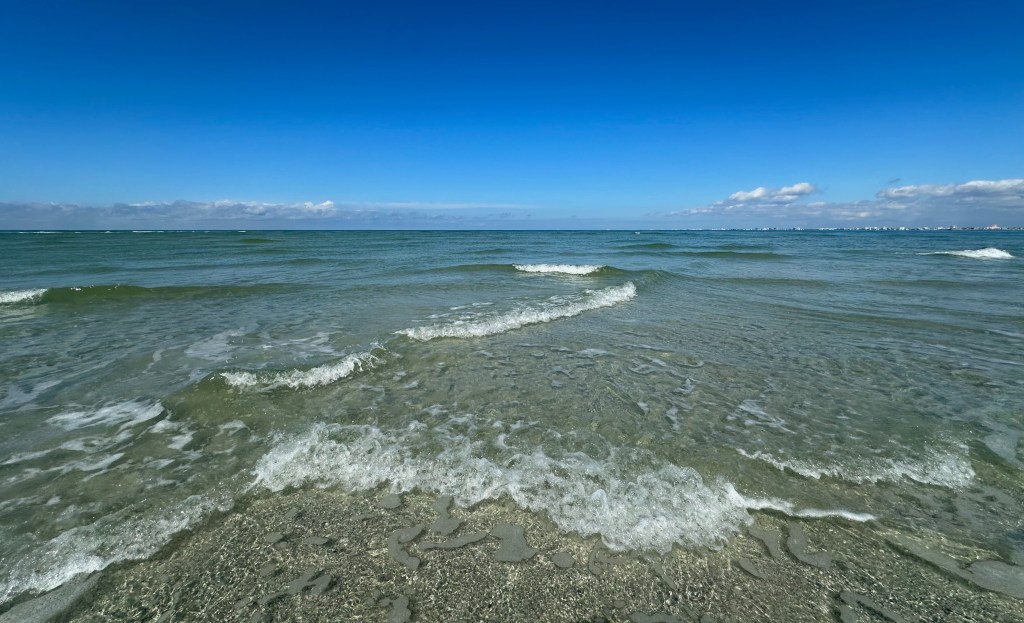
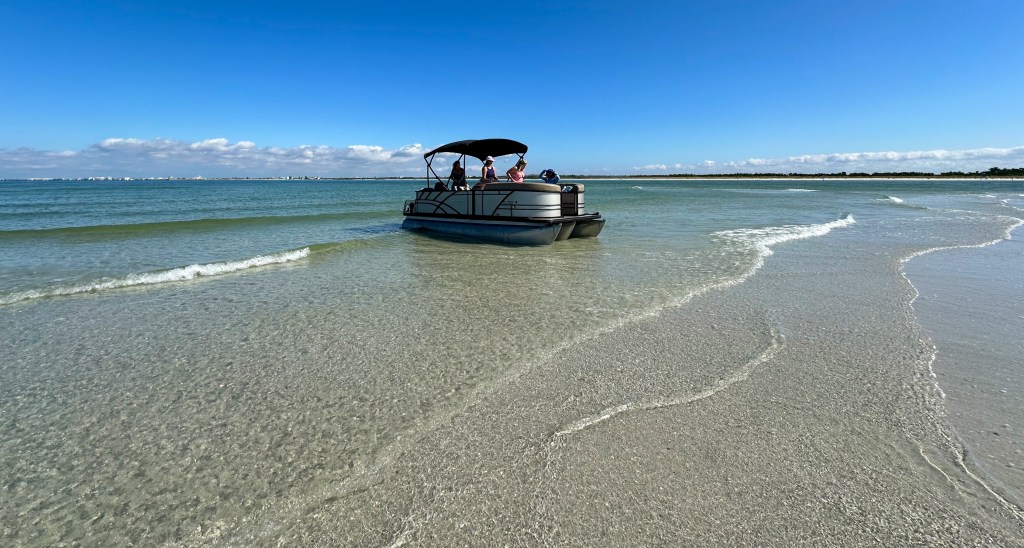
Woke up early to go kayaking with my friend Becky this morning. It was slack tide when we hit the water at 8:30 which made for an easy and enjoyable paddle. The sun was a bit warm so we were appreciative of the light breeze that accompanied us.

Speaking of accompaniment, we were joined by a few Double-crested Cormorants. Endlessly entertaining watching them dive under our kayaks as they chase after the fish we stir up. It’s a pretty successful technique because we saw more than one gulp down a meal.

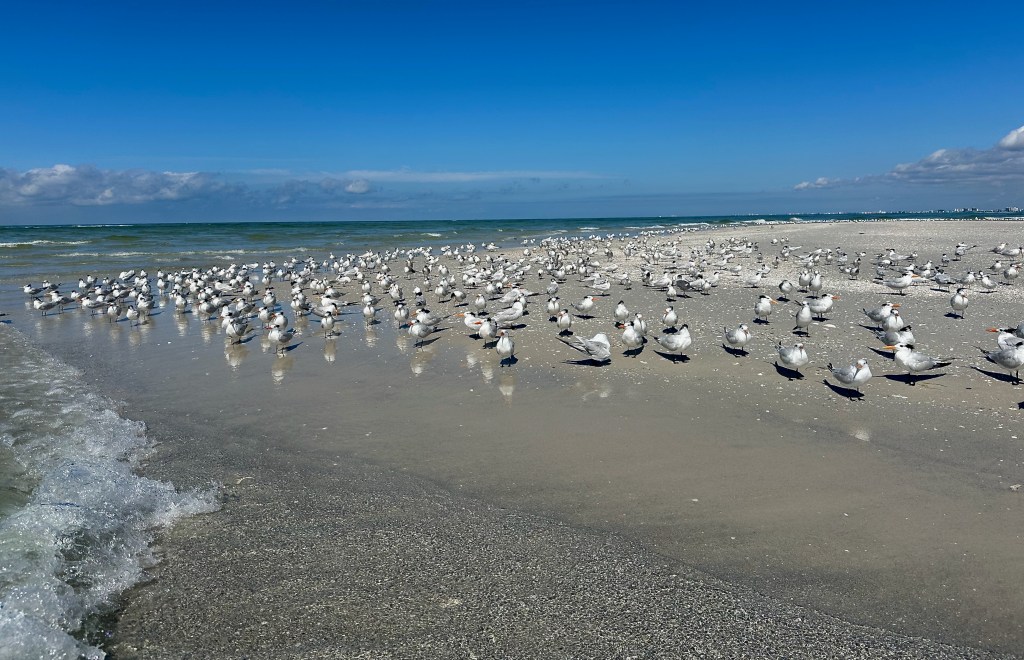
There was a distant manatee sighting today but sadly, no dolphins for us, though mullets put on a show with their flashy jumps. While paddling straight across the open water is a more direct route to Shell Key, it’s more enjoyable to slip into mangrove tunnels and explore (plus, they’re shady).

All in all, a lovely way to spend the morning!

  • Note, This was my second trip out there in two weeks, I just can’t get enough of Shell Key Preserve! These photos are from both trips.

Good Timing

My annual summer cold arrived last week, lucky me. 🙄 I’ve been trying my best to rest and heal, though I know it just takes time. There’s a saying in my family, “If you treat a cold, you’ll get better in 2 weeks. If you don’t, you’ll get better in 14 days.”

I think my garden* heard me sniffling because my first guavas of the season just ripened! I harvested a couple dozen of the roughly ping-pong ball-sized fruits (and promptly devoured half of them).

They are not only delicious but good for me – containing high amounts of Vitamin C, as well as Vitamin A, folate, and potassium. I think I feel better already!

As you can see, there’s a lot more on the way. Both of my Strawberry Guava bushes are absolutely loaded this year. Even after I thinned fruitlets multiple times since I was worried the branches would break from the weight of all the growing berries (yes, botanically speaking, a guava is a berry).

Should be a tasty Summer!

*During the rainy season, yard work still has to happen no matter what, or else the jungle takes over…

Nature Retreat

The final part of my NC/VA trip last month was spent relaxing at a beautiful farm just west of Richmond. This picturesque property is in the process of being lovingly transformed into a flower farm and art retreat. It’s the brainchild of Kim (my good friend Karen’s talented and determined daughter).

Kim may lament the pace of progress (mostly due to bureaucratic delays), but I’m amazed by all she has accomplished thus far. While awaiting permits for her art studio, Kim converted part of the barn into a vibrant, creative space where she hosts classes each Spring and Fall. As for her flower farm, the varieties she has selected for cultivation are colorful, yet unique with a touch of wild in them. Definitely not run of the mill cultivars.

Though it was a short visit, it was just wonderful to soak up some country air and catch up with Karen. Oh, before I forget – there were also fireflies! It was mesmerizing to watch them dance above the lawn as we chatted in the evening. Such a magical time…

Meet My New Neighbor

Juvenile Eastern Narrow-mouthed Toad
(Gastrophryne carolinensis)

There have been a couple downpours today which I presume flushed this little one out of the soil. Thank goodness I noticed it jump because I was about to step on what I thought was a tiny piece of mulch.

Turns out, its diminutive size (about 1/8” in length) proved helpful for identification. The adults of this species only average about an inch.

Even though this species is terrestrial and the common name includes the word, it isn’t actually a toad, it’s a member of the microhylid family of mini frogs. A new species for my yard! 🐸

I’m hoping it stays around as it grows up because the species is known to feed on ants and termites.

*Kindly disregard my filthy finger, I was working in the yard in between storms.

Firsts

After the dismal rainy weather the day before I was greeted with a cloudy and mild morning, perfect for wandering the remains of the first permanent English settlement in North America. Speaking of firsts, I was the first visitor at the Jamestown National Historic Site that day.

In December 1606 three ships loaded with 144 men, boys, and provisions left London headed for the New World. The goal was to establish a colony to give England a foothold in between the Spanish and French land claims.

On May 14, 1607, after exploring the Chesapeake Bay a suitable location was finally selected, roughly 40 miles up a river (which they named after their king, James). As the three ships and their sailors returned to England, construction of a fort commenced.

The main prerequisites were that the land be defensible and unoccupied. The fort’s location on a bend in the river provided good sightlines. However, the land was in use by native people, though only seasonally. The Powhatan tribe did not have a permanent village there because, as the newcomers soon discovered, the swampy land wasn’t arable, there was a dearth of fresh drinking water, and the surrounding slack water bred hordes of mosquitoes.

Despite those hazards, and mainly through the largesse of the Powhatans, the colonists survived (unlike the earlier settlers at Roanoke which all mysteriously disappeared in the late 1580s). But survival wasn’t the only goal, the colony needed to find and cultivate materials for export.

Timber and forest products were in high demand in England, though cumbersome to transport. The settlers planted grapes for wine and mulberry trees for silkworms. They even tried glassblowing, mining, and shipbuilding. Of all their attempts, tobacco quickly became their most valuable commodity.

The downside of that cash crop? It was labor intensive. The economic woes in England provided a handy solution. Indentured servants were sent over by the boatload to work off their debts (or crimes, such as murder or even merely stealing a loaf of bread). Sadly, over 55% of them did not survive the harsh working conditions.

While ultimately a success story, I appreciated that the exhibits in the museum and on the grounds attempted to provide a balanced view. This first permanent colony produced a lot of firsts, not all of them good, such as the first plantations and the first slaves (with the arrival of stolen and enslaved Africans in 1619).

We are all fortunate that places such as this have been preserved and are still being studied. As Winston Churchill said in a 1948 speech to the British House of Commons, “Those that fail to learn from history are doomed to repeat it.”

Dismal, Indeed!

When mapping out my route from Raleigh to Chesapeake, Virginia I noticed the Great Dismal Swamp on the map. I didn’t know much about it but with a name like that who could resist checking it out? 

Midafternoon I pulled into the Dismal Swamp State Park in northern North Carolina. A relatively small park, it provides access to a narrow swath of land alongside the historic Dismal Swamp Canal. My first stop was the visitor center where I was pleasantly surprised by both the history and nature exhibits.  

Less than half of the original million acres of swampland remain, much of it drained for settlement and logging. The majority of the bald cypress trees that once towered over the murky water were cut down for building materials for the early colonists. As you might imagine, transporting the logs out of that morass was incredibly difficult.

During a visit in 1763, a 31-year-old gentleman farmer by the name of George Washington proposed building a canal in the landlocked area. Twenty years later work commenced. When it finally opened in 1805, the 22-mile long watery highway was a boon to commerce between North Carolina and Virginia.

Taking a hint from the name, I used up the last of my can of bug repellant before hitting the trails. Unfortunately, I was the only person on the boardwalk which meant I was the best food source around. The constant whine of mosquitoes I expected, but the fierce chomps of biting flies caught me off guard. Either I’m delicious or they were starving because they were relentless.

My curiosity wouldn’t be thwarted so I continued on to the path along the canal. In between swatting insects I pondered the struggle of the slaves who dug out the waterway over 12 long years. A testament to their hard work, it remains the oldest operating canal in the country, though these days it mostly just carries recreational boat traffic.

A fast-moving thunderstorm abruptly ended my explorations. A bit of a mixed blessing, I ended up soaking wet but at least the rain chased the insects away. The term dismal was given by early settlers to any swampy area, but its easy to see how this place earned the moniker Great Dismal Swamp. Dismal, indeed!

I ended my day with a brief trip to Virginia Beach, which I didn’t have much time to enjoy it as another big storm chased me off the sand. Some days are just like that…

Virginia Beach with Incoming Storm

Relaxing in Raleigh

Last week I took advantage of a lull in my schedule and headed up north to visit friends. My first stop was in Raleigh to spend time with Hector, one of my oldest friends (not that he’s ancient, I’ve just known him a long time).

The overcast skies made our outdoor wanderings quite enjoyable, definitely milder than my Florida temperatures. The time passed quickly with good conversations, tasty libations, and fantastic food.

It was a short visit, much to Gracie’s relief (I threw off her nap schedule and she was not amused). My next stop? An intriguing place with a wretched name: The Great Dismal Swamp.

Lovely Limpkins

As I mentioned the other day, I spent Saturday morning wandering the trails at nearby Boyd Hill Nature Preserve. Not only did the weather cooperate nicely but I was treated to some cool wildlife sightings (I shared the lazily floating alligator last time).

My favorite encounter occurred after I doubled back to my favorite trail. I heard an unusual amount of squeaking which made me think there was a baby bird nearby.

I didn’t expect to actually see the young one, as they are typically safely ensconced in a nest or tucked in foliage. So I was pleasantly surprised to find a Limpkin fledgling foraging with its mom.

Or more accurately, it was crying for food while following mom as she foraged. My boardwalk perch afforded mom a sense of safety as she continued to hunt and feed her loud hatchling.

I was so immersed in watching the pair that it took a few minutes before I spotted an older fledgling who was fending for itself a little further away. It was clearly larger than its sibling and probably a day or two older (mom lays an egg a day and they typically hatch in that order).

As you can tell from all the photos, it was difficult to tear myself away from the little family. Such a wonderful treat!

Feed Me! Limpkin Fledgling Follows Foraging Parent