Author Archives

Unknown's avatar

Erin

Coddiwompling through life, guided by my love of nature and insatiable curiosity.

Shades of Blue

After a previous failed attempt to meet the Florida Scrub Jay (Aphelocoma coerulescens), the state’s only endemic bird species, I finally got lucky this past weekend. Within 15 minutes of hitting the trail at Oscar Scherer State Park, I came across a family group of jays in a thicket of scrub oaks. While not as vividly blue or strikingly marked as other jay species, these birds are still quite handsome.

As I watched the busy birds, more birders arrived. Thankfully, our presence didn’t bother the jays, they were focused on harvesting acorns. It was fascinating to watch them scramble around in the branches, looking for just the right one. I don’t know what makes an acorn appealing but these birds definitely had requirements.

After carefully selecting an acorn (or three), the jays would fly a few yards away and then drop down to the ground out of sight, presumably to stash their booty. I read that each jay can collect over 6,000 acorns in a season. Considering that these jays hang out in family groups of 5-7 birds that’s over 30,000 acorns! As with squirrels, not all the nuts are later recovered by the jays. The forgotten ones often propagate, thereby ensuring future oak trees.

Meanwhile, high in a dead snag overlooking this frenzied nuttery, there perched a lone, sentinel jay. After a sharp cry from the lookout above all the jays below flew off to safety. I waited about 10 minutes for their return to no avail, so I continued along the trail.

I was definitely pleased with that sighting but an even better experience waited just around the bend. There was another family group of jays in some oak trees, even closer to the trail. You may be wondering how I knew it was a different group of jays. I didn’t at first but when looking through my photos afterward I could see the various colored leg bands sported by many of them. They were distinct sets, with no overlap, which tracks since I’d read that they are very territorial.

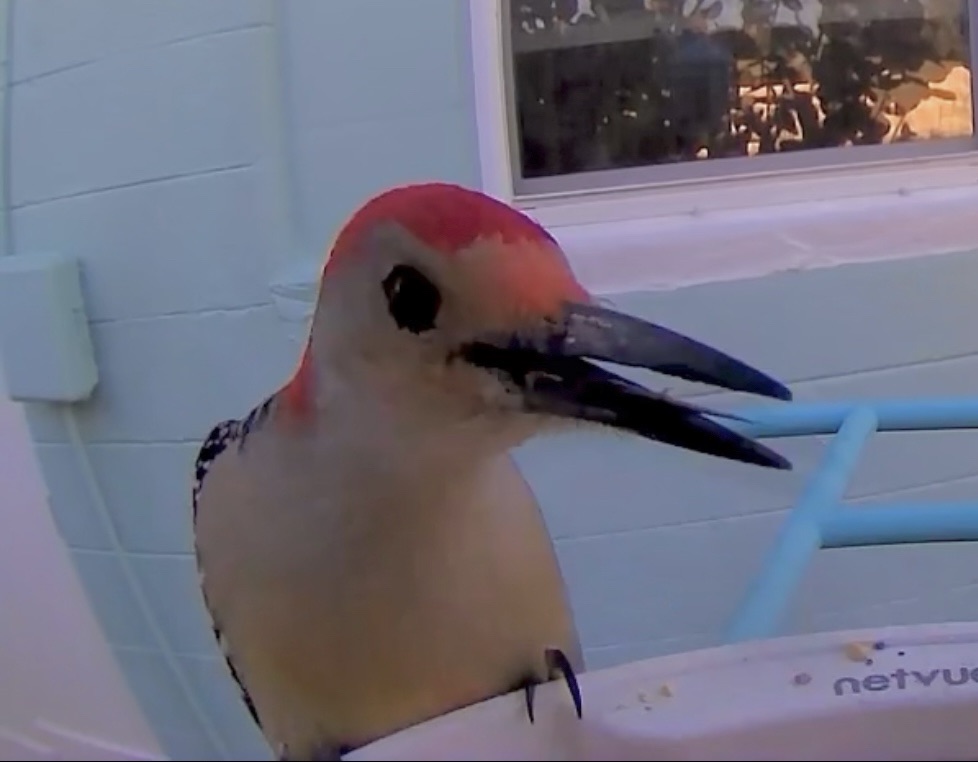
The jays weren’t the only species flocking to those oak trees, there was a pair of Red-bellied Woodpeckers, some Brown Thrashers, Mourning Doves, and even a couple Catbirds (though I have to presume they were after insects and not nuts). The prints in the sand beneath the trees led me to believe these acorns were also favored by deer.

Eventually (and quite reluctantly), I tore myself away from the birds. Since it was such a lovely, warm and sunny day I headed over to the beach south of nearby Venice. The color of the Gulf down there always amazes me, just look at that turquoise blue water! It was a fantastic day, well worth the early morning drive!

Left-eyed

While walking the pier at Fort DeSoto Park recently I watched a fisherman reel in this Southern Flounder (Paralichthys lethostigma).

This species is considered the top bottom-dwelling predator. Their technique is simple, they bury themselves in the sand, something they are ideally camouflaged for, and wait for prey to swim overhead.

What makes this method work so well is their migrating eye. Flounders start life with one eye on each side of their head, like normal fish. As they age, and settle into their benthic feeding routine, the right eye migrates to join the left giving them exceptional one-sided vision.

So Thirsty

Muddy Raccoon Prints on My Front Porch

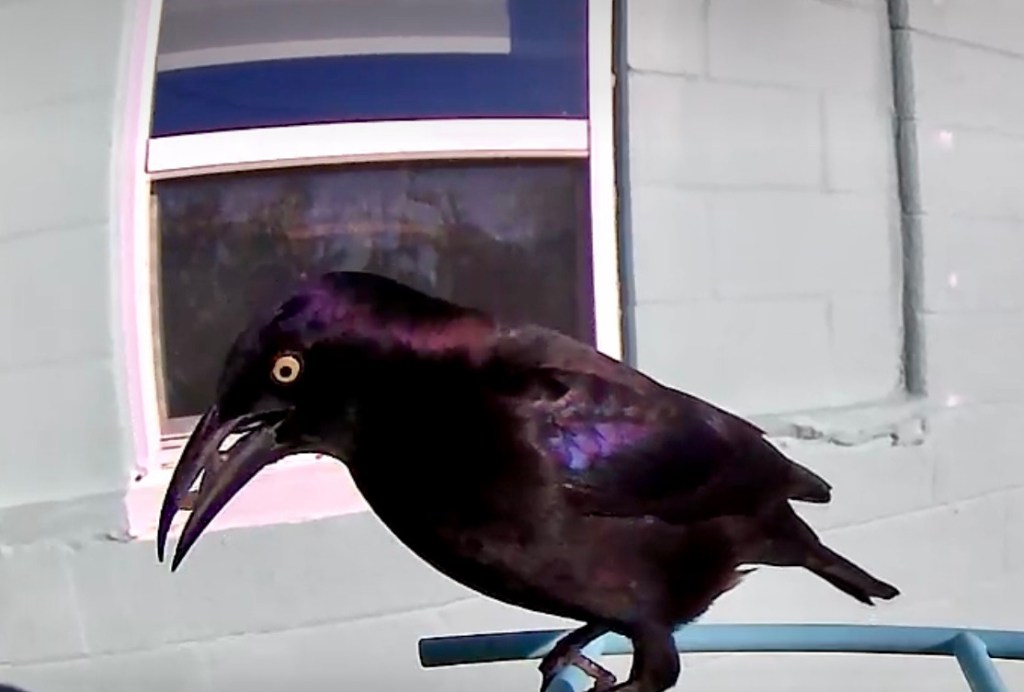
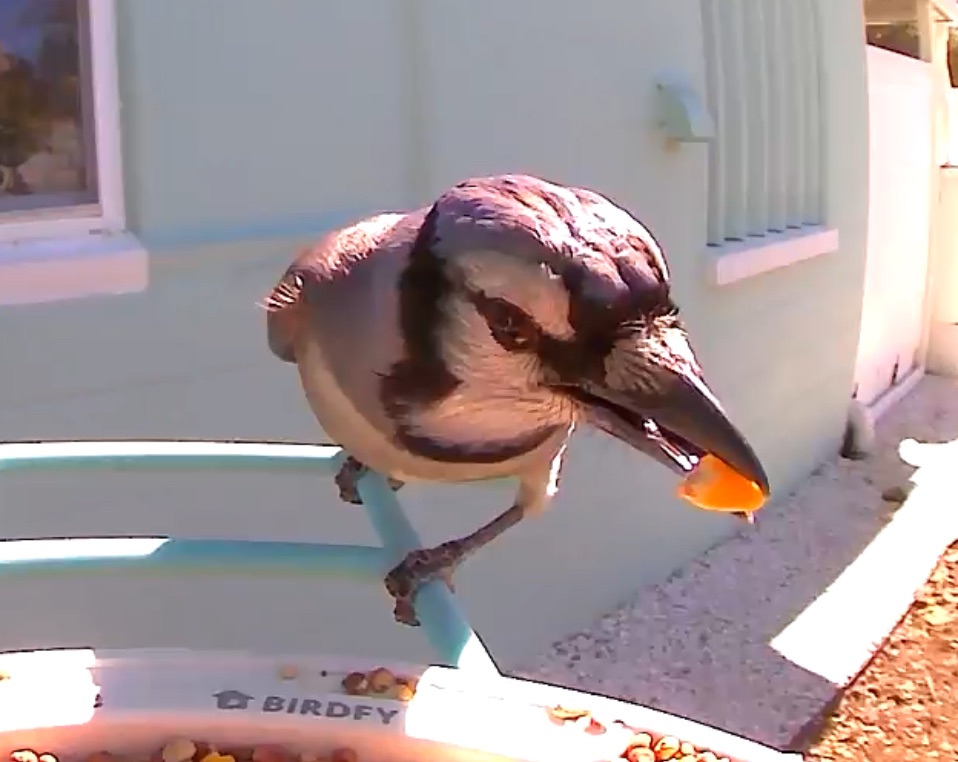
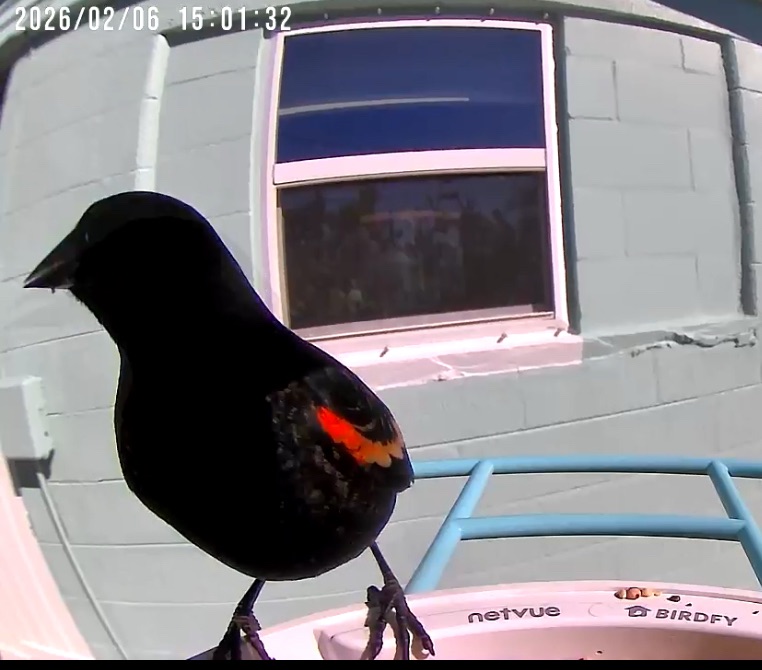
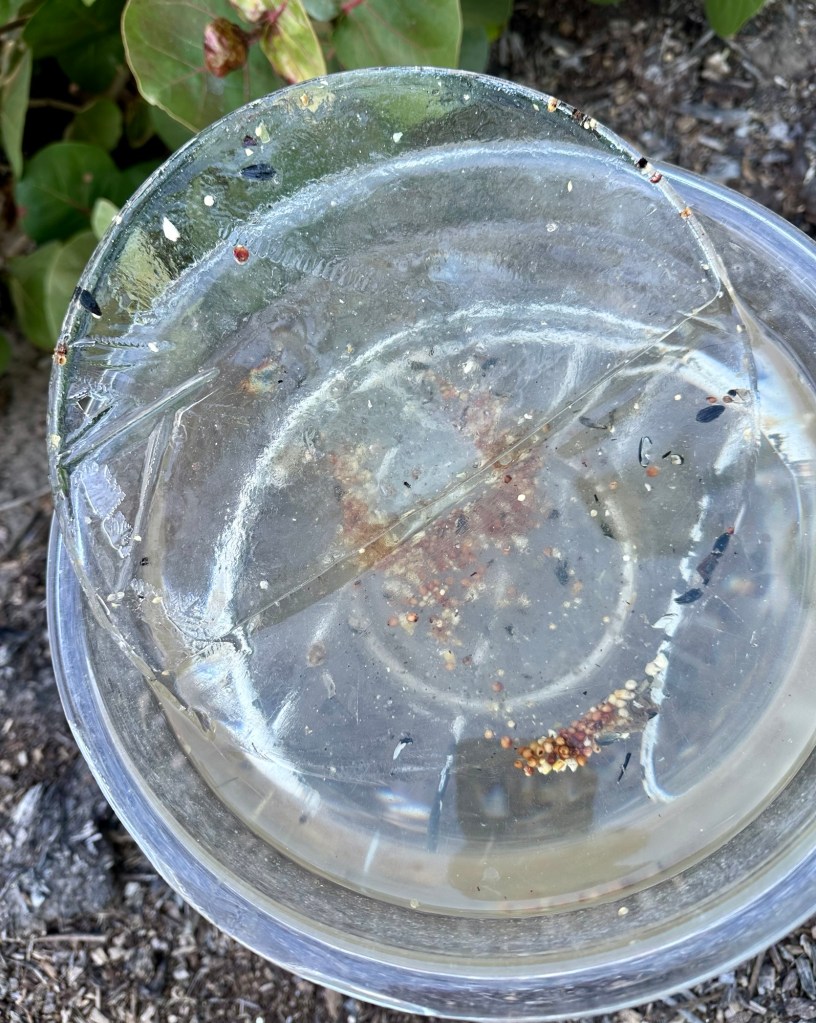
I currently have four water dishes of various sizes and heights in my yard, three up front and one in the back. I don’t call them bird baths because they are intended for, and utilized by, all manner of wildlife.

As I’ve mentioned before, we are in our dry season here in Florida and my region is already experiencing Stage 1 drought conditions, so all these fresh water options draw a crowd.

While birds and pollinators visit during the day, it seems mammals prefer the evening hours, which is why I’m glad I installed a motion-activated camera. Not long ago it caught a video of three young raccoons. After watching them trying to share water dish, I’ve decided to add an even larger water option to my front yard (hopefully soon).

While I’m delighted that wildlife utilizes my yard, I do wish they wouldn’t leave muddy paw prints all over my porch!

Thirsty Trash Pandas

Manatee County Morning

Met a friend for a bird walk yesterday. We started with a wander around Felts Audubon Preserve. It’s a nicely rehabbed property that was once part of a cattle ranch but is now surrounded by housing developments. A Red-shouldered Hawk (Buteo lineatus) kept an eye on us as we admired the recent habitat improvements. The preserve hosts both Indigo and Painted Buntings during the winter but alas, I was unable to capture decent photos of them.

After parting ways, I drove over to nearby Perico Preserve, that overlooks Perico Bayou. A bold Mockingbird (Mimus polyglottos) came out to greet me but the dryland scrub was otherwise quiet. The action was all in the water. I caught a short-lived mating attempt by two Spider Crabs (Libinia emarginata) and was amused by the hunting antics of a Tricolored Heron (Egretta tricolor) but the stars of the show were the two foraging Roseate Spoonbills (Platalea ajaja).

Exterminator Extraordinaire

Plumbago, in My Front Yard

I knew that an Opossum frequented my yard since I’d caught glimpses of it at night, disappearing under my Plumbago bush. Oddly, until recently the animal had eluded the camera in my front yard.

Not sure how because it isn’t tiny! For reference, the shell-lined drainage trench measures 14″ across, so I’m estimating this one is a good 2′ long (including tail).

Since opossums typically dine on insects and rodents, I’m happy to have it visit!

Roadside Attraction

Yesterday was my first visit to the Ellie Schiller Homosassa Springs Wildlife State Park. Knowing it would be busy because of the holidays, I arrived right when it opened. I was one of the first 10 people in the small park and while it was chilly (a mere 42°) it was worth it!

The park encompasses Homosassa Spring, a first magnitude spring that is the head of the short, 7.7 mile, river of the same name. The area first became popular with tourists in the early 1900s as a railside attraction.

Passengers marveled at the fish and manatees amassed there. The constant 74° temperature of the water is the main draw, especially during the cooler months when the Gulf water drops into the low 60s.

In the 1940s, the area officially opened as a roadside attraction, expanding again in the 1960s to include native and exotic animals, many of them trained to perform. By the time the state purchased the property in 1991, that mindset was outdated. Today the emphasis is on the protection and conservation of native wildlife.

The park now provides refuge for injured or habituated animals that are native to the state. Residents include manatees, bobcats, Florida Panthers, Red Wolves, and foxes, as well as numerous bird species.

However, since the river runs through the center of the park, it is also visited by numerous wild animals that take advantage of the safe haven. Other than the charismatic flamingoes, all the animals in my photos above were “visitors”.

Speaking of flamingoes, while admiring them I overheard a Florida girl earnestly ask her dad, “Why is it so cold?” I commiserated with her, even though I was wearing my down parka and gloves. Yes, I’ve lived here for 6, going on 7, years now but I still keep a pair of them in my car (after all, that’s why it’s called a glovebox)!

In case you were wondering, the name Homosassa came from the Seminole and Creek languages and purportedly translates as “place where wild pepper grows”. The pepper in question is the native Firecracker Pepper (Capsicum annum). I didn’t notice any peppers but I did spot a scraggly wild orange tree growing in the mesic forest along the Pepper Creek Trail.

Overall, it was a lovely way to spend one of the last days of the year!

Manatee, Sleeping In
Manatees, Commuting