We are born twice, the second time by the strength of our own courage.
~ Heidegger

Cruz the Mountain Lion, Arizona-Sonora Desert Museum, Tucson, Arizona 2015

We are born twice, the second time by the strength of our own courage.
~ Heidegger
Cruz the Mountain Lion, Arizona-Sonora Desert Museum, Tucson, Arizona 2015
Rejoice in the things that are present; all else is beyond thee.
~ Michel de Montaigne

Crater Lake National Park, Oregon 2008
I choose to make the rest of my life the best of my life.
~ Louise Hay

Incoming Tide, Lincoln City, Oregon 2018
The final piece of my last month of summer was spent touring around Oregon with my dear, old friend Hector. I had the good fortune to work in his Food and Beverage department in the early 90s at Westward Look Resort. It was an excellent learning experience for me: I was young and impetuous* while Hector was a reflective and circumspect manager.
A couple events stand out in my memory: serving iced tea to Ted Turner and his wife Jane Fonda, and cleaning up after mob boss “Joe Bonanno’s” 85th birthday party. Though Hector’s hotel management career moved him around the country multiple times, we’ve kept in touch.
It was a treat to show off my favorite coastal haunts: Lincoln City beaches and tide pools, whale watching in Depoe Bay, touring the lighthouse at Yaquina Head Outstanding Natural Area, as well as checking out the sea lions and Rogue Brewing in Newport.
I especially enjoyed revisiting the Deep Blue Lake (my one and only other tour was May 2008 when the park was still buried under snow). Thankfully, the weather cooperated nicely for this visit. It was a lovely way to wrap up my last month of summer!
*Yeah, so other than my age I haven’t changed much in the last couple decades. Sigh.


It ain’t what they call you, it’s what you answer to.
~ W.C. Fields

Eight-spotted Skimmer, Lincoln City, Oregon 2018
And every day, the world will drag you by the hand, yelling, “This is important! And this is important! And this is important! And this! And this!” And each day, it’s up to you to yank your hand back, put it on your heart and say, “No. This is what’s important.”
~ Iain Thomas
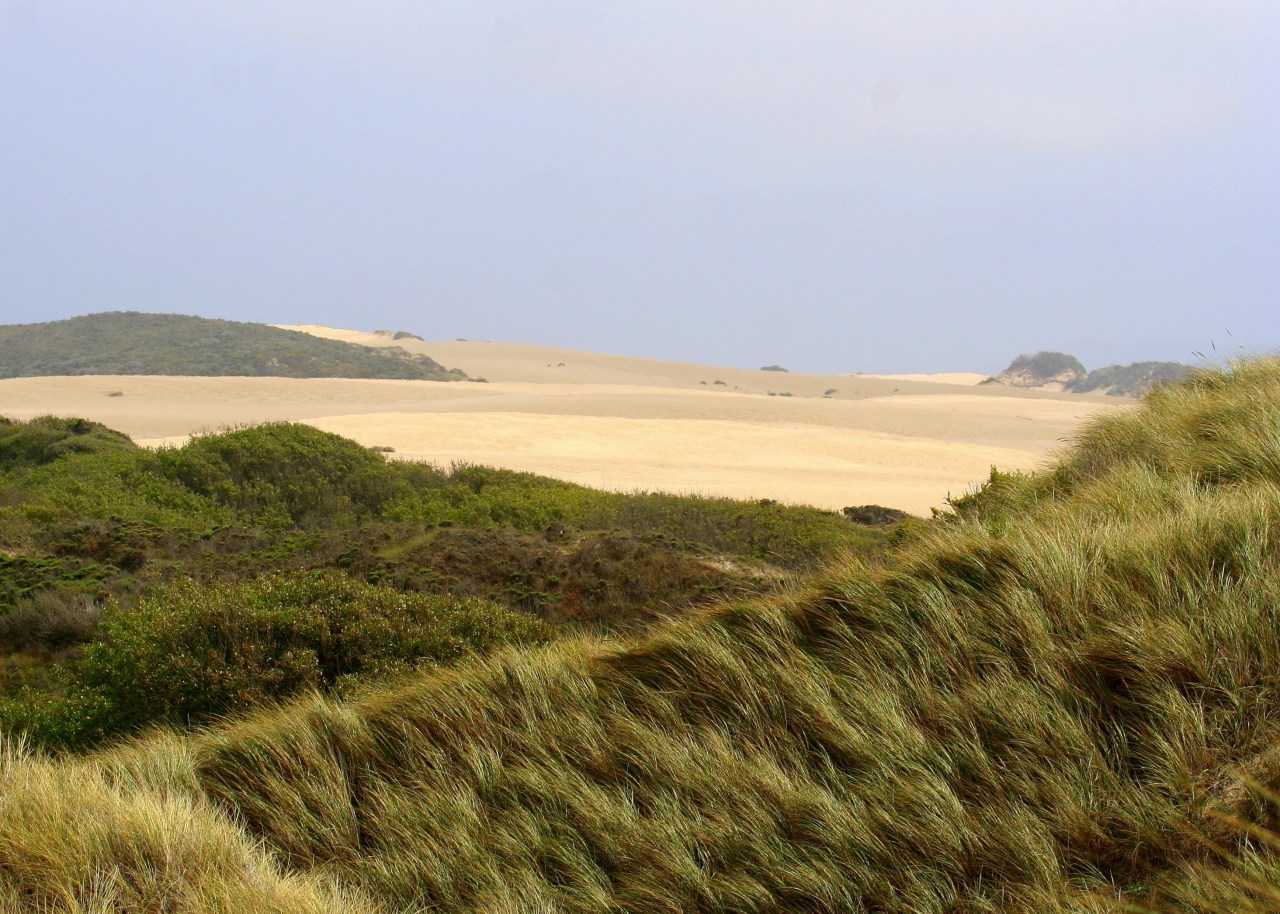
Guadalupe-Nipomo Dunes, California 2008
Overheard from the group hiking behind me on the Hidden Lake Trail during my recent visit to Glacier National Park:
“Engineers think differently than regular folks. You know how optimists say the glass is half full and pessimists say the glass is half empty? Well, engineers, like me, say the glass is at 50% capacity.”

Hidden Lake Trail, Glacier National Park, Montana 2018
If the only prayer you say in your whole life is “thank you,” that would suffice.
~ Meister Eckhart

Yellow-headed Blackbird, Klamath Falls, Oregon 2008
What a wonderful life I’ve had! I only wish I’d realized it sooner.
~ Colette

Sun – Clouds – Surf, Lincoln City, Oregon 2018
Spotted this in a car window at Crater Lake National Park. Welcome to Oregon!

 3rin's View...